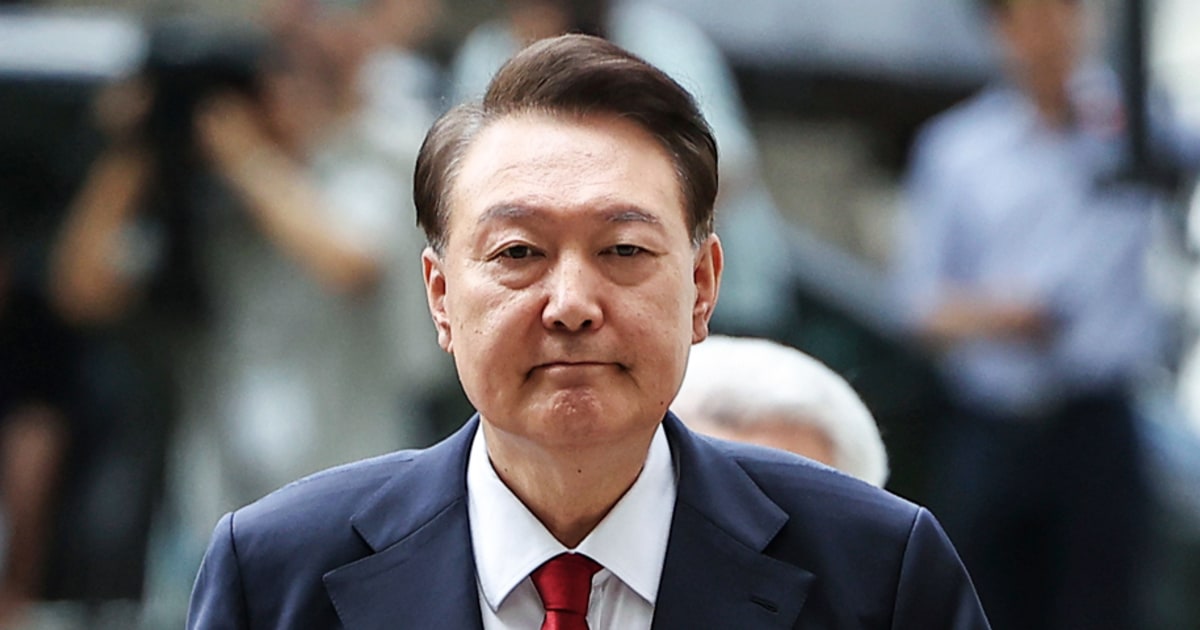
South Korean Appeals Court Upholds Seven-Year Sentence for Former President Yoon Suk Yeol
Compiled from 2 Sources
This report draws on coverage from Fox News, NBC News and presents a structured, balanced account that notes where outlets differ in their reporting.
Key Points
- A South Korean appeals court sentenced former President Yoon Suk Yeol to seven years in prison.
- The sentencing occurred on Wednesday in Seoul, South Korea, as reported by both Fox News and NBC News.
- Core charges include resisting arrest and bypassing a legitimate Cabinet meeting.
- NBC News specified the bypassing of Cabinet meetings occurred before his impeachment.
- Both sources consistently identified him as 'ousted President Yoon Suk Yeol'.
Introduction
A South Korean appeals court has upheld a seven-year prison sentence for former President Yoon Suk Yeol, a development that marks a significant chapter in the nation's political landscape. The ruling, delivered on Wednesday in Seoul, affirms earlier convictions related to charges including resisting arrest and bypassing legitimate Cabinet procedures. This decision underscores the ongoing legal scrutiny faced by high-profile political figures in South Korea and highlights the judicial system's role in holding former leaders accountable.
The former president, who was previously impeached, now faces a substantial prison term following this appellate judgment. The case has drawn considerable attention both domestically and internationally, given its implications for South Korea's political stability and the precedent it sets for future governance. The court's comprehensive review of the charges culminated in a verdict that reinforces the severity of the offenses committed during his tenure.
Key Facts
According to both Fox News and NBC News, the South Korean appeals court sentenced former President Yoon Suk Yeol to seven years in prison. Both outlets specify that the sentencing occurred on Wednesday in Seoul, South Korea. The core charges cited by both Fox News and NBC News include resisting arrest and bypassing a legitimate Cabinet meeting. NBC News further clarifies that the bypassing of the Cabinet meeting occurred "before his brief impo…" (impeachment), providing a slight additional detail on the timing relative to his removal from office.
Both sources identify the individual as "ousted President Yoon Suk Yeol," confirming his status as a former head of state removed from power. The consistent reporting across both Fox News and NBC News on the seven-year sentence and the primary charges indicates these as the undisputed central facts of the court's decision. No discrepancies in the fundamental outcome or the main charges were noted between the two reports.
Why This Matters
This ruling carries significant weight for South Korea's political system and its commitment to democratic accountability. The sentencing of a former head of state to a substantial prison term, particularly for charges that include resisting legal processes and undermining governmental procedures, sends a strong message about the rule of law. It demonstrates that even the highest officeholders are not immune to legal consequences for actions deemed unlawful, thereby reinforcing public trust in judicial independence.
Economically, such high-profile legal battles can introduce elements of political uncertainty, potentially affecting investor confidence or policy stability, though the immediate direct economic impact of this specific appellate decision is likely limited given Yoon Suk Yeol's already ousted status. Socially, the case resonates deeply with the public's expectations for transparency and integrity from their leaders. It can influence public discourse on corruption, abuse of power, and the mechanisms of checks and balances within the government, fostering a demand for greater ethical conduct from elected officials.
Furthermore, the outcome of this appeal could shape future political dynamics, potentially influencing upcoming elections or the strategies of various political factions. It serves as a stark reminder of the consequences of political misconduct and could prompt a re-evaluation of presidential powers and oversight mechanisms. The international community also observes such cases as indicators of a nation's democratic health and its adherence to established legal norms.
Full Report
On Wednesday, a South Korean appeals court delivered a significant judgment, sentencing former President Yoon Suk Yeol to seven years in prison. Both Fox News and NBC News reported this development from Seoul, South Korea. The primary charges that led to this conviction, as detailed by both outlets, include resisting arrest and bypassing a legitimate Cabinet meeting. This appellate decision reaffirms the earlier legal findings against the former head of state.
NBC News provided a slightly more specific context regarding the charge of bypassing a legitimate Cabinet meeting, noting that this occurred "before his brief impo…" (impeachment), implying a connection between these actions and the events leading to his removal from office. Fox News, while not explicitly detailing the timeline relative to his impeachment for that specific charge, also highlighted the severity of the offenses by mentioning "other charges" in addition to resisting arrest and bypassing Cabinet procedures, suggesting a broader scope of legal transgressions.
Both news organizations consistently referred to the individual as "ousted President Yoon Suk Yeol," indicating his prior removal from the presidency. The reports from Fox News and NBC News were largely aligned on the core facts: the identity of the individual, the location and timing of the sentencing, the length of the prison term, and the principal charges. There were no discernible differences in the framing of the core facts or the emphasis on the severity of the sentence between the two sources, both presenting the information in a straightforward, factual manner.
Context & Background
The sentencing of former President Yoon Suk Yeol is not an isolated event but rather the latest development in a series of legal challenges that have frequently faced South Korean former leaders. The nation has a history of prosecuting and convicting its ex-presidents for various offenses, often related to corruption, abuse of power, or other misconduct during their terms. This pattern reflects a robust, albeit sometimes politically charged, judicial system that scrutinizes high-level officials.
Yoon Suk Yeol himself was previously impeached, leading to his removal from office. His impeachment was a culmination of political turmoil and public outcry over alleged wrongdoings. The charges of resisting arrest and bypassing legitimate Cabinet meetings stem from investigations initiated during or after his impeachment process, indicating a thorough examination of his conduct while in power. This legal saga has unfolded against a backdrop of heightened public demand for government transparency and accountability in South Korea.
What to Watch Next
Following the appeals court's decision, the legal process for former President Yoon Suk Yeol may not be entirely concluded. Observers will be watching to see if his legal team chooses to appeal this ruling to the Supreme Court of South Korea. A Supreme Court appeal would represent the final stage of the judicial process, potentially leading to a definitive confirmation or reversal of the current sentence.
Should the Supreme Court uphold the appeals court's decision, the focus will shift to the commencement of his prison term and the implications for his political legacy. Conversely, a reversal could introduce new complexities. Beyond the immediate legal steps, the political ramifications of this high-profile conviction will continue to be monitored, particularly how it influences public sentiment and the rhetoric of current political parties in South Korea.
Source Attribution
This report draws on coverage from Fox News and NBC News.
Found this story useful? Share it:
Sources (2)
Fox News
"Court sentences former world leader to 7 years in prison for resisting arrest, other charges"
April 29, 2026
NBC News
"South Korean court sentences ex-President Yoon to 7 years for charges including resisting arrest"
April 29, 2026