Florida Lawmakers Pass Redistricting Map Potentially Aiding Republican House Seat Gains
Compiled from 3 Sources
This report draws on coverage from NPR Politics, CBS News and presents a structured, balanced account that notes where outlets differ in their reporting.
Key Points
- Florida lawmakers passed a new congressional voting map.
- The map was drawn by Florida Governor Ron DeSantis.
- It could help Republicans flip four House seats currently held by Democrats.
- This action supports a national redistricting effort by former President Trump.
- The GOP likely holds a slight edge in national redistricting efforts.
Introduction
Florida lawmakers have approved a new congressional redistricting map, a development that could significantly alter the political landscape by potentially increasing the Republican party's representation in the U.S. House of Representatives. This legislative action, spearheaded by Florida Governor Ron DeSantis, is seen as a strategic move within a broader national effort to reshape voting districts ahead of upcoming midterm elections. The map's passage marks a critical juncture in the ongoing process of redrawing electoral boundaries following the decennial census, with its immediate impact projected to favor one political party over another.
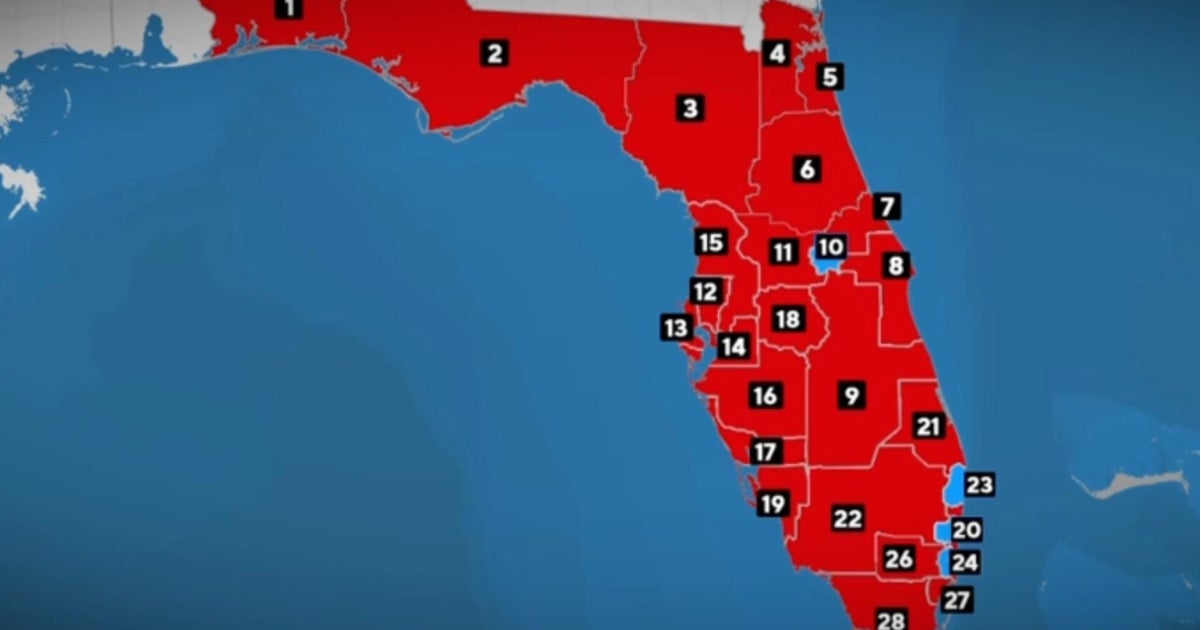
The newly passed map has garnered attention for its potential to shift the balance of power within Florida's congressional delegation. Specifically, analyses suggest that the redrawn districts could enable Republicans to secure up to four additional seats currently held by Democrats. This outcome would not only strengthen the Republican presence from Florida but also contribute to the national Republican strategy for the midterm elections, where control of Congress is at stake.
Key Facts
Florida lawmakers have passed a new voting map, according to both NPR Politics sources. This map is designed to potentially help Republicans flip four House seats, as reported by both NPR Politics sources and CBS News. The initiative is attributed to Florida Governor Ron DeSantis, with NPR Politics specifically noting his role in drawing the map. Both NPR Politics sources highlight that this action boosts former President Trump's effort to reshape voting before the midterm elections, framing it as part of a national redistricting push. NPR Politics also indicated that the Republican Party likely holds a slight edge over Democrats in redistricting efforts nationwide following this development.
Why This Matters
This redistricting decision in Florida carries substantial implications for both state and national politics, extending beyond mere numerical shifts in congressional representation. For Florida, the redrawing of district lines directly impacts the electoral competitiveness of various regions, potentially diminishing the influence of certain demographic groups or political factions. The shift of four House seats could fundamentally alter the state's political discourse and legislative priorities, reflecting a more consolidated Republican majority in its federal delegation. This outcome could lead to a more unified front on issues important to the Republican platform, affecting everything from federal funding allocations to policy debates.
Nationally, Florida's redistricting effort is a significant component of the broader, nationwide battle over electoral maps, particularly in the lead-up to the midterm elections. The potential gain of four House seats for Republicans from Florida would contribute directly to the party's overall strategy to regain control of the U.S. House of Representatives. Such a shift could empower the Republican Party to block the current administration's legislative agenda, influence committee assignments, and shape the national policy debate for the next two years. The process underscores the profound impact of state-level legislative actions on the federal balance of power, demonstrating how seemingly localized decisions can reverberate across the entire political spectrum.
Furthermore, the involvement of Governor Ron DeSantis in drawing the map, as noted by NPR Politics, highlights the increasing role of state executives in the redistricting process. This centralizes power and can lead to maps that are more overtly partisan, potentially reducing the competitive nature of elections and increasing political polarization. The focus on former President Trump's national redistricting push, as reported by NPR Politics, also indicates a coordinated effort by the Republican Party to leverage redistricting for electoral advantage across multiple states, making Florida's outcome a key indicator of the success of this national strategy. This trend raises questions about the fairness and democratic integrity of the electoral system when district boundaries are drawn with explicit partisan goals.
Full Report
Florida lawmakers have officially passed a new congressional voting map, a move that is widely anticipated to benefit the Republican Party in the upcoming midterm elections. Both NPR Politics sources consistently reported that this new map could enable Republicans to flip four House seats currently held by Democrats. This legislative action is directly tied to Florida Governor Ron DeSantis, who, according to NPR Politics, was instrumental in drawing the map. The passage of this map is not an isolated event but rather, as both NPR Politics outlets emphasized, contributes to former President Trump's broader national effort to reshape voting districts across the country before the midterm elections.
The strategic intent behind the map is to solidify and expand Republican representation in the U.S. House. The CBS News headline also corroborated the potential for Republicans to gain four House seats through DeSantis's proposed map. This consensus across the reporting outlets underscores the significant partisan implications of the redistricting. NPR Politics further detailed that, following such developments, the GOP is likely to hold a slight edge over Democrats in the national redistricting landscape, indicating a broader trend where Republican-controlled state legislatures are successfully drawing maps favorable to their party.
While all sources agree on the core fact of the map's passage and its potential impact, there are subtle differences in emphasis. NPR Politics highlighted Governor DeSantis's direct role in drawing the map and explicitly linked it to former President Trump's national redistricting push, providing a broader political context. The second NPR Politics source reiterated these points, reinforcing the narrative of a coordinated national strategy. CBS News, while confirming the potential four-seat gain, presented a more concise headline focusing on DeSantis's proposal, without delving into the broader national context or Trump's involvement in its headline, though it is implied through the shared core facts. The consistent reporting on the four-seat potential across all three outlets signifies this as the most critical and agreed-upon outcome.
Context & Background
Congressional redistricting occurs every ten years following the U.S. Census, a process mandated by the Constitution to ensure that each congressional district contains roughly the same number of people. This decennial redrawing of electoral maps is a highly politicized process, as the way district lines are drawn can significantly influence election outcomes for the next decade. States with unified government control—where one party controls both the governorship and the state legislature—often have a strong advantage in drawing maps that favor their party, a practice commonly referred to as gerrymandering.
Florida, as a populous and politically diverse state, has historically been a battleground for redistricting efforts. The state's rapid population growth, as reflected in the latest census, resulted in Florida gaining an additional congressional seat, bringing its total to 28. This increase intensified the stakes of the redistricting process, as the new seat, along with the redrawing of existing ones, presented a significant opportunity for either party to gain an advantage. The involvement of Governor Ron DeSantis in this process reflects a growing trend of governors taking a hands-on approach to redistricting, often aligning with their party's national objectives.
The current redistricting cycle has been particularly contentious nationwide, with both Republican and Democratic parties seeking to maximize their electoral advantages. Former President Trump's reported national redistricting push, as noted by NPR Politics, indicates a concerted effort by the Republican Party to leverage state-level control to secure a majority in the U.S. House. Florida's new map, therefore, is not an isolated incident but a key piece of a larger, nationwide strategy to influence the balance of power in Congress through the meticulous redrawing of electoral boundaries.
What to Watch Next
The immediate future will likely involve legal challenges to Florida's newly passed congressional map. Opponents of the map, particularly those concerned about partisan gerrymandering or potential dilution of minority voting strength, are expected to file lawsuits in state or federal courts. These legal battles could determine the final shape of Florida's congressional districts, potentially leading to further revisions or even court-imposed maps if the current version is deemed unconstitutional. The timeline for these legal proceedings can vary, but key decisions could emerge in the months leading up to the 2022 midterm elections.
Beyond legal challenges, the practical impact of the map will be observed during the upcoming primary and general elections. Voters in Florida will experience new district boundaries, and the outcomes of these elections will serve as the ultimate test of the map's effectiveness in achieving its stated or implied goals. Election results will provide concrete data on whether the projected four-seat flip for Republicans materializes. Political analysts will closely monitor voter turnout, candidate performance, and the overall shift in partisan representation to assess the map's influence on Florida's political landscape and its contribution to the national balance of power in Congress.
Source Attribution
This report draws on coverage from NPR Politics (Source 1), NPR Politics (Source 2), and CBS News (Source 3).
Found this story useful? Share it:
Sources (3)
NPR Politics
"Florida lawmakers pass a voting map that could help Republicans flip 4 House seats"
April 29, 2026
NPR Politics
"Florida lawmakers pass voting map that could help Republicans flip 4 House seats"
April 30, 2026
CBS News
"DeSantis proposes new congressional map that could net Republicans 4 House seats"
April 27, 2026