China's Manufacturing Hubs Grapple with Economic Strain Amidst Geopolitical Tensions
Structured Editorial Report
This report is based on coverage from BBC News and has been structured for clarity, context, and depth.
Key Points
- China's manufacturing hubs are experiencing a noticeable economic slowdown, characterized by idle workers and a rise in temporary job postings.
- The current economic strain is perceived as more severe than the impact of the Trump administration's tariffs, indicating new, complex challenges.
- The situation suggests broader geopolitical factors, potentially including global conflicts, are contributing to economic headwinds in China.
- This downturn could have significant global repercussions for supply chains and consumer markets, given China's role as the 'world's factory'.
- Domestically, widespread unemployment in manufacturing poses social stability risks and challenges China's long-term economic growth objectives.
- Future economic data and government policy responses in China, alongside global geopolitical developments, will be critical to monitor.
Introduction
China's manufacturing heartlands, particularly in regions known for their export-oriented industries, are experiencing significant economic headwinds. A somber atmosphere pervades these areas, characterized by visible signs of reduced economic activity and increased unemployment. This downturn is manifesting in scenes of idle workers gathered outside factories and a proliferation of temporary job advertisements, signaling a challenging period for the nation's industrial workforce.
The current economic pressures are notably distinct from previous challenges, such as the trade disputes with the United States under the Trump administration. While China demonstrated resilience during that period, the confluence of new geopolitical factors and domestic issues appears to be inflicting a more profound and widespread impact. The situation underscores a complex interplay of global economic shifts and internal vulnerabilities affecting the stability of China's vast manufacturing sector.
Key Facts
Observations from major manufacturing hubs reveal workers congregating in public spaces, indicating a lack of immediate employment opportunities. Storefronts in these industrial zones are increasingly advertising temporary positions, suggesting a shift from stable, long-term employment to more precarious labor arrangements. The BBC News report specifically highlights a "sombre gathering" of workers in one such hub, emphasizing the palpable sense of economic uncertainty among the labor force.
Crucially, the current economic strain is being perceived as more impactful than the tariffs imposed by the Trump administration. This suggests that the underlying causes are multifaceted and potentially more deeply rooted than mere trade protectionism. The reference to the "Iran war" in the original headline, while not elaborated upon in the provided content, implies a broader geopolitical context contributing to the economic challenges, possibly through disruptions to global supply chains, energy markets, or investment flows.
Why This Matters
The economic slowdown in China's manufacturing sector carries immense global significance. As the world's factory, any substantial disruption to Chinese production has ripple effects across international supply chains, impacting consumer prices, corporate profits, and economic stability worldwide. A decline in Chinese manufacturing output could lead to shortages of goods, increased inflationary pressures in importing nations, and a general slowdown in global trade, potentially exacerbating an already fragile global economy.
Domestically, the implications are profound for China. Widespread unemployment or underemployment among its vast industrial workforce poses significant social and political risks. A large, disaffected labor pool could challenge social stability and place immense pressure on the government to implement effective economic stimulus and social safety nets. Furthermore, a struggling manufacturing base could hinder China's long-term economic growth targets and its ambition to transition towards a more innovation-driven economy, as resources are diverted to address immediate employment crises.
Moreover, the perception that current challenges surpass the impact of previous trade wars suggests a more systemic issue. This could indicate a confluence of factors, including shifting global manufacturing trends, increased geopolitical fragmentation, and potentially domestic policy choices, all contributing to a more complex and enduring economic predicament. Understanding these dynamics is crucial for businesses, policymakers, and international organizations as they navigate an increasingly interconnected and volatile global economic landscape.
Full Report
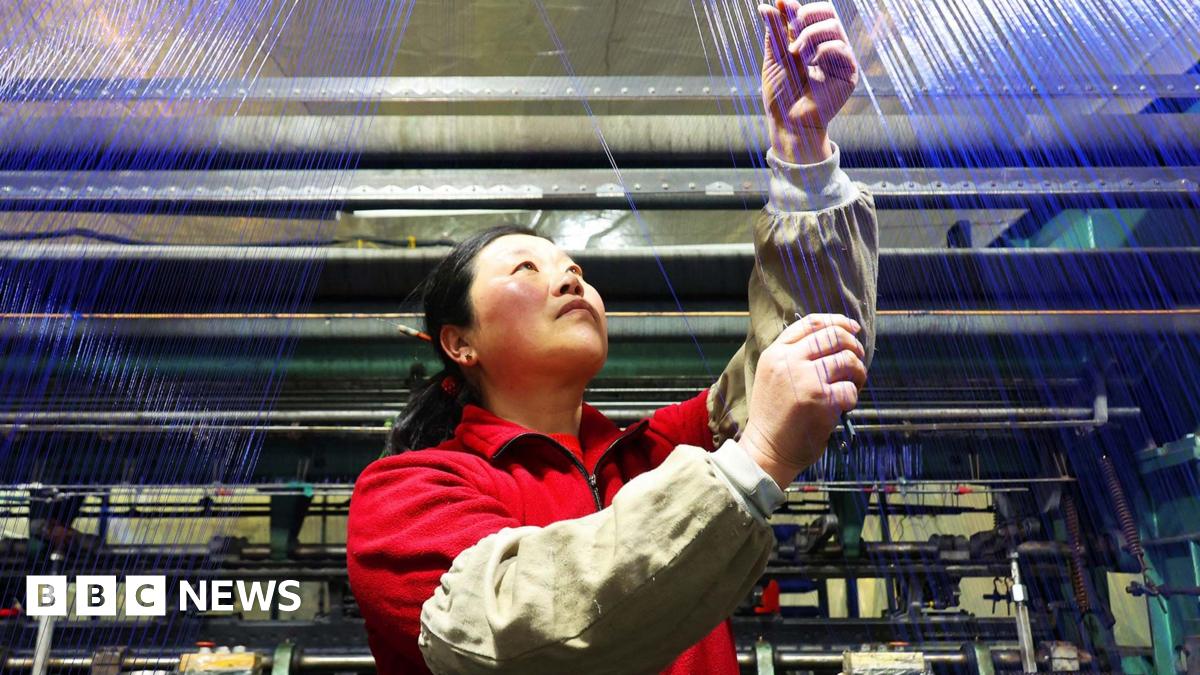
In the bustling industrial districts that typically hum with activity, a noticeable quiet has settled over many areas, particularly in the backstreets of China's prominent manufacturing centers. Workers, who would ordinarily be engaged in production lines, are now observed congregating outdoors, often under trees, seeking respite and discussing their predicament. The scene is a stark contrast to the relentless pace usually associated with these hubs, where factories operate at full capacity to meet global demand.
This shift is further underscored by the proliferation of advertisements for temporary factory jobs. These postings are a clear indicator of a labor market in flux, moving away from the previously common long-term contracts towards more transient employment. The demand for temporary labor often signifies either a cautious approach by employers facing uncertain economic outlooks or a reduction in overall production needs, leading to a surplus of available workers.
The current economic environment is being described by local observers as more challenging than the period when the United States imposed significant tariffs on Chinese goods. During the Trump administration's trade war, China's manufacturing sector demonstrated a remarkable degree of resilience, adapting to new market conditions and diversifying its trade partners. However, the present circumstances, hinted at by the reference to a broader geopolitical conflict like the "Iran war," suggest a different magnitude of impact, possibly affecting global energy prices, shipping routes, and overall investor confidence, which then trickles down to manufacturing orders.
This situation highlights the deep integration of China's economy into the global system. While tariffs represented a targeted economic pressure, a broader geopolitical instability can create more diffuse and unpredictable disruptions, affecting everything from raw material costs to export markets. The visible signs of economic strain in manufacturing hubs serve as a tangible barometer of these complex global forces at play, directly impacting the livelihoods of millions of Chinese workers and the stability of the nation's industrial backbone.
Context & Background
China's manufacturing sector has been a primary engine of its economic growth for decades, transforming the nation into the "world's factory." This growth was fueled by a vast and relatively inexpensive labor force, significant foreign investment, and a globalized trade system that facilitated the export of goods to markets worldwide. The coastal regions, in particular, developed into massive industrial clusters, attracting millions of migrant workers from rural areas seeking better economic opportunities.
However, this model has faced increasing pressures in recent years. Rising labor costs, environmental concerns, and a push towards higher-value manufacturing have led to some industries relocating or automating. The trade war initiated by the Trump administration in 2018 introduced a significant external shock, with tariffs on hundreds of billions of dollars worth of Chinese goods. While initially disruptive, China's economy largely weathered this storm through a combination of domestic stimulus, trade diversification, and the adaptability of its industrial base.
The current challenges, however, appear to stem from a different set of circumstances, potentially exacerbated by ongoing global geopolitical tensions and a post-pandemic economic realignment. The reference to the "Iran war" in the headline, while not detailed in the provided content, points to how broader international conflicts can ripple through global supply chains, energy markets, and investor sentiment, creating a more complex and pervasive economic headwind than traditional trade disputes. This confluence of factors presents a new and potentially more formidable test for China's economic resilience.
What to Watch Next
Observers should closely monitor official economic data releases from China, including manufacturing Purchasing Managers' Index (PMI) figures, industrial output reports, and unemployment statistics, particularly for migrant workers. These indicators will provide a clearer picture of the depth and breadth of the current economic slowdown. Any government announcements regarding new stimulus measures or policy adjustments aimed at bolstering employment and industrial production will also be critical to watch.
Furthermore, the evolution of global geopolitical events, especially those impacting energy prices and international shipping, will have direct implications for China's manufacturing sector. Developments in major export markets, such as Europe and the United States, regarding consumer demand and trade policies will also be key. The upcoming sessions of China's National People's Congress and Chinese Communist Party plenums may reveal strategic shifts or new directives addressing these economic pressures.
Source Attribution
This report draws on coverage from BBC News.
Found this story useful? Share it:
Sources (1)
BBC News
"China weathered Trump's tariffs - but the Iran war is taking a toll"
April 22, 2026