Assaults on Ukrainian Military Recruiters Rise Amidst Deepening War Fatigue
Structured Editorial Report
This report is based on coverage from Bloomberg and has been structured for clarity, context, and depth.
Key Points
- Attacks on Ukrainian military draft officers are increasing, signaling growing public resistance and war fatigue.
- A recent incident involved youths attacking officers, allowing a detainee to flee, highlighting escalating tensions.
- The rising assaults impede Ukraine's ability to mobilize troops, crucial for sustaining defense against Russia.
- Deepening war fatigue and social strain are evident, eroding initial patriotic unity and fostering resentment towards conscription.
- The government faces a critical challenge balancing national security needs with managing public discontent over mobilization.
- Future legislative changes and public sentiment regarding conscription will be key indicators of the war's societal impact.
Introduction
Incidents of physical assault against Ukrainian military draft officers have seen a significant increase, signaling growing public resistance and fatigue as the conflict with Russia continues. A recent confrontation in which a group of youths attacked officers, enabling a detainee to escape, underscores the escalating tensions faced by recruitment personnel across the country. These incidents are not isolated, but rather part of a disturbing trend reflecting the immense strain placed on Ukrainian society by prolonged mobilization efforts.
The rising number of attacks highlights a critical challenge for Kyiv: maintaining troop numbers and public support for the war effort. As the conflict enters its third year, the initial wave of patriotic enthusiasm has waned, replaced by a more complex and often resentful public sentiment towards conscription. This shift poses a substantial threat to Ukraine's ability to replenish its forces and sustain its defense against Russian aggression.
Key Facts
Reports indicate a notable surge in physical assaults targeting Ukrainian military draft officers. These incidents range from direct attacks on personnel to obstruction of their duties. The confrontations often involve groups of civilians intervening to prevent detentions or aid individuals attempting to evade conscription.
The context for these incidents is Ukraine's ongoing mobilization campaign, which aims to bolster its armed forces. The country has been at war since Russia's full-scale invasion in February 2022, necessitating continuous recruitment to replace casualties and maintain operational strength. The increasing hostility towards recruitment officers suggests a significant disconnect between the state's military needs and a segment of the public's willingness to participate.
Why This Matters
The escalating attacks on military recruiters carry profound implications for Ukraine's war effort and its societal cohesion. Firstly, they directly impede the nation's ability to effectively mobilize new troops, which is crucial for sustaining defensive operations and potentially launching future counter-offensives. A failure to replenish forces adequately could weaken Ukraine's position on the battlefield, potentially prolonging the conflict or leading to territorial losses.
Secondly, these incidents are a stark indicator of deepening war fatigue and social strain within Ukraine. While initial resistance to the invasion was characterized by widespread unity and volunteerism, the protracted nature of the conflict, coupled with significant casualties and economic hardship, has eroded public morale. The targeting of recruitment officers suggests a growing segment of the population views conscription efforts with resentment, rather than patriotic duty, which could foster internal divisions and undermine national resilience.
Finally, the rise in confrontations could force the Ukrainian government to adopt more stringent or even coercive measures to meet recruitment quotas, potentially further alienating the populace. This delicate balance between national security imperatives and civil liberties presents a significant governance challenge. The long-term societal impact of such tensions, including potential distrust in state institutions and social unrest, could persist long after the conflict concludes, complicating post-war recovery and national unity.
Full Report
The recent incident involving military draft officers attempting to check identity documents exemplifies the growing friction between recruitment personnel and segments of the Ukrainian populace. As officers stopped two men, a group of youths reportedly intervened, assaulting the officers and allowing one of the detainees to flee. This type of direct physical confrontation underscores the increasingly hostile environment in which recruitment efforts are being conducted.
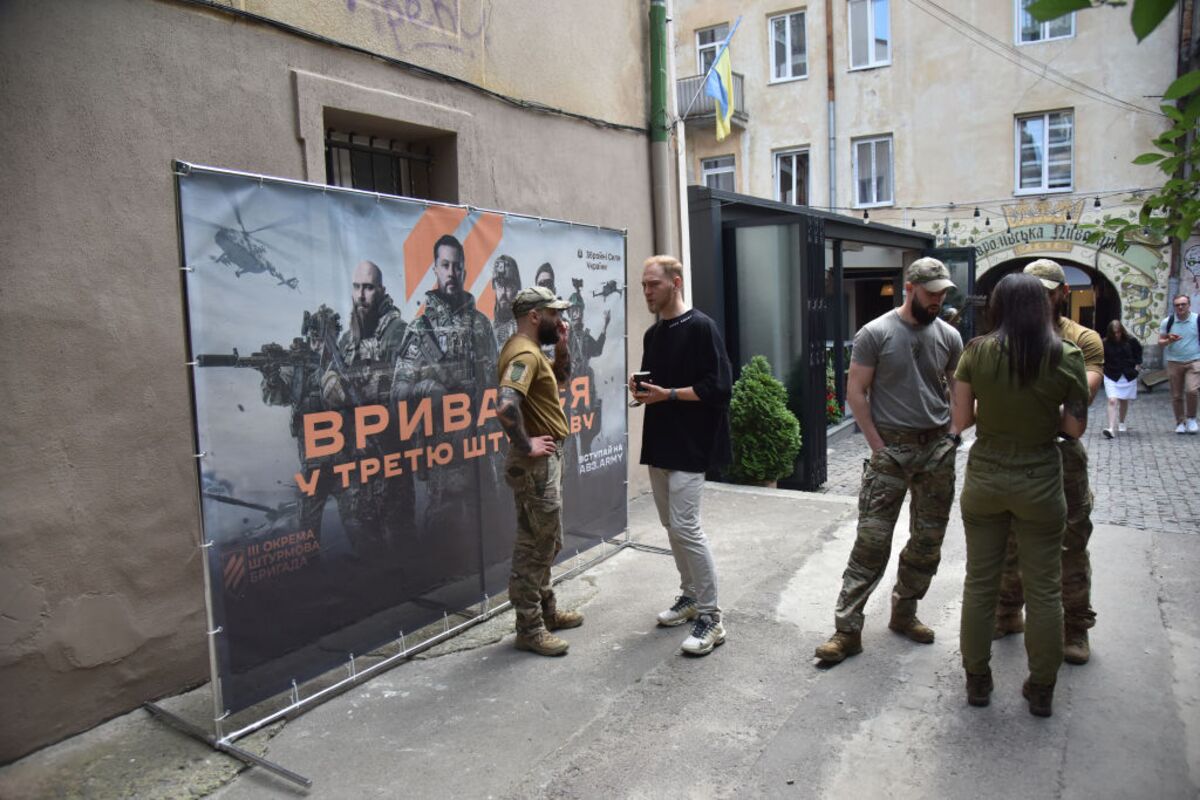
These incidents are not isolated. Throughout various regions of Ukraine, reports have emerged detailing similar altercations, ranging from verbal abuse and threats to physical violence. Recruitment centers, once symbols of national defense, are now sometimes viewed with apprehension by parts of the civilian population. The officers themselves, often veterans of the conflict, find themselves in an unenviable position, tasked with enforcing unpopular mandates among a weary populace.
The challenges faced by recruitment officers are compounded by the methods employed to identify potential conscripts. Officers frequently operate in public spaces, stopping individuals to verify their identities and military registration status. While legally sanctioned, these actions are often perceived as intrusive and aggressive, fueling public resentment and leading to spontaneous outbursts of resistance, as seen in the aforementioned incident.
Ukrainian authorities are acutely aware of these challenges. The government has consistently emphasized the necessity of mobilization to defend the nation, yet it also grapples with the social ramifications of its policies. The balancing act involves ensuring a steady flow of personnel to the front lines while attempting to mitigate public backlash and maintain a semblance of national unity in the face of ongoing aggression.
Context & Background
Ukraine has been under a state of martial law and general mobilization since Russia's full-scale invasion in February 2022. Initially, there was an outpouring of volunteerism, with many Ukrainians eager to defend their homeland. However, as the war has dragged on, with immense human cost and no clear end in sight, the initial patriotic fervor has inevitably given way to exhaustion and a more pragmatic, sometimes cynical, view of military service.
Prior to the full-scale invasion, Ukraine had already been engaged in conflict with Russian-backed separatists in its eastern regions since 2014. This protracted low-intensity conflict had already introduced the concept of conscription and military service to a generation, but the scale and intensity of the current war are unprecedented. The demand for personnel is constant, requiring continuous waves of mobilization to replace casualties, rotate exhausted troops, and expand military capabilities.
The legal framework for mobilization in Ukraine allows for the conscription of men aged 27 to 60, with some exceptions for health, family circumstances, or critical professions. However, the enforcement of these laws has become increasingly challenging. Reports of draft evasion and attempts to leave the country illegally have become more frequent, indicating a growing segment of the population actively seeking to avoid military service. The rising attacks on recruiters are a direct manifestation of this societal pressure and resistance to state authority in the context of wartime mobilization.
What to Watch Next
Observers should closely monitor any legislative changes related to mobilization in Ukraine. The government may consider amendments to existing laws to address both recruitment shortfalls and public discontent, potentially adjusting age limits, expanding categories of eligible personnel, or introducing new incentives or penalties. Such legislative actions will indicate the state's evolving strategy to manage its human resources for the war effort.
Furthermore, the public discourse and social media trends surrounding conscription will be crucial indicators of societal sentiment. Any significant shifts in public opinion, either towards greater acceptance or increased resistance, could influence government policy and the effectiveness of future mobilization campaigns. The frequency and nature of further incidents involving recruitment officers will serve as a barometer for the ongoing tension between state imperatives and public will.
Source Attribution
This report draws on coverage from Bloomberg.
Found this story useful? Share it: