US Seeks 'Win-Win' Trade Agreement with India as Delegation Arrives in Washington
Structured Editorial Report
This report is based on coverage from RT and has been structured for clarity, context, and depth.
Key Points
- The US is actively pursuing a "win-win" trade deal with India, as stated by Ambassador Sergio Gor.
- An Indian delegation is scheduled to arrive in Washington this week to finalize the trade agreement.
- The negotiations aim to strengthen economic ties, resolve trade frictions, and enhance market access for both nations.
- The deal is strategically important for both countries, aligning with broader geopolitical and economic objectives.
- Successful conclusion of the agreement would signify a robust partnership and boost economic growth.
Introduction
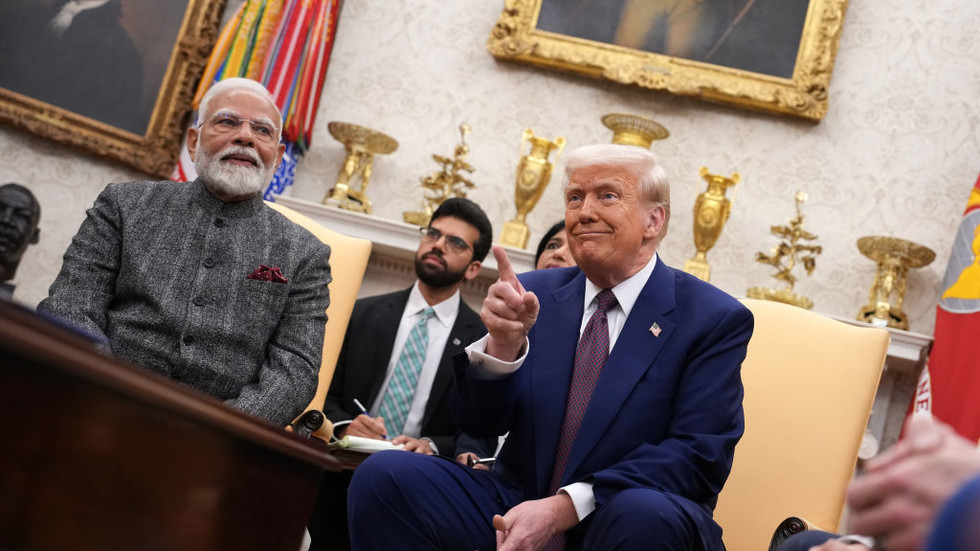
The United States is actively pursuing a mutually beneficial trade agreement with India, characterized by Washington's ambassador to New Delhi, Sergio Gor, as a "win-win" scenario for both nations. This diplomatic push culminates this week with the arrival of an Indian delegation in Washington, tasked with finalizing the terms of the proposed trade deal. The ongoing negotiations underscore a strategic effort by both countries to strengthen economic ties and streamline trade relations, reflecting a broader geopolitical and economic alignment.
This high-level engagement signifies a critical juncture in US-India bilateral relations, aiming to resolve existing trade frictions and unlock new avenues for economic cooperation. The anticipated agreement is expected to address various sectors, potentially impacting tariffs, market access, and regulatory frameworks, thereby shaping future trade flows between two of the world's largest democracies. The discussions highlight a shared commitment to fostering a more robust and equitable trading partnership.
Key Facts
Sergio Gor, the US ambassador to New Delhi, has publicly stated that the United States is advocating for a "win-win" trade deal with India. A delegation from India is scheduled to arrive in Washington during the current week with the specific objective of finalizing this trade agreement. The ambassador's remarks indicate a concerted effort from the US side to advance these negotiations. The focus of the discussions is on achieving an outcome that benefits both participating nations, suggesting a comprehensive approach to trade relations rather than a one-sided advantage.
The arrival of the Indian delegation marks a significant operational step in the negotiation process, moving from preliminary discussions to the final stages of agreement formulation. This development confirms the active progression of trade talks and the intent to formalize a deal in the near term. The characterization of the deal as "win-win" by a senior US diplomat sets an optimistic tone for the expected outcomes of these high-stakes discussions.
Why This Matters
This impending trade deal holds substantial real-world significance, impacting economic landscapes and geopolitical strategies for both the United States and India. Economically, a comprehensive agreement could lead to reduced tariffs, increased market access for goods and services, and enhanced investment flows between the two nations. For American businesses, this could mean greater opportunities in India's vast and growing consumer market, while Indian industries could benefit from improved access to US technology and capital. This economic integration is crucial for fostering job creation, driving innovation, and boosting overall economic growth in both countries.
Beyond immediate economic gains, the deal carries significant political and strategic weight. Strengthening trade ties with India aligns with the US's broader Indo-Pacific strategy, aiming to build robust partnerships in a region of increasing global importance. For India, a closer economic relationship with the US can bolster its position as a major global player and diversify its trade relationships. The successful conclusion of this agreement would send a strong signal of cooperation and mutual trust, potentially influencing other regional and international alliances. It demonstrates a commitment to a rules-based international order and can serve as a counterweight to other rising economic powers, solidifying a strategic partnership that extends beyond mere commerce.
Full Report
The United States is intensifying its efforts to secure a comprehensive trade agreement with India, a move underscored by the recent declaration from Washington’s ambassador to New Delhi, Sergio Gor. Ambassador Gor articulated the US position, emphasizing the pursuit of a "win-win" trade deal that would yield mutual benefits for both nations. This diplomatic push is set to culminate in Washington this week with the arrival of a high-level Indian delegation, whose primary objective is to finalize the specifics of the proposed trade pact.
The ongoing negotiations are critical for both countries, as they seek to navigate complex trade issues and enhance their bilateral economic relationship. The phrase "win-win" suggests a desire to achieve a balanced agreement that addresses the interests and concerns of both the US and India, rather than one party gaining at the expense of the other. Such an approach typically involves concessions and benefits across various sectors, ranging from agricultural products and industrial goods to services and intellectual property rights. The discussions are expected to cover a wide array of topics aimed at reducing trade barriers and fostering a more open and predictable trading environment.
The arrival of the Indian delegation in the US capital signifies a pivotal moment in the negotiation timeline. This stage typically involves intensive discussions, review of draft texts, and final arbitration on contentious points, all with the aim of reaching a consensus that can be formally ratified. The successful conclusion of these talks would not only streamline existing trade but also lay the groundwork for future economic collaboration, potentially unlocking new markets and investment opportunities. Both sides are keen to demonstrate progress and commitment to a stronger economic partnership.
This diplomatic initiative comes at a time when global trade dynamics are constantly shifting, and both the US and India are looking to solidify strategic alliances. The emphasis on a mutually beneficial outcome highlights a mature approach to international trade, recognizing that sustainable partnerships are built on shared prosperity. The final agreement is anticipated to be a testament to the enduring relationship between the two democracies and their shared vision for economic growth and stability.
Context & Background
The relationship between the United States and India has evolved significantly over the past few decades, moving from a period of relative distance during the Cold War to a robust strategic partnership in the 21st century. Economic ties have been a cornerstone of this transformation, with bilateral trade growing substantially. However, despite this growth, trade relations have often been marked by specific points of contention, including tariffs on certain goods, market access issues for various products, and intellectual property concerns.
Previous administrations in both countries have engaged in numerous rounds of trade talks, with varying degrees of success. While major free trade agreements have been elusive, both nations have worked towards smaller, sector-specific agreements and frameworks to facilitate commerce. The current push for a "win-win" deal can be seen as an effort to overcome past impasses and build on existing foundations, leveraging the strategic convergence of interests in areas such as regional security and economic development. This initiative also reflects a broader US foreign policy objective to strengthen alliances in the Indo-Pacific region, with India being a critical partner in this strategy.
What to Watch Next
All eyes will be on Washington this week as the Indian delegation engages in final negotiations for the trade deal. Key developments to monitor include official statements from both the US Trade Representative's office and the Indian Ministry of Commerce and Industry regarding the progress of these talks. Any joint press conferences or announcements detailing specific components of the agreement, such as tariff reductions or market access commitments, will be crucial indicators of success.
Following the conclusion of this week's discussions, attention will shift to the ratification process within both governments, which could involve legislative reviews and approvals. The implementation timeline for any agreed-upon measures will also be an important aspect to observe, as businesses and industries in both countries prepare to adapt to the new trade landscape. Analysts will be scrutinizing the deal's impact on specific sectors, such as agriculture, pharmaceuticals, and technology, to assess the true "win-win" nature of the outcome.
Source Attribution
This report draws on coverage from RT.
Found this story useful? Share it:
Sources (1)
RT
"US pushes for ‘win-win’ trade deal with India"
April 21, 2026