Netanyahu States Iran Conflict 'Not Over,' Cites Trump's Uranium Removal Goal
Compiled from 3 Sources
This report draws on coverage from Daily Signal, USA Today, CBS News and presents a structured, balanced account that notes where outlets differ in their reporting.
Key Points
- Israeli PM Benjamin Netanyahu stated in a '60 Minutes' interview that the U.S.-Israeli conflict with Iran 'is not over'.
- Netanyahu claimed former U.S. President Donald Trump wanted to 'physically' remove Iran's enriched uranium stockpile.
- The interview was scheduled to air on May 10, with The Daily Signal noting it aired on Sunday.
- USA Today reported Netanyahu's allegation that Iran still possesses the means to develop nuclear weapons.
- CBS News quoted Netanyahu saying there is still 'work to be done' before the Iran conflict ends.
- The statements underscore persistent international concerns about Iran's nuclear program and regional stability.
Introduction
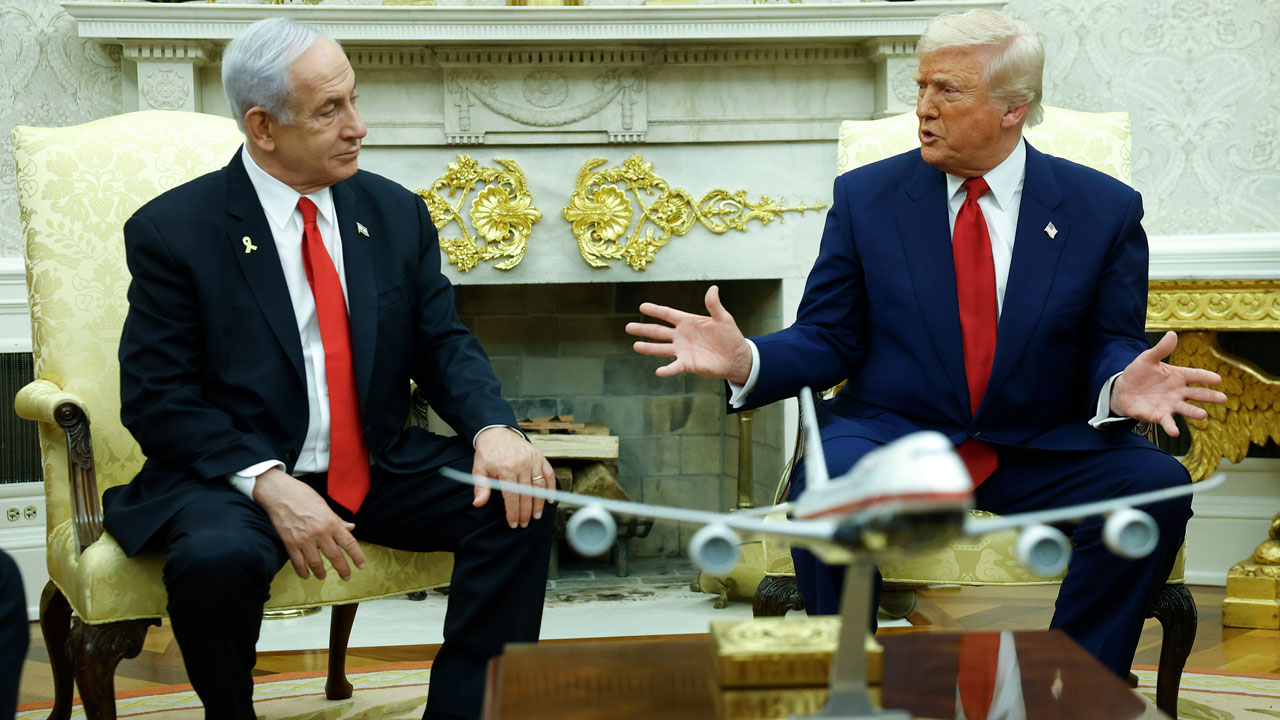
Israeli Prime Minister Benjamin Netanyahu has asserted that the conflict with Iran is far from concluded, a statement made during an interview with CBS's "60 Minutes" that was scheduled to air on May 10. His remarks highlighted ongoing concerns regarding Iran's nuclear program and its regional activities. Netanyahu also indicated that former U.S. President Donald Trump had expressed a desire to physically remove Iran's stockpile of enriched uranium, underscoring the high-stakes nature of the diplomatic and strategic tensions between the nations.
The Prime Minister's comments come amid persistent international efforts to address Iran's nuclear ambitions and its role in Middle Eastern stability. The interview provided a platform for Netanyahu to reiterate Israel's long-standing position on the Iranian threat, emphasizing that despite various agreements and sanctions, the underlying issues remain unresolved. His statements are significant for their timing and content, offering insight into the perspectives of a key regional player on a critical geopolitical challenge.
Key Facts
Israeli Prime Minister Benjamin Netanyahu stated in a "60 Minutes" interview, set to air on May 10, that the U.S.-Israeli conflict with Iran "is not over," as reported by USA Today. The Daily Signal further specified that Netanyahu's interview was with "60 Minutes" and was airing on Sunday. According to the Daily Signal, Netanyahu claimed that President Donald Trump wanted to "physically" remove Iran's stockpile of enriched uranium. USA Today noted that the prime minister alleged Iran still possesses the means to develop nuclear weapons, despite international agreements. CBS News, in its headline, quoted Netanyahu as saying there's still "work to be done" before the Iran conflict ends, aligning with the sentiment of the other reports.
Where Sources Differ
Our analysis of how different outlets reported this story
- A news outlet like USA Today frames Netanyahu's statement as a direct declaration that the "U.S.-Israeli war on Iran 'is not over'," emphasizing the active, combative nature of the situation, while CBS News's headline frames it as a statement that there's still "work to be done" before the war ends, which matters because the former suggests an ongoing state of conflict, whereas the latter implies a phase of tasks leading to a potential conclusion, offering a slightly more process-oriented perspective.
- The Daily Signal includes the specific detail that President Donald Trump wanted to "physically" remove Iran's stockpile of enriched uranium, providing a concrete and highly significant policy objective attributed to a U.S. president, while USA Today mentions Netanyahu's allegation that Iran still possesses the means to develop nuclear weapons without elaborating on specific U.S. policy intentions, which matters because the Daily Signal's inclusion offers a unique insight into a past U.S. administration's extreme consideration regarding Iran's nuclear material, a detail absent from the other reports.
Why This Matters
This development directly affects international diplomatic bodies, particularly those involved in nuclear non-proliferation, such as the International Atomic Energy Agency (IAEA), as well as nations with strategic interests in the Middle East, including the United States, Israel, and Iran. The continued assertion by a key regional leader like Netanyahu that the conflict is unresolved signals persistent instability and potential for escalation, impacting regional security frameworks and global energy markets. Concrete consequences include sustained military readiness in the region, ongoing economic sanctions against Iran, and a potential chilling effect on foreign investment in the Middle East, as geopolitical risks remain elevated.
The measurable impact of such statements contributes to a climate of uncertainty, potentially influencing oil prices due to perceived supply risks and diverting national resources towards defense rather than development. For instance, heightened tensions can lead to increased defense spending by affected nations, shifting billions of dollars annually. The precedent set by these remarks reinforces the perception that the Iranian nuclear issue remains a flashpoint, regardless of past agreements, suggesting that future diplomatic efforts will face significant skepticism and that military options, however remote, remain on the table. This alters the landscape by maintaining a high-stakes environment where any perceived escalation could trigger broader regional or international responses, affecting trade routes, alliances, and global security priorities.
Full Report
Israeli Prime Minister Benjamin Netanyahu conveyed in an interview with CBS's "60 Minutes," scheduled for broadcast on May 10, that the conflict with Iran remains active and unresolved. USA Today reported Netanyahu's direct quote stating that the "U.S.-Israeli war on Iran 'is not over'." This phrasing from USA Today emphasizes the ongoing nature of the confrontation, framing it as an active state of conflict rather than a past event. The Daily Signal corroborated the interview details, specifying that it aired on Sunday and that Netanyahu articulated concerns about Iran's nuclear capabilities.
During the interview, Netanyahu made a notable claim regarding former U.S. President Donald Trump's intentions. According to the Daily Signal, the Israeli Prime Minister stated that Trump had expressed a desire to "physically" remove Iran's stockpile of enriched uranium. This specific detail, provided by the Daily Signal, highlights a potentially aggressive and direct approach considered at the highest levels of the U.S. government regarding Iran's nuclear material, a critical element in non-proliferation efforts. USA Today, while not detailing Trump's specific alleged intention, did report Netanyahu's broader allegation that Iran still possesses the means to develop nuclear weapons, despite international agreements designed to curb such capabilities.
CBS News, in its headline, framed Netanyahu's sentiment by quoting him as saying there's still "work to be done" before the Iran conflict ends. This phrasing, while consistent with the overall message of ongoing concern, subtly shifts the emphasis towards a task-oriented perspective, suggesting that specific actions or diplomatic efforts are still required to reach a resolution. All three sources converge on the central theme that, from Netanyahu's perspective, the Iranian challenge persists and demands continued attention, whether through direct confrontation, policy actions, or ongoing diplomatic "work."
Netanyahu's comments underscore a persistent distrust of Iran's nuclear program and its regional ambitions, signaling that Israel views the threat as enduring. The mention of Trump's alleged intent to physically remove uranium stockpiles, as reported by the Daily Signal, reveals the depth of concern and the extreme measures that may have been contemplated to address what is perceived as an existential threat. These statements collectively reinforce the narrative that the Iranian issue remains a top priority for Israel and continues to be a significant point of tension in international relations.
Context & Background
The enduring tension surrounding Iran's nuclear program has been a defining feature of Middle Eastern geopolitics for decades. International concerns escalated particularly after revelations in the early 2000s about Iran's undeclared nuclear activities. This led to a series of United Nations Security Council resolutions imposing sanctions and persistent diplomatic efforts to curb Tehran's nuclear ambitions. The Joint Comprehensive Plan of Action (JCPOA), commonly known as the Iran nuclear deal, signed in 2015 by Iran and the P5+1 group of world powers (China, France, Germany, Russia, the United Kingdom, and the United States), aimed to prevent Iran from developing nuclear weapons in exchange for sanctions relief.
However, the agreement faced significant challenges, notably with the withdrawal of the United States under the Trump administration in 2018. This move, accompanied by the re-imposition of stringent sanctions, led Iran to gradually roll back its commitments under the JCPOA, increasing its uranium enrichment levels and stockpiles. Israel has consistently viewed Iran's nuclear program as an existential threat, irrespective of the JCPOA, advocating for more stringent measures and maintaining a highly skeptical stance on Iran's intentions. This historical context of escalating and de-escalating tensions, coupled with Israel's consistent warnings, provides the backdrop for Prime Minister Netanyahu's recent statements, highlighting a long-standing and deeply entrenched geopolitical rivalry.
What to Watch Next
Observers should monitor statements from the International Atomic Energy Agency (IAEA) regarding Iran's current uranium enrichment levels and stockpile sizes, with the next quarterly report expected by the end of the current fiscal quarter. Any significant deviation from agreed-upon limits or a further increase in enrichment purity could serve as a trigger event for renewed diplomatic pressure or heightened international concern. Additionally, watch for any direct responses from Iranian officials to Netanyahu's specific claims, particularly regarding the alleged intent of former President Trump to physically remove uranium, which could materialize in state media addresses within the coming weeks.
Further, the actions and rhetoric of the current U.S. administration concerning Iran's nuclear program will be critical. Any indication of a shift in policy or new diplomatic initiatives, potentially signaled by statements from the U.S. Secretary of State or National Security Advisor, could provide insight into the future trajectory of international engagement with Iran. These developments, including specific dates for negotiations or new sanctions announcements, will offer measurable signals of how the international community intends to address the ongoing concerns articulated by Prime Minister Netanyahu.
Source Attribution
This report draws on coverage from The Daily Signal, USA Today, and CBS News.
Found this story useful? Share it:
Sources (3)
Daily Signal
"Netanyahu Insists Iran War Is ‘Not Over,’ Says Trump Wants to ‘Physically’ Remove Uranium"
May 10, 2026
USA Today
"Benjamin Netanyahu says Iran war 'is not over'"
May 10, 2026
CBS News
"Netanyahu says there's still "work to be done" before Iran war ends | 60 Minutes"
May 10, 2026