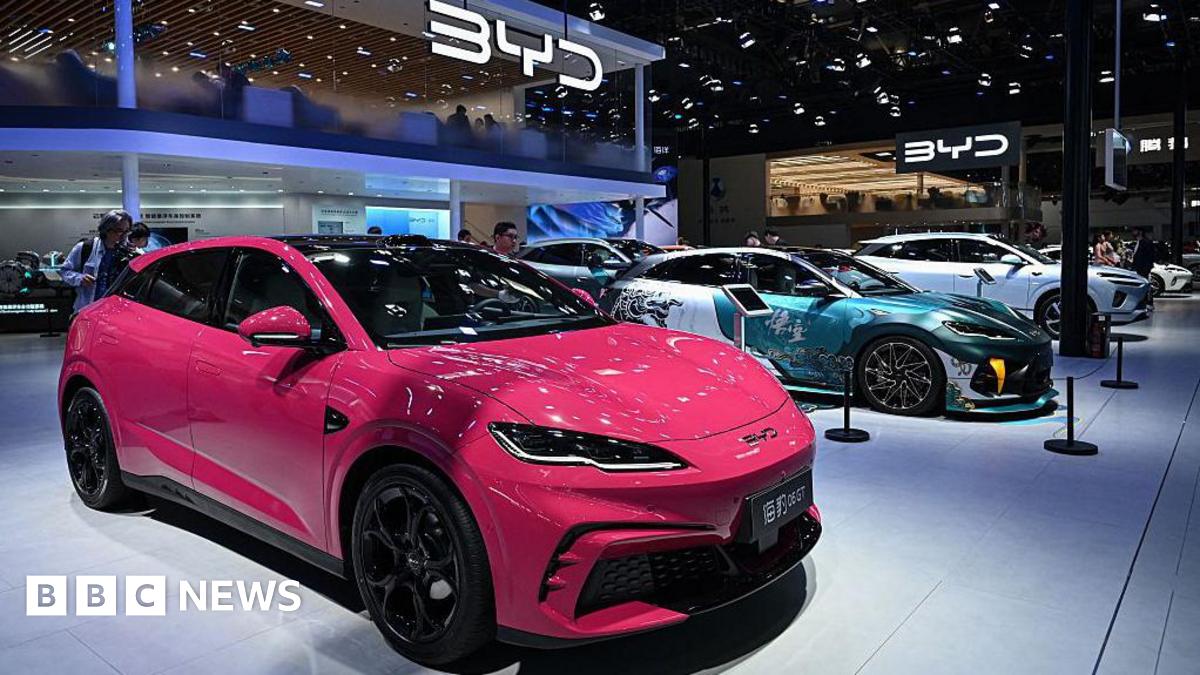
BYD Confident in Global Electric Vehicle Market Growth Despite US Access Limitations
Structured Editorial Report
This report is based on coverage from BBC News and has been structured for clarity, context, and depth.
Key Points
- Global EV demand surges due to rising fuel prices, spurred by the conflict in Iran, creating opportunities for Chinese automakers.
- BYD, a major Chinese car manufacturer, asserts its ability to succeed globally without needing access to the United States market.
- China is the world's largest automotive market and the leading producer of electric vehicles, providing a strong base for its companies.
- BYD's confidence highlights a strategic focus on non-US markets and the resilience of Chinese EV manufacturers amidst geopolitical tensions.
Introduction
The global electric vehicle (EV) market is experiencing a significant surge, driven largely by rising fuel prices exacerbated by international conflicts. This dynamic environment presents substantial opportunities for automotive manufacturers, particularly those based in China. Chinese car giant BYD has expressed strong confidence in its ability to thrive and expand its global footprint, even without direct access to the lucrative United States market, signaling a strategic focus on other regions and an inherent strength in its operational model.
This assertion from a major player like BYD underscores a shifting landscape in the automotive industry, where geopolitical factors and market access limitations are increasingly influencing corporate strategy and global competition. The company's stance highlights a broader trend of Chinese manufacturers asserting independence and projecting resilience in the face of potential trade barriers, positioning themselves as formidable contenders in the burgeoning EV sector worldwide.
Key Facts
The recent escalation in fuel prices, attributed to the ongoing conflict in Iran, has directly stimulated a heightened global demand for electric vehicles. This economic pressure point has created a fertile ground for Chinese car manufacturers to expand their market share and influence. China currently holds the position of the world's largest automotive market and is also the leading producer of electric vehicles, demonstrating its dominant role in the sector.
BYD, a prominent Chinese automaker, has explicitly stated its capacity to succeed globally without needing to enter the United States market. This declaration suggests a strategic pivot or reinforcement of existing plans to focus on other international markets where regulatory and trade conditions may be more favorable. The company's confidence is rooted in its established production capabilities and its competitive positioning within the global EV supply chain.
Why This Matters
BYD's declaration that it can thrive without access to the US market carries significant implications for the global automotive industry, international trade relations, and the future of electric vehicle adoption. Economically, it signals a potential bifurcation of the global EV market, with Chinese manufacturers potentially dominating non-US regions while American and European brands compete intensely within their traditional spheres. This could lead to divergent technological standards and supply chains, affecting economies of scale and global pricing strategies. For consumers outside the US, it could mean a wider array of affordable and technologically advanced EV options from Chinese brands, fostering greater competition and accelerating EV adoption.
Politically, BYD's stance reflects the growing geopolitical tensions and protectionist sentiments, particularly between the US and China. The US has historically imposed tariffs and other barriers on Chinese goods, and the EV sector is no exception, often citing national security or unfair trade practices. BYD's confidence suggests that Chinese companies are increasingly prepared to navigate or bypass these barriers, building self-sufficient ecosystems and focusing on markets less influenced by US policy. This could empower China's industrial policy and its ambition to be a leader in advanced manufacturing, reducing its vulnerability to external pressures.
Socially, the increased availability and competitiveness of Chinese EVs in markets outside the US could accelerate the transition away from fossil fuel vehicles, contributing significantly to global climate goals. However, it also raises questions about labor practices, environmental standards, and data privacy associated with Chinese manufacturing, which could become points of contention for consumer advocacy groups and governments. The success of companies like BYD without US market access demonstrates a growing multipolar world economy, where technological leadership and market influence are no longer solely concentrated in traditional Western powers, compelling other nations to re-evaluate their trade relationships and industrial strategies.
Full Report
The global automotive industry is currently undergoing a profound transformation, with electric vehicles at the forefront of this change. The recent spike in global fuel prices, directly linked to the ongoing conflict in Iran, has significantly accelerated the demand for EVs worldwide. This economic catalyst has created an unprecedented opportunity for Chinese car manufacturers, who are strategically positioned to capitalize on the burgeoning market.
China, already established as the world's largest automotive market, also leads globally in the production of electric vehicles. This dual leadership provides Chinese companies with a formidable home base and a robust manufacturing ecosystem from which to launch international expansion efforts. Among these, BYD, a major Chinese car giant, has publicly articulated its strong belief in its ability to achieve global success and substantial growth even without the necessity of penetrating the United States market.
This declaration by BYD is particularly noteworthy given the significant size and economic importance of the US automotive market. However, it underscores a strategic decision to focus resources and expansion efforts on other regions, potentially including Europe, Southeast Asia, Latin America, and Africa, where market entry might be less encumbered by geopolitical tensions or protectionist policies. The company's confidence is likely bolstered by its vertically integrated supply chain, extensive battery technology expertise, and competitive pricing strategies, which resonate well in diverse international markets.
BYD's strategy reflects a broader trend among Chinese EV manufacturers to build resilient global operations independent of direct US market access. This approach allows them to mitigate risks associated with trade disputes and tariffs, while simultaneously fostering stronger relationships and market shares in other rapidly developing economies. The company's continued innovation in battery technology and diverse EV offerings further strengthens its position to thrive in the evolving global automotive landscape, demonstrating a clear path for sustained growth and influence.
Context & Background
The rise of Chinese automotive manufacturers, particularly in the electric vehicle sector, is a culmination of decades of strategic industrial policy and significant government investment. Beginning in the early 2000s, China identified new energy vehicles (NEVs) as a strategic industry, offering substantial subsidies, tax breaks, and infrastructure development to foster domestic innovation and production. This long-term commitment allowed companies like BYD to develop robust research and development capabilities, particularly in battery technology, which is a cornerstone of EV manufacturing.
BYD, initially a battery manufacturer, leveraged its expertise to pivot into automotive production, creating a vertically integrated model that controls key components of the EV supply chain. This integration provides a significant competitive advantage in terms of cost control, quality assurance, and speed of innovation. Furthermore, the sheer scale of the Chinese domestic market has allowed these companies to achieve economies of scale, refine their products, and build extensive supply networks before venturing into international markets.
Geopolitical factors also play a crucial role in the current landscape. The ongoing trade tensions between the United States and China, characterized by tariffs and restrictions on technology transfer, have prompted Chinese companies to seek alternative growth avenues. While the US market remains attractive, the regulatory hurdles and political climate have encouraged a strategic focus on other regions, fostering a more diversified global presence for Chinese EV brands. This historical trajectory of state support, technological prowess, and adaptive international strategy underpins BYD's current confidence in its global ambitions.
What to Watch Next
Observers should closely monitor BYD's expansion into European and Southeast Asian markets, particularly its market share growth and the reception of its new models in these regions. Key indicators will include sales figures from countries like Germany, Norway, and Thailand, where EV adoption is accelerating. Additionally, watch for any announcements regarding new manufacturing facilities or strategic partnerships outside of China, which would further solidify its global footprint and independence from the US market.
Furthermore, pay attention to the responses from established Western automakers. Their strategies to counter the competitive pressure from Chinese brands in non-US markets will be critical. This includes potential price adjustments, accelerated EV model launches, or increased lobbying efforts for protective measures in their home markets. The evolving regulatory landscape in the European Union regarding EV imports, particularly any discussions around tariffs similar to those imposed by the US, will also be a significant development to track.
Source Attribution
This report draws on coverage from BBC News.
Found this story useful? Share it:
Sources (1)
BBC News
"China car giant BYD says it can thrive without access to US market"
April 25, 2026