Private Credit Market Dynamics: Bargain Hunting and AI Disruption
Compiled from 2 Sources
This report draws on coverage from Bloomberg Markets, Google News Technology and presents a structured, balanced account that notes where outlets differ in their reporting.
Key Points
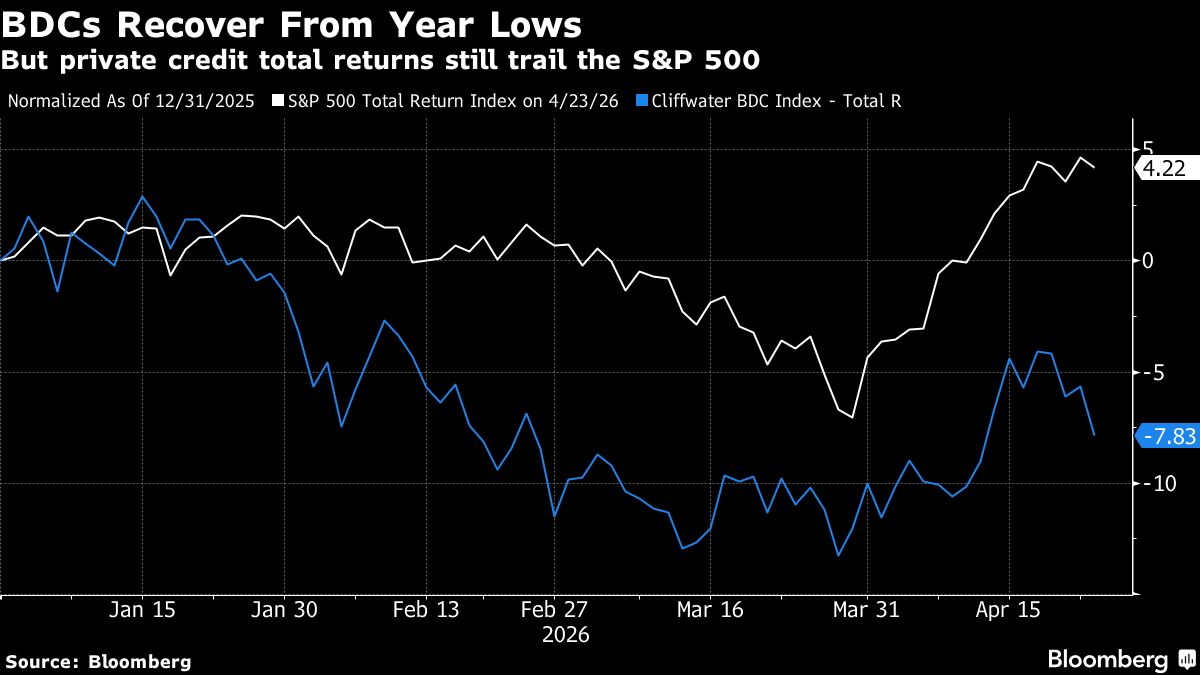
- Bargain hunters are acquiring private lending funds in the stock market, viewing them as cheap by a key measure (Bloomberg Markets).
- Private credit's software lending practices are encountering disruption from artificial intelligence (Google News Technology, citing BIS).
- Investor interest indicates a belief in the undervaluation or growth potential of private credit assets.
- AI is expected to transform operational paradigms, risk assessment, and competitive landscapes within private credit.
- The private credit market is experiencing both significant capital inflows and fundamental technological shifts.
- The Bank for International Settlements highlights the systemic importance of AI's impact on private credit.
Introduction
Recent developments in the private credit market indicate a dual dynamic, characterized by both investor interest in seemingly undervalued assets and a growing awareness of technological disruption. Bargain hunters are actively acquiring private lending funds in the stock market, drawn by what they perceive as attractive valuations based on key financial metrics. This investor activity suggests a belief in the long-term potential or current undervaluation of these private credit instruments, positioning them as appealing opportunities for those seeking advantageous entry points into the market.
Simultaneously, the sector is confronting significant technological shifts, particularly concerning the intersection of private credit's software lending practices and the burgeoning influence of artificial intelligence. This technological facet, highlighted by the Bank for International Settlements, points to a future where AI could fundamentally alter operational paradigms, risk assessment, and competitive landscapes within private credit. These two trends—investor opportunism and technological evolution—underscore a complex and evolving environment for private credit, demanding attention from market participants and regulators alike.
Key Facts
According to Bloomberg Markets, bargain hunters are actively purchasing private lending funds available in the stock market. These investors are motivated by the perception that these assets appear inexpensive when evaluated against a crucial financial measure. The specific metric was not detailed by Bloomberg Markets, but its role in attracting investors suggests a focus on valuation and potential returns.
Google News Technology, citing the Bank for International Settlements (BIS), reported on the convergence of private credit's software lending practices with the disruptive potential of artificial intelligence. This report specifically links the software-driven aspects of private credit to the broader impact of AI, indicating an area of significant technological evolution and potential transformation within the financial sector. The BIS, as a central bank for central banks, lends considerable weight to this observation, highlighting its systemic importance.
Why This Matters
The confluence of bargain hunting in private credit and the impending disruption by artificial intelligence holds substantial implications for the global financial system, investors, and the broader economy. The attraction of bargain hunters, as reported by Bloomberg Markets, signifies a market belief that private credit assets are either undervalued or poised for growth, potentially indicating a shift in capital allocation towards less liquid, higher-yielding investments. This trend could fuel the expansion of the private credit market, providing alternative financing channels for businesses, particularly those underserved by traditional banking. However, it also raises questions about the transparency and liquidity of these investments, especially if a significant volume of capital flows into them based on perceived low prices.
Furthermore, the integration of AI into private credit's software lending, as highlighted by Google News Technology via the Bank for International Settlements, is a transformative development. AI has the potential to revolutionize credit assessment, loan origination, and portfolio management, leading to greater efficiency, reduced operational costs, and potentially more accurate risk pricing. This could democratize access to credit for certain segments while also introducing new forms of algorithmic bias and systemic risks if not properly managed. The implications extend to job markets within financial services, regulatory oversight, and the competitive dynamics between traditional lenders and tech-enabled private credit firms. The intersection of these trends suggests a rapidly maturing and technologically advanced private credit landscape that will demand sophisticated analysis and adaptive strategies from all stakeholders.
Full Report
Bloomberg Markets reported that a notable trend is emerging in the stock market, where investors are actively seeking out and acquiring private lending funds. These investors, characterized as "bargain hunters," are reportedly motivated by the belief that these funds are currently undervalued. The core attraction, as detailed by Bloomberg Markets, stems from these assets appearing "cheap by a key measure." While the specific metric was not elaborated upon, its impact is clearly sufficient to draw significant investor interest, suggesting a strategic move to capitalize on perceived market inefficiencies or future growth potential within the private credit sector. This activity indicates a potential re-evaluation of private credit assets by a segment of the investment community, positioning them as attractive opportunities for capital deployment.
In a distinct but equally significant development, Google News Technology, referencing an analysis from the Bank for International Settlements (BIS), highlighted the evolving landscape of private credit through a technological lens. This report specifically focused on the intersection of "private credit's software lending" capabilities with the "AI disruption." This framing suggests that the private credit industry, which has increasingly relied on sophisticated software for its operations, is now on the cusp of a major transformation driven by artificial intelligence. The BIS's involvement underscores the systemic importance of this technological shift, implying that AI's influence will not be merely operational but could reshape the fundamental structures and risks associated with private credit. The report from Google News Technology, sourced from the BIS, points to a future where AI will play a critical role in how private credit functions, from underwriting to portfolio management.
While Bloomberg Markets emphasizes the financial appeal and investor behavior driven by valuation, Google News Technology, through the BIS, focuses on the technological evolution and its disruptive potential. Bloomberg's perspective is rooted in current market dynamics and investor sentiment, observing an immediate capital flow into private credit funds. In contrast, the Google News Technology report projects a more forward-looking view, addressing the structural changes that AI will bring to the operational and risk management aspects of private credit. There is no direct contradiction between these reports; rather, they illuminate different facets of the same complex market. One describes the 'what' of current investment trends, while the other addresses the 'how' and 'why' of future operational shifts, suggesting a market that is simultaneously attracting traditional investment based on perceived value and undergoing a fundamental technological re-engineering.
Context & Background
Private credit, also known as private debt, refers to non-bank lending, where capital is extended directly to companies by investment funds and other non-bank institutions. This market has grown substantially since the 2008 financial crisis, partly due to increased regulation on traditional banks, which has made them more cautious lenders. This created a vacuum that private credit providers have eagerly filled, offering flexible financing solutions to businesses that might not qualify for conventional bank loans or prefer the speed and bespoke nature of private funding. The assets often include senior debt, mezzanine finance, and venture debt, typically with higher yields than public market alternatives, compensating for their illiquidity.
The rise of software lending within private credit has been a crucial enabler of its expansion. Technology has allowed private credit firms to streamline underwriting processes, manage larger portfolios, and conduct more sophisticated data analysis for risk assessment. This technological backbone has made the industry more efficient and scalable, attracting significant institutional capital. The current discussion around AI disruption, as highlighted by the Bank for International Settlements, builds upon this existing technological infrastructure, suggesting that the next wave of innovation will involve leveraging advanced algorithms to further enhance decision-making, optimize returns, and manage complex credit portfolios, potentially leading to a paradigm shift in how credit is originated and serviced.
What to Watch Next
Market participants should closely monitor the trajectory of investor sentiment towards private credit funds, particularly whether the "bargain hunting" trend identified by Bloomberg Markets continues or intensifies. Observing the performance of these funds, especially those trading at perceived discounts, will offer insights into the accuracy of current valuations and the broader health of the private credit market. Any significant shifts in the key financial measure attracting these investors could signal changes in market confidence or underlying asset quality. Furthermore, the regulatory landscape surrounding private credit, which has historically been less stringent than for traditional banking, will be a critical area to watch, as increased capital flows could prompt greater scrutiny from financial authorities.
On the technological front, the practical implementation and impact of AI in private credit's software lending, as flagged by the Bank for International Settlements, will be a key development. Stakeholders should look for reports and analyses from institutions like the BIS, the International Monetary Fund, and national regulators detailing the adoption rates of AI technologies, their effects on credit risk models, and any emerging regulatory frameworks designed to govern AI's use in lending. The evolution of AI's role will likely manifest in new software solutions, altered operational efficiencies, and potentially new competitive dynamics within the private credit sector, warranting continuous observation for both opportunities and risks.
Source Attribution
This report draws on coverage from Bloomberg Markets and Google News Technology, which cited the Bank for International Settlements.
Found this story useful? Share it:
Sources (2)
Bloomberg Markets
"Cheap Private Credit Funds Draw Bargain Hunters"
April 25, 2026
Google News Technology
"Private credit's software lending meets AI disruption - Bank for International Settlements"
March 16, 2026