Supreme Court Considers LGBTQ+ Family Preschool Access and Sidesteps Transgender Pronoun Case
Compiled from 2 Sources
This report draws on coverage from Advocate.com, USA Today and presents a structured, balanced account that notes where outlets differ in their reporting.
Key Points
- Supreme Court will hear a case on whether LGBTQ+ families' children can be excluded from publicly funded religious preschools.
- Advocate.com highlighted the potential for religious exemptions to deny access to public services for LGBTQ+ families.
- Supreme Court declined to hear a case on transgender student pronoun usage versus parental rights, as reported by USA Today.
- The Court's refusal in the pronoun case leaves lower court rulings in place, avoiding a national precedent on the issue.
- The preschool access case will balance religious freedom claims against anti-discrimination principles in publicly funded programs.
- Both actions by the Court reflect ongoing legal and social tensions surrounding LGBTQ+ rights and educational policies.
Introduction
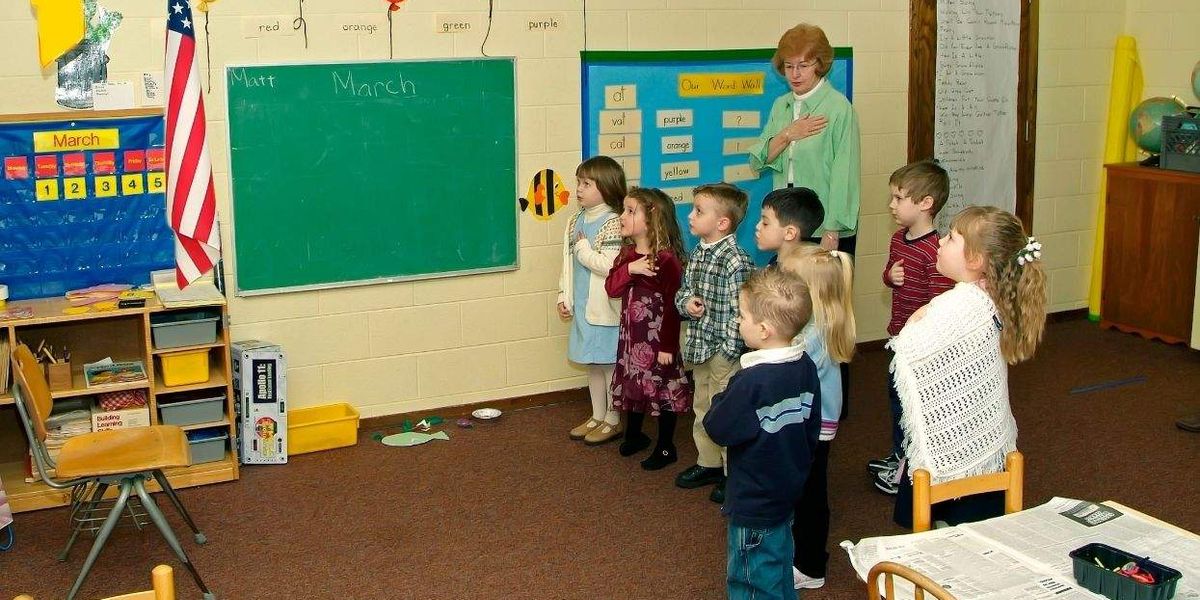
The U.S. Supreme Court is set to hear a significant case that could determine the eligibility of children from LGBTQ+ families for publicly funded preschool programs operated by religious institutions. This development introduces a new legal battle over the intersection of religious freedom and anti-discrimination principles, potentially impacting thousands of families nationwide. Concurrently, the Court has opted not to intervene in a separate, high-profile case concerning transgender student rights and parental authority over school pronoun policies, leaving lower court decisions to stand.
These two distinct actions by the nation's highest court highlight ongoing legal and social tensions surrounding LGBTQ+ rights, parental control in education, and the scope of religious exemptions. The decision to hear the preschool access case signals the Court's willingness to address complex questions about public funding and private religious services, while its refusal to hear the pronoun case indicates a cautious approach to certain aspects of transgender rights at this juncture. Both developments carry substantial implications for civil rights advocates, religious organizations, and educational institutions.
Key Facts
Advocate.com reports that the U.S. Supreme Court will hear a case concerning whether children of LGBTQ+ parents can be excluded from publicly funded preschool programs run by religious schools. This case was noted to be taken up on a Monday, according to Advocate.com. The core issue revolves around the potential for religious exemptions to override anti-discrimination provisions in programs receiving public funds.
In a separate but related development, USA Today reported that the Supreme Court decided not to hear a case involving a school's handling of a student's request to be identified by specific pronouns. This case centered on whether a school violated parents' constitutional right to direct their child's upbringing. By declining to hear this case, the Supreme Court effectively allowed the lower court's ruling to remain in place, avoiding a direct pronouncement on the complex interplay between transgender rights and parental rights in schools.
Why This Matters
The Supreme Court's decision to hear the preschool access case carries profound implications for LGBTQ+ families, potentially shaping their ability to access essential educational services. If religious schools receiving public funds are permitted to deny enrollment to children based on their parents' sexual orientation or gender identity, it could create a two-tiered system of public education, where certain families are excluded from programs their tax dollars support. This directly impacts the well-being and educational opportunities of potentially thousands of children, fostering environments of discrimination and inequality. The outcome will also define the boundaries of religious freedom claims when public funds are involved, setting a precedent for other publicly funded services.
Conversely, the Court's choice to sidestep the transgender pronoun case, as reported by USA Today, means that the legal landscape surrounding parental rights versus student gender identity in schools remains somewhat fragmented, with lower court decisions holding sway for now. While it avoids a potentially divisive national ruling, it also leaves schools, parents, and transgender students without clear, uniform guidance from the highest court. This ongoing uncertainty can lead to continued legal challenges and varying policies across different jurisdictions, affecting the safety, inclusion, and educational experience of transgender youth. Both scenarios underscore the critical role the judiciary plays in defining fundamental rights and liberties in a diverse society, with real-world consequences for families and communities.
Full Report
Advocate.com detailed that the U.S. Supreme Court has agreed to hear a case that could significantly impact LGBTQ+ families by determining whether children of LGBTQ+ parents can be barred from publicly funded preschool programs operated by religious schools. The outlet emphasized that the core of the dispute lies in the tension between religious institutions' claims of autonomy and the principle of non-discrimination in programs supported by taxpayer money. This case, taken up on a Monday, according to Advocate.com, represents a direct challenge to the inclusion of LGBTQ+ families in public services that are outsourced to private religious entities.
In a distinct but equally relevant action, USA Today reported that the Supreme Court declined to hear a case concerning a school's decision to accommodate a student's request for specific pronouns, which parents argued infringed upon their constitutional right to direct their child's upbringing. This refusal means the Court will not issue a definitive ruling on the matter, effectively allowing lower court decisions, which have largely favored schools' abilities to support transgender students, to stand. USA Today's coverage highlighted that this decision avoids a direct confrontation over the complex legal and social issues surrounding transgender rights in schools versus parental authority, a topic that has generated considerable debate nationwide.
While Advocate.com focused exclusively on the preschool access case and its implications for LGBTQ+ families, USA Today's reporting centered on the pronoun case, presenting a different facet of the broader legal landscape concerning LGBTQ+ rights and education. The Advocate.com piece framed its discussion around the potential for exclusion and discrimination against LGBTQ+ parents and their children, underscoring the civil rights aspect. USA Today, on the other hand, framed the pronoun case around the conflict between parental rights and school policies regarding gender identity, without delving into the specific details of the lower court's reasoning or the specific school district involved. The divergent focuses of the two outlets illustrate the multifaceted nature of current legal challenges faced by the LGBTQ+ community and their allies, as well as the different legal theories being tested in courts across the country.
Context & Background
The cases before the Supreme Court emerge from a broader national debate concerning LGBTQ+ rights, religious freedom, and educational policies. Over recent years, there has been an increase in legal challenges asserting religious exemptions from anti-discrimination laws, particularly in contexts involving public funding or services. This trend reflects a growing tension between the First Amendment's protection of religious exercise and the Fourteenth Amendment's guarantee of equal protection under the law. The legal framework often involves balancing these fundamental rights, a task frequently left to the judiciary.
Simultaneously, the rights of transgender individuals, particularly youth, have become a focal point in legislative and judicial arenas. Issues such as bathroom access, sports participation, and pronoun usage in schools have led to numerous lawsuits and policy changes at state and local levels. These disputes often pit evolving understandings of gender identity against traditional views of parental authority and school governance. The Supreme Court's selective engagement with these cases reflects the complexity and sensitivity of these issues, as well as the Court's strategic approach to setting national precedents.
What to Watch Next
For the preschool access case, legal analysts will closely monitor the Supreme Court's oral arguments, which will likely be scheduled for the upcoming term. The arguments will provide insights into the justices' leanings and the specific legal theories being considered. A ruling is expected by June of the following year, which will significantly clarify the extent to which religious institutions can receive public funds while maintaining discriminatory practices against LGBTQ+ families. Civil rights organizations and religious advocacy groups will be preparing amicus briefs and closely following every development.
Regarding the transgender pronoun case, the Supreme Court's decision to deny certiorari means that the lower court's ruling stands, effectively setting a precedent within that specific circuit. While this avoids a national ruling, similar cases are likely to continue arising in other federal circuits and state courts. Advocates for both parental rights and transgender student rights will continue to pursue litigation and legislative efforts at the state level, making state judicial decisions and legislative actions the primary focus for future developments on this particular issue. The legal landscape will remain dynamic, with ongoing challenges expected in various jurisdictions.
Source Attribution
This report draws on coverage from Advocate.com and USA Today.
Found this story useful? Share it:
Sources (2)
Advocate.com
"The Supreme Court is taking up a case that could shut LGBTQ+ families out of preschool"
April 20, 2026
USA Today
"Supreme Court sidesteps pronouns case on trans rights vs. parents rights"
April 20, 2026