South Korean Stock Market Experiences Significant Surge, Samsung Electronics Reaches $1 Trillion Valuation
Compiled from 2 Sources
This report draws on coverage from MarketWatch, Bloomberg Markets and presents a structured, balanced account that notes where outlets differ in their reporting.
Key Points
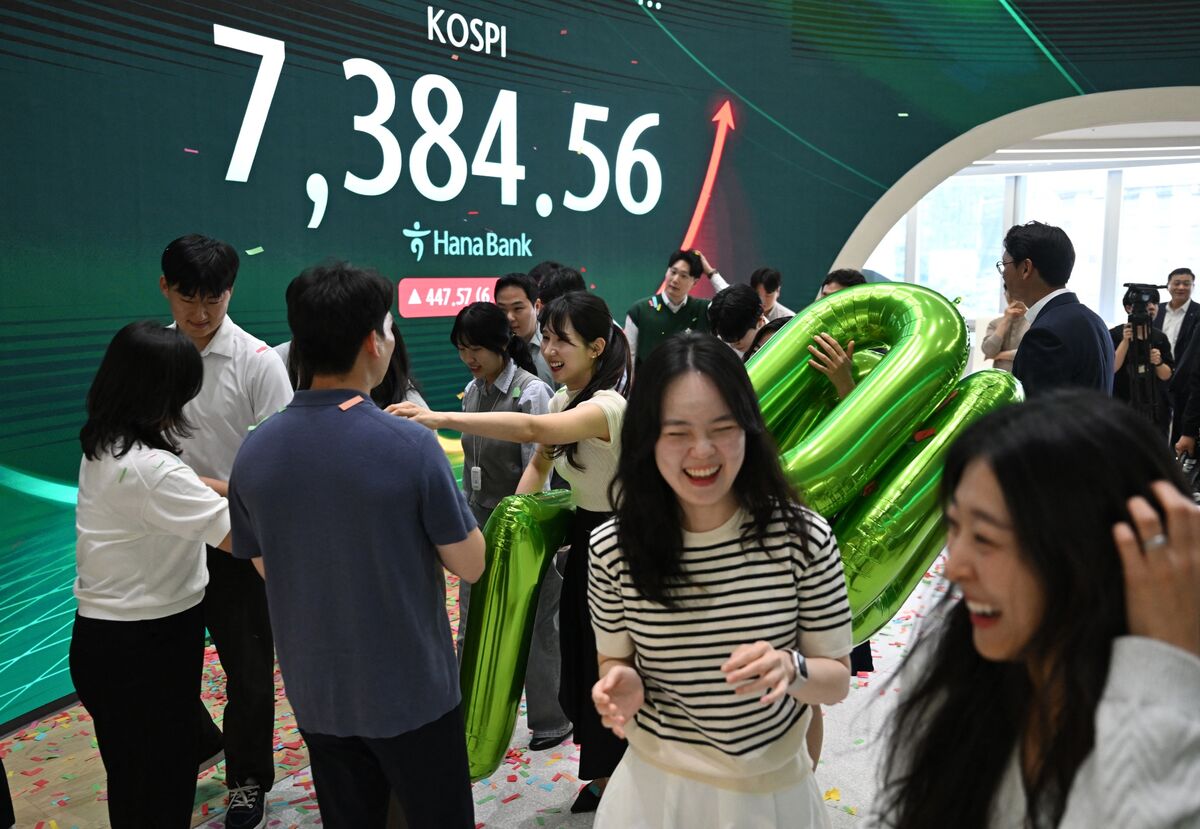
- South Korean stocks increased 6% on Wednesday, contributing to significant market growth.
- Samsung Electronics achieved a market capitalization of $1 trillion, a key milestone.
- The Kospi index has surged 75% this year and nearly tripled over the last 52 weeks.
- Bloomberg Markets noted the 75% gain occurred in less than five months of 2026.
- The market is nearing last year's record 76% gain, indicating sustained high growth.
- The market's performance reflects strong investor confidence and robust economic activity.
- Future monitoring includes quarterly earnings reports and Bank of Korea policy statements.
Introduction
South Korea's stock market has demonstrated exceptional growth, with its benchmark index experiencing a substantial surge in recent trading. This remarkable performance has culminated in Samsung Electronics achieving a market capitalization of $1 trillion, marking a significant milestone for both the company and the broader South Korean equity landscape. The rapid appreciation of stock values has placed the market under international scrutiny, highlighting its robust momentum in the current economic climate. This development underscores a period of intense activity and investor confidence within the region's financial sector, drawing comparisons to previous periods of high growth.
The surge reflects a dynamic period for South Korean equities, with the Kospi index showing unprecedented gains over the past year. The market's trajectory indicates a strong bullish trend, attracting considerable attention from global investors and analysts. The achievement by Samsung Electronics further solidifies its position as a global economic powerhouse and a key driver of the nation's financial prosperity. This confluence of factors paints a picture of a vibrant and rapidly expanding market.
Key Facts
South Korean stocks experienced a 6% increase on Wednesday, as reported by MarketWatch. This surge contributed to Samsung Electronics reaching a market capitalization of $1 trillion, a figure also noted by MarketWatch. The Kospi index, according to MarketWatch, has surged 75% this year and nearly tripled over the last 52 weeks. Bloomberg Markets corroborates the 75% gain for South Korean stocks already in 2026, adding that the market is on the cusp of surpassing last year's world-beating 76% gain, despite 2026 being less than five months old. Both sources agree on the magnitude of the market's current year-to-date performance.
Where Sources Differ
Our analysis of how different outlets reported this story
- MarketWatch frames the market's performance by highlighting specific numerical milestones, such as Samsung Electronics reaching a $1 trillion valuation and the Kospi index nearly tripling over 52 weeks, while Bloomberg Markets emphasizes the market's current year-to-date gain in relation to its previous year's record, which matters because MarketWatch provides concrete, absolute achievements, whereas Bloomberg Markets focuses on the comparative, ongoing momentum against historical performance.
- Bloomberg Markets includes a specific temporal detail, noting that the 75% gain occurred "even though 2026 is less than five months old," which MarketWatch omits, and this matters because Bloomberg Markets provides critical context regarding the speed and intensity of the current year's growth, suggesting an accelerated pace compared to previous periods.
Why This Matters
This substantial surge in the South Korean stock market directly affects several key stakeholders. Investors holding South Korean equities, both domestic and international, are experiencing significant increases in their portfolio values, leading to enhanced wealth and potential for reinvestment. Companies listed on the Kospi, particularly large-cap entities like Samsung Electronics, benefit from increased market valuation, which can facilitate capital raising, improve balance sheets, and enhance their global competitive standing. The South Korean economy as a whole is affected through a bolstered financial sector, potentially leading to increased consumer confidence and economic activity.
Concrete consequences include a measurable increase in national wealth, with the Kospi index's 75% year-to-date gain translating into billions of dollars in added market value. Samsung Electronics' $1 trillion market cap signifies a substantial concentration of economic power and technological leadership within a single entity, which can influence global supply chains and technological innovation. This market performance sets a precedent for the potential for rapid, high-growth cycles in advanced emerging markets, demonstrating that significant capital appreciation can occur within relatively short timeframes, even for already large economies. This performance may encourage further foreign direct investment and portfolio inflows into the region, altering the landscape of global investment flows.
Full Report
South Korean equities have demonstrated extraordinary momentum, with the Kospi index registering a 75% surge this year, according to both MarketWatch and Bloomberg Markets. This rapid appreciation culminated on Wednesday, when South Korean stocks collectively rose another 6%, as reported by MarketWatch. This single-day gain contributed to a remarkable period for the market, which has seen the Kospi index nearly triple over the last 52 weeks, a detail highlighted by MarketWatch.
A significant consequence of this market surge is the achievement of a $1 trillion market capitalization by Samsung Electronics. MarketWatch specifically noted this milestone, underscoring the company's substantial valuation. Bloomberg Markets further contextualized the market's performance by stating that the 75% gain in 2026 has occurred even though the year is less than five months old. This indicates an exceptionally rapid pace of growth, placing the market on track to potentially exceed last year's world-beating 76% gain, as Bloomberg Markets reported.
The consistent upward trajectory of the Kospi index and the record-breaking valuation of Samsung Electronics reflect a period of heightened investor confidence and strong corporate performance within South Korea. The market's ability to sustain such high growth rates, as noted by Bloomberg Markets in comparison to the previous year, suggests underlying economic strength and robust corporate earnings. The focus on specific numerical achievements by MarketWatch, such as the $1 trillion valuation, provides concrete evidence of the scale of this financial expansion.
Context & Background
The current surge in the South Korean stock market builds upon a foundation of robust economic activity and technological leadership. South Korea has long been recognized as a global leader in technology, particularly in semiconductors, electronics, and automotive industries, sectors that often drive significant market capitalization. Companies like Samsung Electronics are at the forefront of these global industries, benefiting from sustained demand for their products and innovations. This technological prowess provides a structural advantage for the nation's equity markets.
Historically, South Korea's economy has demonstrated resilience and adaptability, navigating global economic shifts through strategic industrial policies and a strong export-oriented model. The Kospi index has experienced periods of significant growth driven by both domestic and international factors, including global liquidity, technological advancements, and shifts in consumer behavior. The current performance can be viewed within this broader context of a dynamic economy with a strong track record of innovation and market expansion.
What to Watch Next
Investors and analysts will be closely monitoring the upcoming quarterly earnings reports from key South Korean technology companies, particularly Samsung Electronics, expected in late July. These reports will provide measurable signals regarding the sustainability of current valuations and future growth prospects. Additionally, any statements from the Bank of Korea regarding monetary policy or interest rate adjustments, particularly following their next scheduled meeting in late June, could act as a trigger event for market sentiment. The performance of the broader Kospi index relative to its 76% gain from the previous year, as highlighted by Bloomberg Markets, will serve as a continuous measurable signal for market analysts throughout the remainder of 2026.
Source Attribution
This report draws on coverage from MarketWatch and Bloomberg Markets.
Found this story useful? Share it:
Sources (2)
MarketWatch
"This chart tells the story of the hottest stock market as Samsung values hits $1 trillion"
May 6, 2026
Bloomberg Markets
"Up 75% Already in 2026, Korea’s Stock Market Is Hotter Than Ever"
May 6, 2026