Supreme Court's Voting Rights Decisions Draw Criticism from Civil Rights Leaders and Lawmakers
Compiled from 2 Sources
This report draws on coverage from Raw Story, CBS News and presents a structured, balanced account that notes where outlets differ in their reporting.
Key Points
- The Supreme Court's recent decisions on voting rights have sparked significant criticism from civil rights leaders and lawmakers.
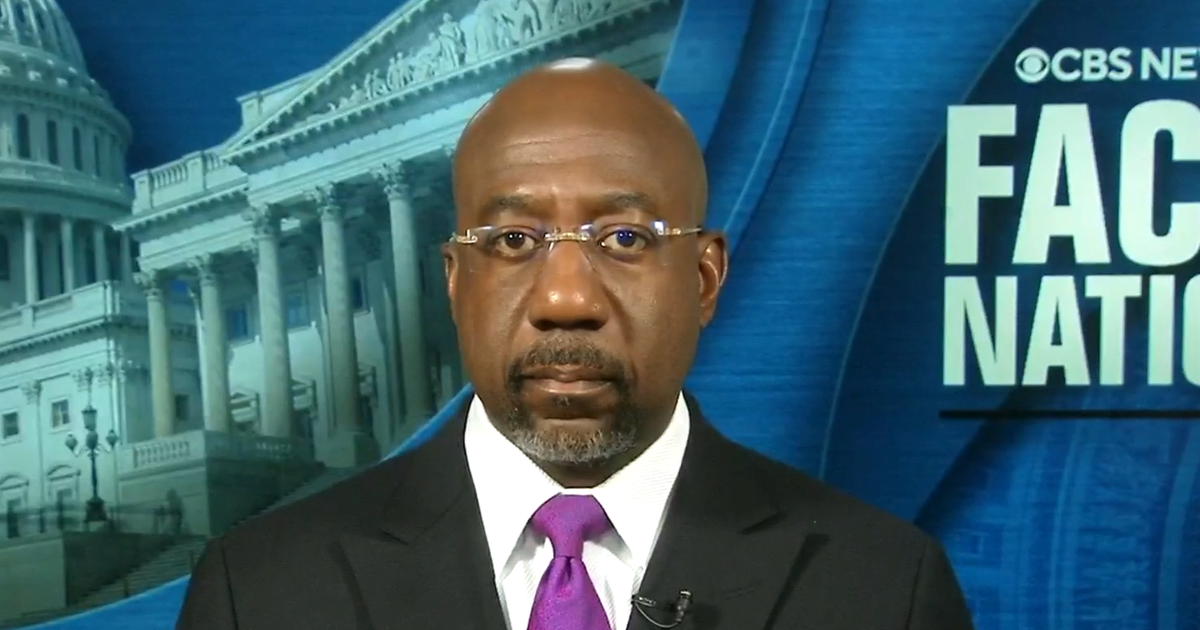
- Sen. Raphael Warnock (D-GA) stated the ruling on Louisiana's congressional map and the Voting Rights Act is a 'massive and devastating blow' (CBS News).
- Warnock specifically noted the decision 'poured fuel on this redistricting arms race' (CBS News).
- A civil rights icon described the Supreme Court's actions as a 'seismic shock,' seeing 'history repeating itself' regarding voter suppression (Raw Story).
- The Louisiana case involved a congressional map with only one majority-Black district despite Black residents making up one-third of the state's population (CBS News).
- The decisions raise concerns about the future of fair representation and access to the ballot for minority communities.
Introduction
Recent decisions by the U.S. Supreme Court concerning voting rights have ignited significant debate and concern among civil rights advocates and political figures. These rulings, particularly one impacting Louisiana's congressional map and the broader interpretation of the Voting Rights Act, are being characterized by some as a setback for racial equity and democratic participation. The discourse surrounding these judicial actions highlights a growing apprehension about the future of voting protections in the United States, drawing parallels to historical struggles for civil liberties.
The Supreme Court's stance has prompted strong reactions, with figures like Senator Raphael Warnock and unnamed civil rights icons expressing profound disappointment and alarm. Their statements underscore a shared belief that the court's actions could exacerbate existing challenges in ensuring fair representation and access to the ballot. This developing situation is prompting a re-evaluation of the legal landscape governing elections and the ongoing efforts to safeguard the foundational principles of American democracy.
Key Facts
Democratic Senator Raphael Warnock of Georgia stated that the Supreme Court's decision last week to strike down Louisiana's congressional map and narrow the Voting Rights Act has "poured fuel on this redistricting arms race," according to CBS News. He further characterized the ruling as "a massive and devastating blow to voting rights in America." CBS News also reported that the Supreme Court's decision was related to a challenge against Louisiana's congressional map, which had only one majority-Black district out of six, despite Black residents comprising one-third of the state's population.
Raw Story reported that a civil rights icon, unnamed in their coverage, described the Supreme Court's recent actions as a "seismic shock." This individual drew a direct parallel between the current judicial climate and historical periods when the U.S. government utilized its power to disenfranchise Black voters. The civil rights icon's comments, as reported by Raw Story, suggest a perception of history "repeating itself" in the context of voting rights.
Why This Matters
The implications of the Supreme Court's recent voting rights decisions extend far beyond legal precedent, touching the core of democratic representation and racial equity in the United States. By narrowing the scope of the Voting Rights Act and impacting redistricting processes, these rulings could significantly alter the political landscape, potentially diminishing the electoral power of minority communities. This directly affects who can vote, how their votes are counted, and ultimately, who represents them in government, raising fundamental questions about fairness and equal access to political participation.
For communities of color, particularly Black Americans, these decisions resonate deeply with a history of systemic disenfranchisement and struggle for civil rights. The ability to elect representatives who genuinely reflect their interests and demographic makeup is crucial for addressing long-standing disparities in areas like education, healthcare, and economic opportunity. A weakening of voting protections can translate into a reduced voice in policy-making, perpetuating cycles of inequality and undermining the promise of a truly representative democracy.
Furthermore, the judicial branch's role in interpreting and enforcing voting rights has profound societal consequences. When the Supreme Court issues rulings that are perceived by civil rights leaders and lawmakers as undermining established protections, it can erode public trust in institutions and intensify political polarization. This creates an environment where the very mechanisms designed to ensure fair elections become sources of contention, potentially leading to increased legal challenges, legislative battles, and heightened social unrest over the fundamental right to vote.
Full Report
Democratic Senator Raphael Warnock of Georgia has voiced strong criticism regarding the Supreme Court's recent decision affecting voting rights, stating it has "poured fuel on this redistricting arms race." CBS News reported that Warnock described the ruling, which struck down Louisiana's congressional map and narrowed the Voting Rights Act, as "a massive and devastating blow to voting rights in America." The specific case involved a challenge to Louisiana's congressional map, which allocated only one majority-Black district out of six, despite Black residents constituting one-third of the state's population, a detail highlighted by CBS News.
In a separate but related commentary, a civil rights icon, whose identity was not disclosed by Raw Story, characterized the Supreme Court's actions as a "seismic shock." This individual expressed concern that these decisions echo historical periods when the U.S. government actively used its authority to prevent Black people from exercising their right to vote. The framing from Raw Story emphasizes a sense of historical recurrence and a potential regression in civil rights progress.
CBS News further elaborated on Senator Warnock's remarks, noting his emphasis on the impact of the decision on the broader landscape of redistricting. His statement suggests that the ruling could encourage more aggressive and potentially discriminatory redistricting efforts across the country. The outlet highlighted Warnock's concern that the decision could empower states to draw electoral maps that dilute minority voting strength, thereby exacerbating existing challenges to fair representation.
The civil rights icon, as reported by Raw Story, underscored the emotional and historical weight of the court's actions. Their perspective frames the current situation not merely as a legal dispute but as a profound threat to the gains made during the Civil Rights Movement. This outlet's reporting focuses on the symbolic and historical resonance of the decisions, portraying them as a significant challenge to the principles of equality and justice that underpin American democracy.
Context & Background
The Supreme Court's recent decisions on voting rights are situated within a long and often contentious history of electoral law in the United States. The Voting Rights Act of 1965 (VRA) was a landmark piece of federal legislation designed to overcome legal barriers at the state and local levels that prevented African Americans from exercising their right to vote. Prior to the VRA, various mechanisms, including poll taxes, literacy tests, and grandfather clauses, were used to disenfranchise Black voters, particularly in the Southern states.
Over the decades, the VRA has been instrumental in challenging discriminatory voting practices, including gerrymandering that dilutes minority voting power. However, the Act has also faced repeated challenges, notably the 2013 Supreme Court decision in *Shelby County v. Holder*, which invalidated a key provision requiring certain states with a history of discrimination to obtain federal preclearance before changing their voting laws. This ruling significantly weakened the VRA's enforcement mechanisms and has been cited by critics as opening the door to new forms of voting restrictions.
The current legal battles often revolve around Section 2 of the VRA, which prohibits voting practices that discriminate on the basis of race, color, or membership in a language minority group. Cases involving congressional redistricting, such as the Louisiana map at the heart of the recent decision, frequently test the interpretation and application of Section 2. These challenges typically involve arguments over whether district lines are drawn to intentionally suppress minority votes or have that effect, even without explicit discriminatory intent.
What to Watch Next
Following these Supreme Court decisions, attention will likely turn to how states, particularly those with significant minority populations, respond to the altered legal landscape for redistricting. Advocates for voting rights are expected to monitor legislative sessions and electoral map drawing processes for any changes that could further dilute minority voting strength. Specific states, especially those with ongoing or anticipated redistricting cycles, will be under scrutiny for their compliance with the narrowed interpretation of the Voting Rights Act.
Further legal challenges against newly drawn congressional or state legislative maps are also highly probable. Civil rights organizations and advocacy groups may initiate new lawsuits, testing the boundaries of the Supreme Court's recent rulings and seeking to establish new precedents within the revised legal framework. The composition of lower federal courts and the willingness of the Supreme Court to revisit these issues in future terms will be critical factors in determining the long-term impact on electoral fairness.
Source Attribution
This report draws on coverage from Raw Story and CBS News.
Found this story useful? Share it:
Sources (2)
Raw Story
"Civil rights icon sees 'history repeating itself' with Supreme Court's 'seismic shock'"
May 3, 2026
CBS News
"Sen. Raphael Warnock says Supreme Court's voting rights decision "poured fuel on this redistricting arms race""
May 3, 2026