
ECB Delays Interest Rate Hike Amid Iran War Economic Impact Assessment
Compiled from 2 Sources
This report draws on coverage from Financial Post, Bloomberg and presents a structured, balanced account that notes where outlets differ in their reporting.
Key Points
- The European Central Bank (ECB) finds no clear justification for an interest rate hike based on current data.
- ECB Chief Economist Philip Lane is overseeing the data assessment regarding the economic impact of the Iran war.
- Policymakers are scrutinizing various economic indicators to pinpoint potential damage from the conflict.
- The current data does not present a 'cast-iron case' to lift interest rates, indicating a cautious approach.
- The ECB's decision reflects a deliberate pause in monetary policy shifts amidst geopolitical uncertainties.
Introduction
The European Central Bank (ECB) is currently assessing a range of economic data to determine the potential impact of the ongoing conflict in Iran on the Eurozone economy. This comprehensive review, spearheaded by Chief Economist Philip Lane, indicates that there is not yet a definitive justification to increase interest rates. The central bank's cautious approach underscores its commitment to evidence-based policy decisions, particularly in the face of geopolitical uncertainties that could significantly alter economic forecasts.
Policymakers within the ECB are meticulously scrutinizing various indicators to gauge the extent of economic damage, if any, before making any adjustments to the current interest rate regime. This careful evaluation suggests a deliberate pause in monetary policy shifts, allowing for a clearer picture of the conflict's broader economic ramifications to emerge. The focus remains on understanding the nuanced effects across different sectors and regions within the Eurozone.
Key Facts
According to both the Financial Post and Bloomberg, the core finding is that the array of data being scrutinized by the European Central Bank (ECB) does not yet present a "cast-iron case" to lift interest rates. This data is specifically being analyzed to pinpoint economic damage stemming from the Iran war. Both outlets highlight that this assessment is being conducted under the guidance of Chief Economist Philip Lane.
Bloomberg's reporting, which is also referenced by the Financial Post, emphasizes that policymakers are actively engaged in this data review. The consistent messaging across both sources points to a shared understanding within the financial news landscape regarding the ECB's current stance: a wait-and-see approach driven by ongoing data evaluation related to geopolitical events.
Why This Matters
The ECB's decision to hold off on interest rate hikes, pending further assessment of the Iran war's economic impact, carries significant implications for the Eurozone's financial stability and economic growth. Interest rates directly influence borrowing costs for businesses and consumers, affecting investment, consumption, and inflation. A premature hike could stifle an already fragile recovery or exacerbate economic slowdowns, while delaying too long could allow inflationary pressures to build unchecked.
For businesses, particularly those reliant on international trade or energy imports, the uncertainty surrounding the geopolitical situation and the ECB's monetary policy creates a challenging environment for planning and investment. Consumers might experience fluctuating prices for goods and services, especially if energy costs are impacted, leading to shifts in purchasing power and overall economic sentiment. The broader implications extend to the stability of the euro, investor confidence in European markets, and the region's competitive standing on the global stage, making the ECB's data-driven approach crucial for navigating complex economic headwinds.
Full Report
The European Central Bank (ECB) is currently engaged in a comprehensive review of economic data, specifically looking for indicators of damage caused by the Iran war, which has not yet yielded a clear justification for an interest rate hike. This assessment is being led by ECB Chief Economist Philip Lane, as reported by both the Financial Post and Bloomberg. The shared headline across both publications, "ECB Finds No Clear Case to Hike Yet on Lane’s Data Dashboard," underscores the consensus on the central bank's current cautious stance.
Both sources agree that the "array of data" being scrutinized is signaling that there is "no cast-iron case to lift interest rates just yet." Bloomberg's reporting, which the Financial Post also cites, indicates that policymakers are actively involved in this ongoing evaluation. While the Financial Post's article is significantly longer, stating "THIS… [+4997 chars]", its summary content provided for this analysis is identical to Bloomberg's shorter excerpt, which concludes with "As policymakers … [+246 chars]". This suggests that the core message regarding the ECB's immediate policy direction and the rationale behind it is consistent across both outlets.
The congruence in reporting between the Financial Post and Bloomberg highlights a unified understanding of the ECB's current strategy. There were no discernible differences in framing or emphasis within the provided snippets; both outlets focused on the lack of a clear case for a rate hike based on the data dashboard overseen by Philip Lane. The extensive length of the Financial Post's full article, compared to Bloomberg's excerpt, implies that the former likely delves into greater detail regarding the specific data points, economic models, or discussions among policymakers, although these specifics are not available in the provided text.
The consistent attribution to Bloomberg in the Financial Post's headline and content further suggests that Bloomberg may have been the original source or a primary contributor to the initial reporting on this specific development. This cross-referencing reinforces the credibility and widespread acceptance of the information within the financial news community, indicating that the market is likely reacting to a well-corroborated assessment of the ECB's position.
Context & Background
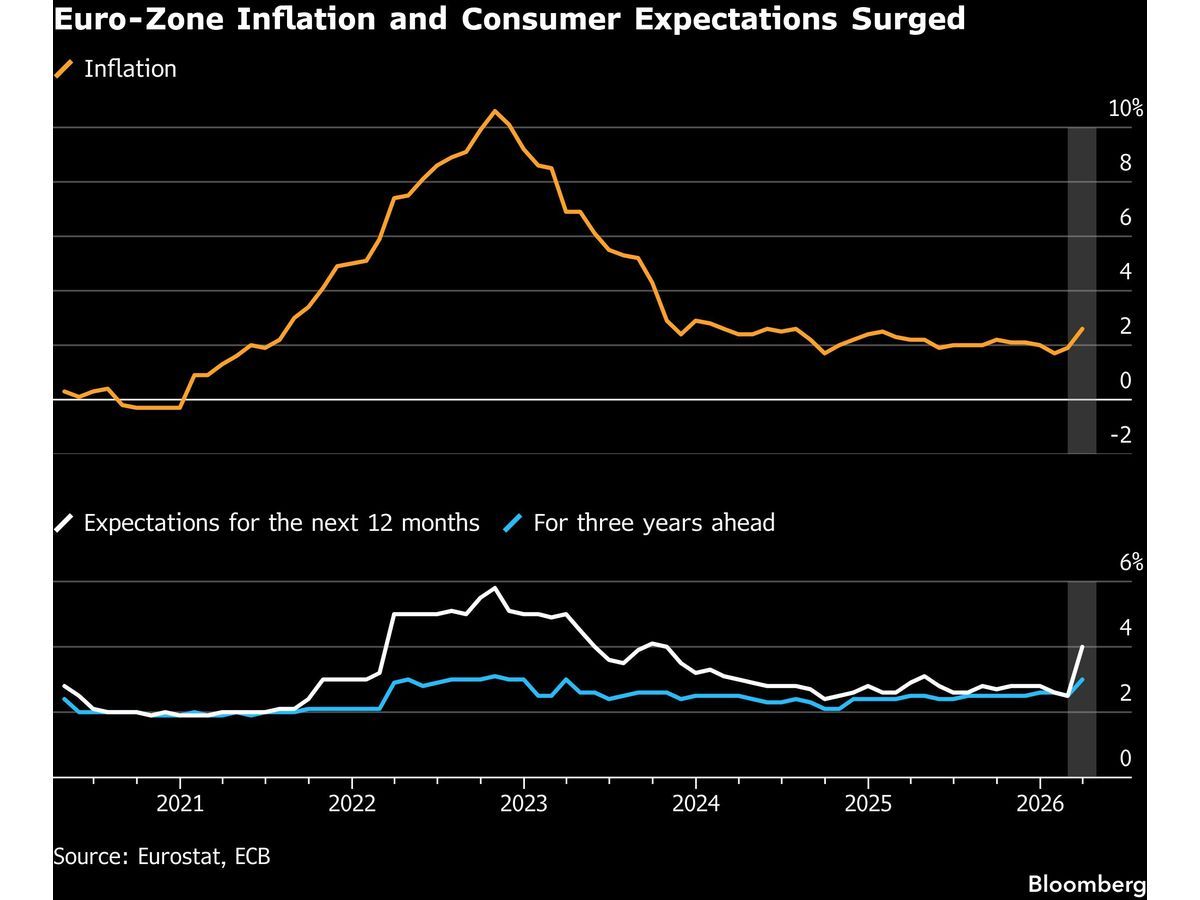
The European Central Bank operates under a primary mandate to maintain price stability within the Eurozone, typically targeting inflation around 2%. In recent years, global economic uncertainties, including supply chain disruptions, energy price volatility, and geopolitical conflicts, have complicated this task. The current assessment regarding the Iran war's economic impact follows a period where central banks globally have been navigating persistent inflationary pressures and the subsequent need for monetary tightening.
Prior to the current geopolitical tensions, the ECB had been carefully adjusting its monetary policy, including interest rate decisions, to balance economic growth with inflation control. The emergence of new conflicts, such as the situation in Iran, introduces fresh variables that can significantly influence energy markets, trade routes, and investor sentiment, thereby directly impacting the Eurozone's economic outlook. The ECB's current data-driven approach reflects a learning from past crises, emphasizing caution and thorough analysis before implementing significant policy shifts that could have widespread consequences.
What to Watch Next
Market participants and economic observers should closely monitor upcoming statements and speeches from ECB officials, particularly those involving Chief Economist Philip Lane, for further insights into the data dashboard's findings. The ECB's next monetary policy meeting, typically accompanied by a press conference, will be a critical event for any potential shifts in interest rate policy or forward guidance. Additionally, economic indicators such as inflation rates, GDP growth figures, and energy prices, especially those related to oil and gas, will be crucial in shaping the ECB's assessment of the Iran war's economic fallout. Any escalation or de-escalation of the conflict itself will also be a key factor influencing the central bank's future decisions.
Source Attribution
This report draws on coverage from the Financial Post and Bloomberg.
Found this story useful? Share it:
Sources (2)
Financial Post
"ECB Finds No Clear Case to Hike Yet on Lane’s Data Dashboard"
April 29, 2026