
Correspondents' Dinner Shooting: Accused Attacker Identified Amid Event Chaos
Compiled from 3 Sources
This report draws on coverage from The Washington Post, BBC News, Associated Press and presents a structured, balanced account that notes where outlets differ in their reporting.
Key Points
- A shooting incident disrupted the White House Correspondents Association dinner on Saturday, attended by President Donald Trump.
- The Washington Post reported immediate chaos, with shouts of 'Get down, get down!' heard among attendees.
- The Associated Press identified the arrested suspect as a highly educated California tutor and amateur virologist.
- BBC News noted Health Secretary RFK Jr.'s presence prior to the incident, expressing hunger for the event to begin.
- The incident prompts a review of security at high-profile events and raises questions about public figure safety.
- Ongoing investigations will focus on the suspect's motives and any potential affiliations, with further details expected.
Introduction
On Saturday, a White House Correspondents Association dinner, attended by President Donald Trump, was disrupted by a shooting incident, leading to immediate chaos and a subsequent arrest. The event, a significant gathering of journalists and political figures, quickly turned from a social occasion into a scene of alarm. The incident prompted a rapid response from security personnel and left attendees seeking cover, marking a dramatic and unexpected turn for the high-profile annual event. This report synthesizes accounts from multiple news organizations to provide a comprehensive overview of the events, the individual arrested, and the broader implications.
The shooting occurred as dignitaries and media professionals were gathered, with the initial moments characterized by confusion and fear. Eyewitness accounts describe a sudden shift from polite conversation to urgent commands for safety. The swift apprehension of a suspect has brought some clarity to the immediate aftermath, though investigations are ongoing into the motives and circumstances surrounding the attack. The incident has raised questions about security protocols at such prominent events and the potential vulnerabilities of public figures.
Key Facts
The shooting incident took place on Saturday during the White House Correspondents Association dinner, an event attended by President Donald Trump, as reported by The Washington Post. The accused attacker has been identified as a highly educated tutor from California, a detail reported by the Associated Press. Social media posts matching the arrested individual suggest he is also an amateur virologist, according to the Associated Press. Prior to the dinner, BBC News noted that Health Secretary RFK Jr. was seen in a small room near the ballroom, expressing hunger and a desire for the event to proceed. The Washington Post described the initial moments of the incident with plates clanging and glasses clinking, followed by shouts of 'Get down, get down!' The Associated Press confirmed the arrest of the California man in connection with the shooting. The incident caused significant disruption and alarm among the attendees, as detailed by all three sources.
Why This Matters
This incident at the White House Correspondents Association dinner carries significant real-world implications, extending beyond the immediate disruption of a social event. Firstly, it underscores persistent concerns regarding the security of high-profile public gatherings, particularly those attended by the President and other senior government officials. The ability of an individual to disrupt such a heavily guarded event raises critical questions for security agencies and event organizers about their protocols and threat assessment capabilities. This could lead to a re-evaluation of security measures at similar future events, potentially impacting access and the overall atmosphere of transparency that such gatherings often aim to foster.
Secondly, the nature of the event—a gathering of journalists and political figures—adds another layer of significance. The Correspondents' Dinner is traditionally a forum for dialogue, even if lighthearted, between the press and the administration. An act of violence at such an event can be perceived as an attack on the institutions of a free press and democratic discourse. This could have a chilling effect on attendance or participation in similar events, or it could galvanize efforts to protect these essential interactions. The incident also highlights the vulnerability of individuals in positions of public visibility, irrespective of their political alignment or professional role.
Finally, the identification of the accused attacker as a highly educated individual with an interest in virology, as reported by the Associated Press, could prompt broader societal discussions about radicalization, mental health, and the pathways to violence, even among seemingly conventional individuals. Understanding the motivations behind such acts is crucial for developing preventative strategies and addressing underlying societal issues that may contribute to such incidents. The event serves as a stark reminder that threats can emerge from unexpected quarters, necessitating constant vigilance and adaptive security strategies in an increasingly complex world.
Full Report
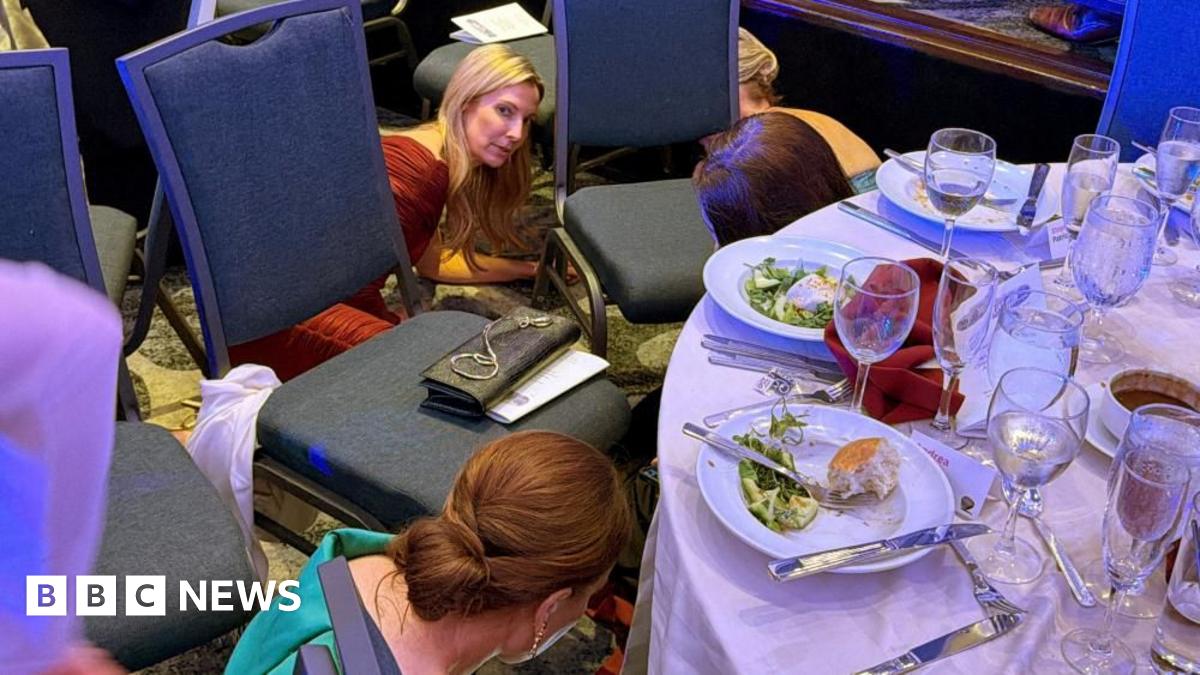
The White House Correspondents Association dinner on Saturday, intended as a celebratory gathering, quickly descended into chaos following a shooting incident. The Washington Post reported that President Donald Trump was seated at the front of the room when the disruption began, characterized by the sound of plates clanging and glasses clinking, followed by urgent shouts of 'Get down, get down!' This immediate reaction from attendees underscored the sudden and alarming nature of the event. The atmosphere shifted abruptly from a formal dinner to one of panic and self-preservation.
Prior to the main event, BBC News noted an observation of Health Secretary RFK Jr. in a small room adjacent to the ballroom. He reportedly expressed hunger and a desire for the event to commence, an detail that provides a brief snapshot of the pre-incident atmosphere, contrasting sharply with the subsequent turmoil. This detail, while seemingly minor, helps to establish the ordinary context from which the extraordinary events unfolded, highlighting the unexpectedness of the attack.
The Associated Press provided crucial details regarding the individual arrested in connection with the shooting. The suspect is identified as a California man, described as a highly educated tutor. Furthermore, social media posts that appear to belong to the arrested individual suggest an interest in amateur virology. This information, unique to the Associated Press's reporting, begins to paint a picture of the alleged perpetrator, moving beyond the immediate incident to the individual involved. The differing emphasis across sources is notable; The Washington Post focused on the immediate chaos and presidential presence, BBC News offered an anecdotal pre-event observation, and the Associated Press concentrated on the identity and background of the accused.
The immediate aftermath involved a swift security response and the apprehension of the suspect. The Washington Post's account of the 'Get down, get down!' shouts illustrates the rapid security directives issued to protect attendees, including the President. The Associated Press's reporting on the arrest of the California man confirms the successful containment of the immediate threat. The incident, while contained, undoubtedly left a lasting impression on all present, transforming a traditional Washington D.C. event into a scene of unexpected danger and prompting widespread concern.
Context & Background
The White House Correspondents Association dinner is an annual event with a rich history, traditionally serving as a platform for the President to engage with the press corps in a less formal setting. Established in 1914, the dinner aims to promote understanding and cooperation between the President and the journalists who cover the White House. Over the decades, it has evolved into a high-profile social event in Washington D.C., attracting not only journalists and politicians but also celebrities. The event typically features a comedic roast by the President and a guest comedian, often used to deliver satirical commentary on politics and media.
This particular dinner marked President Donald Trump's return to the event, as highlighted by The Washington Post. His attendance has been inconsistent during his presidency, making his presence at this specific dinner noteworthy. The event usually draws considerable media attention, not just for its political commentary but also for its guest list and social dynamics. The decision of a sitting President to attend or not attend often carries symbolic weight, reflecting the state of relations between the administration and the press.
The broader context includes an environment where public events, especially those involving prominent political figures, are increasingly vulnerable to security threats. In recent years, there has been a global rise in lone-wolf attacks and incidents of violence targeting public gatherings. This necessitates constant vigilance and adaptation of security protocols, particularly for events that bring together a concentration of high-value targets. The incident at the Correspondents' Dinner, therefore, occurs against a backdrop of heightened security concerns and a complex threat landscape for public figures and institutions.
What to Watch Next
Moving forward, several key developments warrant close observation. The immediate focus will be on the ongoing investigation into the accused attacker. Details regarding the individual's motives, any potential affiliations, and the specific sequence of events leading to the shooting will be critical. Law enforcement agencies will likely release further information as the investigation progresses, including potential charges and court proceedings. The Associated Press's initial reporting on the suspect's background as a tutor and amateur virologist suggests that deeper insights into his personal history and motivations may emerge.
Additionally, the incident is expected to trigger a comprehensive review of security protocols for high-profile events in Washington D.C., particularly those attended by the President and other senior government officials. Event organizers and federal agencies will likely assess vulnerabilities and implement enhanced measures. Any changes to security procedures for future White House Correspondents Association dinners or similar gatherings will be important to monitor, as they could impact access, logistics, and the overall experience of these events. The findings of any internal security reviews will be crucial in shaping future policies.
Finally, the broader public and political discourse surrounding the incident will be noteworthy. Reactions from political figures, media organizations, and the public could influence discussions on gun control, mental health, and the safety of public figures. The incident's long-term impact on the relationship between the press and the presidency, and the perception of such traditional events, will also be a significant area to observe. Any statements or policy proposals emerging from the administration or Congress in response to this event will also be key indicators of its lasting influence.
Source Attribution
This report draws on coverage from The Washington Post, BBC News, and the Associated Press.
Found this story useful? Share it:
Sources (3)
The Washington Post
"Inside the chaotic correspondents’ dinner shooting: ‘Get down, get down!’"
April 26, 2026
Associated Press
"Accused correspondents’ dinner attacker is tutor from California"
April 26, 2026


