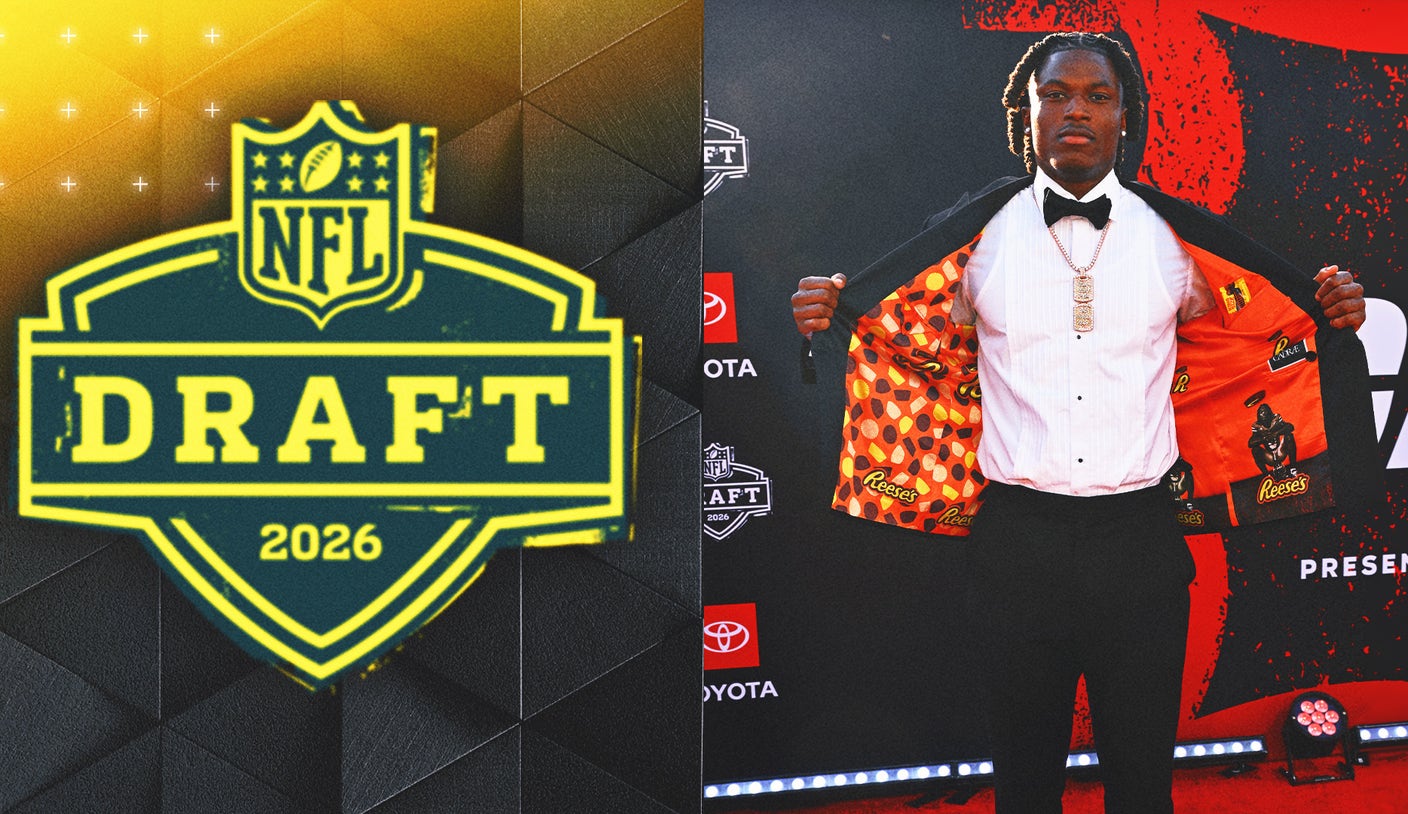
Eagles Trade with Cowboys to Select USC Wide Receiver Makai Lemon at Pick No. 20

Structured Editorial Report
This report is based on coverage from USA Today and has been structured for clarity, context, and depth.
Key Points
- The Philadelphia Eagles traded picks No. 23, 114, and 137 to the Dallas Cowboys.
- In exchange, the Eagles received pick No. 20 and a seventh-round pick from the Cowboys.
- With the 20th overall pick, the Eagles selected wide receiver Makai Lemon from USC.
- The trade is interpreted as potentially signaling the end of the A.J. Brown era in Philadelphia.
- The move indicates the Eagles' strategic intent to bolster their receiving corps and secure a specific talent.
- Lemon's development and the future of A.J. Brown will be key storylines to follow.
Introduction
The Philadelphia Eagles executed a significant trade during the NFL Draft, moving up three spots in the first round by sending picks No. 23, 114, and 137 to their division rival, the Dallas Cowboys. This strategic maneuver allowed the Eagles to secure the 20th overall selection. With this pick, Philadelphia drafted wide receiver Makai Lemon from the University of Southern California (USC), a move that has immediately sparked considerable discussion regarding the future composition of the team's receiving corps.
The acquisition of Lemon, a highly-touted prospect, comes amidst speculation surrounding the long-term tenure of established Eagles wide receiver A.J. Brown. The trade, involving a direct exchange with a key NFC East competitor, underscores the Eagles' perceived urgency in addressing their roster needs and potentially signals a shift in their offensive strategy or personnel planning. This development marks a pivotal moment for both the Eagles' draft class and the potential trajectory of their upcoming seasons.
Key Facts
The Philadelphia Eagles initiated a trade with the Dallas Cowboys, exchanging three draft selections for an earlier first-round pick and an additional late-round selection. Specifically, the Eagles sent picks No. 23 (first round), No. 114 (fourth round), and No. 137 (fifth round) to the Cowboys. In return, Philadelphia received pick No. 20 (first round) and a seventh-round pick from Dallas. Utilizing the 20th overall selection, the Eagles drafted wide receiver Makai Lemon, who played collegiately at the University of Southern California (USC).
This transaction positions Lemon as the newest addition to the Eagles' roster, joining a receiving unit that includes prominent players. The trade involved a direct divisional rival, a factor that often adds an additional layer of intrigue to such transactions in professional sports. The immediate aftermath of the trade has led to widespread commentary suggesting potential implications for the Eagles' current receiving personnel, particularly regarding the future of A.J. Brown.
Why This Matters
This trade carries substantial implications for the Philadelphia Eagles' roster construction, offensive scheme, and long-term financial planning. By investing a first-round pick in Makai Lemon, the Eagles are signaling a commitment to bolstering their receiving talent, which could either complement existing stars or serve as a contingency for potential future departures. The decision to trade up, especially with a divisional rival like the Cowboys, highlights a strategic imperative to secure a specific player, indicating Lemon was high on their draft board and considered a key piece for their future.
Furthermore, the move directly impacts the perception and reality of the Eagles' receiving room. The source explicitly states that this trade "will certainly signal the end of the A.J. Brown era in Philadelphia." If this assessment holds true, it would represent a monumental shift for the Eagles, as Brown has been a cornerstone of their offense since his arrival. Such a change would necessitate Lemon stepping into a significant role sooner rather than later, placing immense pressure on his development and performance.
Beyond individual player implications, this trade also reflects the competitive dynamics within the NFC East. Trading valuable draft capital, including multiple mid-round picks, to a direct competitor like the Cowboys for a marginal move up in the first round suggests a calculated risk. It underscores the high stakes involved in securing top-tier talent in a highly competitive league and the willingness of teams to make bold moves to gain an edge, even if it means aiding a rival in the process by providing them with additional draft assets.
Full Report
The Philadelphia Eagles executed a notable draft-day trade, moving up from the 23rd overall pick to the 20th overall pick in the first round. This strategic ascent was achieved through a transaction with their NFC East rivals, the Dallas Cowboys. The Eagles sent their 23rd pick, along with their 114th (fourth-round) and 137th (fifth-round) selections, to Dallas. In exchange, Philadelphia received the 20th overall pick and a seventh-round pick from the Cowboys, effectively consolidating their draft capital to target a specific player.
With the 20th selection, the Eagles officially drafted wide receiver Makai Lemon from the University of Southern California (USC). Lemon's selection immediately became a focal point of discussion, particularly concerning its potential impact on the Eagles' existing wide receiver depth chart. The trade and subsequent pick were widely interpreted as a strong indication of impending changes to the team's receiving corps, with the USA Today source explicitly stating that this move "will certainly signal the end of the A.J. Brown era in Philadelphia."
This commentary suggests that the Eagles may be preparing for a future without A.J. Brown, a prominent figure in their offense. Such a development would elevate Lemon's importance and potential role within the team's offensive scheme. The decision to trade multiple mid-round picks to move up only three spots in the first round, and to do so with a division rival, highlights the Eagles' conviction in Lemon's talent and their perceived need to secure him ahead of other teams.
Lemon's collegiate career at USC showcased his abilities as a dynamic pass-catcher, and his transition to the professional level will be closely watched. The Eagles' front office has a history of making aggressive moves in the draft to secure players they highly value, and this trade aligns with that pattern. The acquisition of Lemon is expected to inject new talent and competition into the wide receiver group, potentially reshaping the team's offensive identity in the coming seasons.
Context & Background
The Philadelphia Eagles have historically demonstrated an aggressive approach to roster management and draft strategy, frequently engaging in trades to move up or down the draft board to acquire specific talent. This philosophy often involves prioritizing high-upside prospects, even if it means sacrificing multiple mid-round picks. The team's recent success has been built, in part, on a willingness to make bold personnel decisions, including significant trades for established stars and strategic draft selections.
In recent years, the Eagles have invested heavily in their wide receiver position, acquiring top-tier talent to support their quarterback. The arrival of A.J. Brown, through a high-profile trade, significantly elevated the team's passing game and contributed to their offensive prowess. However, the nature of NFL contracts and the constant need to manage the salary cap often lead to difficult decisions regarding veteran players, especially when promising young talent becomes available through the draft.
The dynamic within the NFC East, where the Eagles and Cowboys maintain a fierce rivalry, adds another layer of context to this trade. Transactions between these two teams are relatively uncommon for significant draft capital, making this particular exchange noteworthy. Such moves often reflect a strong belief in the targeted player's potential, as teams are typically reluctant to provide rivals with assets that could strengthen them in the long run.
What to Watch Next
Moving forward, observers will closely monitor Makai Lemon's integration into the Philadelphia Eagles' offense during rookie minicamps, organized team activities (OTAs), and training camp. His performance in these early stages will provide initial insights into his readiness for the professional game and his potential role in the upcoming season. Specific attention will be paid to his chemistry with the starting quarterback and his ability to grasp the team's playbook.
Concurrently, the situation surrounding A.J. Brown will be a critical development to watch. Any official statements from the Eagles' general manager or head coach regarding Brown's future, or any reports of potential trade discussions, will be significant. The team's financial maneuvering leading up to the start of the regular season, particularly concerning contract adjustments or extensions, could also provide clues about their long-term plans for their receiving corps and whether the predicted departure of Brown materializes.
Source Attribution
This report draws on coverage from USA Today.
Found this story useful? Share it:
Sources (1)
USA Today
"Eagles trade with Cowboys at pick No. 20 to select USC WR Makai Lemon"
April 24, 2026