Virginia Redistricting Approved, Potentially Shifting Midterm Election Dynamics
Structured Editorial Report
This report is based on coverage from BBC News and has been structured for clarity, context, and depth.
Key Points
- Virginia has approved new redistricting maps, which are widely seen as giving an electoral advantage to Democrats in the upcoming midterms.
- This move could challenge the historical trend of the president's party losing House seats during midterm elections.
- A strong Democratic performance in Virginia, influenced by these maps, would be a significant blow to former President Trump's political influence.
- The redistricting highlights the critical role of boundary drawing in shaping national political outcomes and the balance of power.
- The November midterm elections in Virginia will serve as a key test for the impact of these newly drawn congressional districts.
Introduction
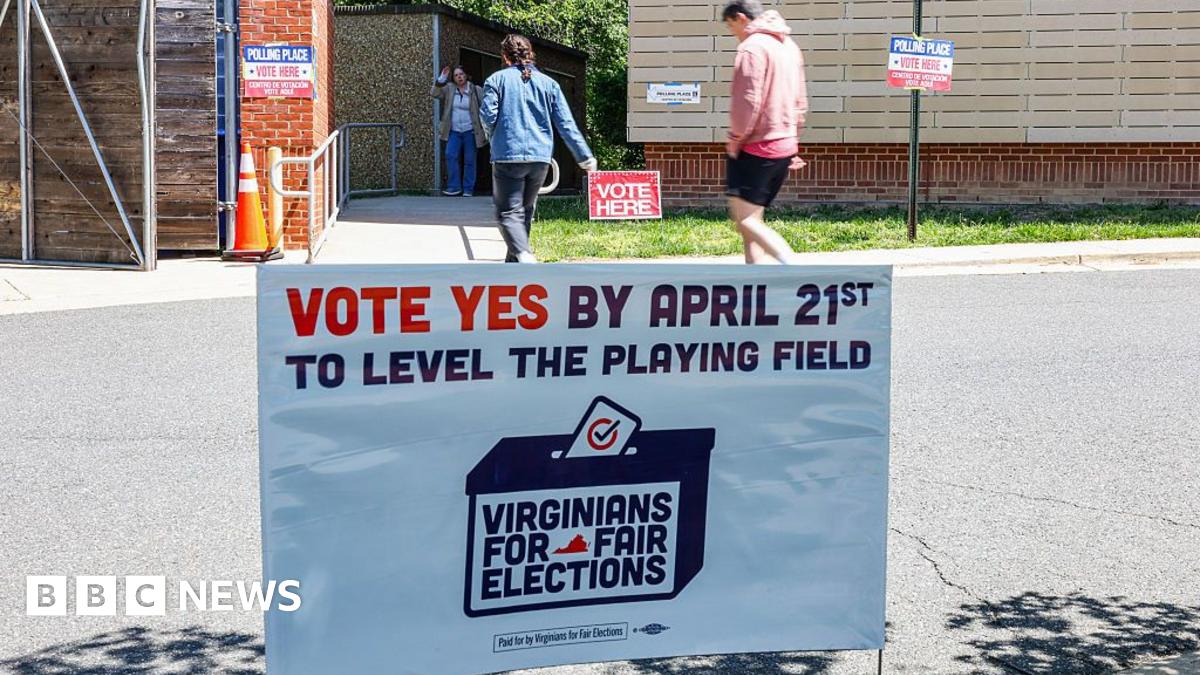
The Commonwealth of Virginia has recently enacted new redistricting maps, a move that political analysts suggest could significantly alter the landscape of the upcoming congressional midterm elections. This development is particularly noteworthy given historical trends where the party occupying the White House typically experiences losses in House seats during these off-year contests. The newly drawn districts are widely perceived to offer a strategic advantage to Democratic candidates, potentially enabling them to defy conventional wisdom and secure victories in November.
Should the Democrats succeed in leveraging these new district boundaries to their benefit, it would represent a substantial political setback for former President Donald Trump and his enduring influence within the Republican Party. The outcome in Virginia, a state that has seen increasing political polarization and shifting demographics, is therefore being closely watched as a bellwether for national political sentiment and the efficacy of redistricting efforts in shaping electoral results.
Key Facts
The core development is the approval of new redistricting maps in Virginia. These maps are designed to delineate the boundaries of congressional and state legislative districts for the next decade. Political observers and analysts have widely interpreted these new boundaries as providing a strategic electoral advantage to the Democratic Party. This assessment is based on demographic data and voting patterns within the newly configured districts. Historically, the party of the sitting U.S. President tends to lose seats in the House of Representatives during midterm elections, a pattern that the Virginia redistricting could potentially disrupt. A Democratic victory in the November elections, particularly if influenced by these new maps, would be seen as a significant blow to the political standing and influence of former President Donald Trump.
Why This Matters
This redistricting effort in Virginia carries profound implications, extending far beyond the state's borders and into the national political arena. For the Democratic Party, a successful outcome in Virginia's midterm elections, bolstered by these new maps, could provide crucial momentum and potentially help them retain or even expand their slim majority in the House of Representatives. This would be a significant counter-narrative to the historical trend of the president's party losing seats in midterms, offering a blueprint for how strategic redistricting can mitigate national political headwinds. Conversely, for the Republican Party, a loss of ground in Virginia, especially if attributed to the new maps, would necessitate a re-evaluation of their electoral strategies and their approach to state-level redistricting battles.
Beyond partisan considerations, the Virginia redistricting highlights the enduring power of geographical boundary drawing in shaping democratic outcomes. It underscores how seemingly technical processes can have monumental impacts on representation, policy-making, and the balance of power. Citizens within these newly drawn districts will find their votes potentially carrying different weight or being grouped with different communities of interest, which can affect their access to elected officials and the responsiveness of their representatives. This process also raises questions about the fairness and impartiality of redistricting, even when undertaken by non-partisan commissions, as the political ramifications are undeniable. The outcome in Virginia will serve as a case study for future redistricting efforts across the nation, demonstrating the potential for such changes to either entrench or challenge existing political power structures.
Full Report
The recent approval of new redistricting maps in Virginia has set the stage for a potentially transformative midterm election cycle, with analysts suggesting a notable shift in favor of the Democratic Party. This development is particularly salient against the backdrop of historical electoral patterns, which typically see the incumbent president's party experience a reduction in its House representation during midterm contests. The strategic redrawing of district lines in Virginia could, however, provide Democrats with a crucial advantage, potentially allowing them to defy this long-standing trend and secure unexpected victories in the November elections.
The implications of these new maps extend to the national political landscape, particularly concerning the influence of former President Donald Trump. A strong performance by Democrats in Virginia, facilitated by the redistricting, would not only bolster their congressional standing but also represent a significant challenge to Trump's continued political sway within the Republican Party. This scenario would underscore the importance of state-level electoral mechanics in shaping broader national political narratives and power dynamics.
The redistricting process itself in Virginia has been a complex and often contentious affair, reflecting the intense partisan stakes involved in drawing electoral boundaries. While the specifics of the map-drawing process, such as whether it involved an independent commission or legislative action, are crucial context, the ultimate outcome has been widely interpreted as beneficial to Democrats. This perception stems from an analysis of how population shifts, demographic changes, and voting histories have been incorporated into the new district configurations, creating more favorable conditions for Democratic candidates in key areas.
This situation in Virginia is a microcosm of the broader national battle over redistricting, often referred to as gerrymandering, where both major parties seek to draw maps that maximize their electoral advantage. The outcome of these efforts can determine control of state legislatures and congressional delegations for the next decade. The Virginia case illustrates how even in states with evolving political landscapes, strategic redistricting remains a powerful tool that can profoundly influence election results and the balance of power, making the November elections in the state a critical barometer for national political trends.
Context & Background
Redistricting in the United States is a constitutionally mandated process that occurs every ten years following the decennial census. Its purpose is to redraw electoral district boundaries to reflect population changes, ensuring that each district has roughly the same number of residents and that communities are fairly represented. Historically, this process has often been highly politicized, with state legislatures typically holding the power to draw these maps, frequently leading to gerrymandering—the practice of drawing districts to favor one political party over another.
Virginia's approach to redistricting has undergone significant changes in recent years, moving towards reforms aimed at reducing partisan influence. While the specific details of whether an independent commission or a legislative body ultimately approved these maps are crucial, the broader context is a national reckoning with the fairness of electoral maps. Many states have grappled with how to balance population equality with preserving communities of interest, all while navigating intense partisan pressures. The current political climate, marked by deep divisions and high stakes for control of Congress, amplifies the importance of every state's redistricting outcome, making Virginia's recent approval a key development in the ongoing national political struggle.
What to Watch Next
The immediate focus will be on the upcoming November midterm elections in Virginia. Political analysts and campaigns will closely monitor how the newly drawn district lines translate into actual voter behavior and election results. Specific congressional races within Virginia, particularly those in districts that saw significant boundary changes, will be critical indicators of the maps' impact. Observers should watch for any shifts in voter turnout, the competitiveness of races previously considered safe, and the demographic composition of winning coalitions.
Beyond the November elections, the long-term implications of these maps will be assessed over the next decade. Future elections, both federal and state, will provide further data on the lasting effects of this redistricting cycle. Additionally, potential legal challenges to the new maps, though not explicitly mentioned, are always a possibility in such processes and could emerge if aggrieved parties believe the maps violate state or federal law. The political strategies adopted by both Democrats and Republicans in response to these new boundaries will also be a key area of observation.
Source Attribution
This report draws on coverage from BBC News.
Found this story useful? Share it:
Sources (1)
BBC News
"Virginia approves redistricting, giving Democrats edge in midterms"
April 22, 2026