
Jitter Done Tool Aims to Personalize Caffeine Metabolism Understanding for Improved Sleep and Well-being
Structured Editorial Report
This report is based on coverage from Jitterdone.com and has been structured for clarity, context, and depth.
Key Points
- Jitter Done is a new online tool designed to help users track and understand their personal caffeine metabolism.
- The tool allows users to input daily caffeine consumption and adjust for their individual caffeine half-life (2-10 hours).
- It visualizes caffeine levels in the body, advising users to keep levels below 100mg, ideally under 30mg, before bedtime.
- Understanding individual caffeine metabolism is crucial for improving sleep quality, productivity, and overall health.
- The platform aims to democratize access to personalized health information, empowering users to optimize caffeine intake.
Introduction
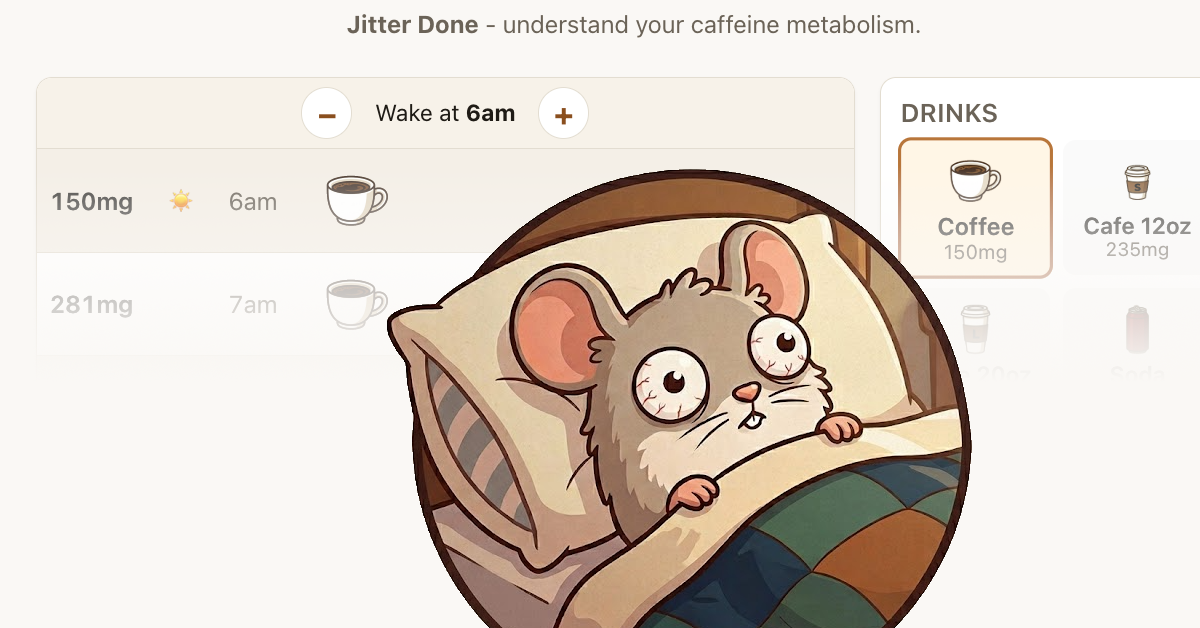
A new online tool, "Jitter Done," has been introduced by Jitterdone.com, designed to help individuals better understand their personal caffeine metabolism and its impact on their sleep patterns and overall well-being. This innovative platform allows users to graphically track their daily caffeine consumption and adjust for their metabolic rate, providing a visual representation of how caffeine levels fluctuate in their system throughout the day. The primary goal is to empower users to optimize their caffeine intake, particularly by ensuring levels are sufficiently low before bedtime to prevent sleep disruption.
The tool addresses a common challenge faced by many caffeine consumers: the often-unseen residual effects of caffeine that can persist for hours, even after the stimulating effects have worn off. By offering a personalized approach to understanding caffeine half-life, Jitter Done aims to demystify the science behind caffeine's physiological impact, enabling users to make more informed choices about their daily consumption. Its simple, interactive interface makes complex metabolic concepts accessible to a broad audience, fostering healthier habits.
Key Facts
The Jitter Done tool operates on a simple, interactive principle: users input their daily caffeine consumption by clicking or dragging on a timeline. A critical recommendation provided by the tool is to maintain caffeine levels below 100mg, and ideally below 30mg, before going to bed. A core feature allows users to adjust the caffeine half-life parameter, which is typically between 2 to 10 hours, to reflect their individual metabolic rate. This customization is crucial because genetic factors, liver health, and other physiological aspects can significantly alter how quickly an individual processes caffeine.
For instance, a person with a fast metabolism might have a half-life closer to 2 hours, meaning half the caffeine is eliminated from their system in that timeframe. Conversely, someone with a slower metabolism might experience a half-life closer to 10 hours, indicating that caffeine remains in their system for much longer. The tool visualizes these dynamics, showing the estimated caffeine concentration in the user's body over a 24-hour period. This visual feedback is intended to help users identify patterns of consumption that might be detrimental to their sleep quality, guiding them towards more beneficial habits.
Why This Matters
Understanding one's personal caffeine metabolism is not merely an academic exercise; it has profound real-world implications for public health, productivity, and quality of life. Poor sleep, often exacerbated by ill-timed caffeine consumption, is a widespread issue contributing to numerous health problems, including cardiovascular disease, diabetes, obesity, and mental health disorders. By providing a clear, personalized insight into how caffeine affects an individual's body, Jitter Done offers a practical solution to mitigate these risks, potentially improving sleep quality for millions.
Beyond individual health, the societal impact of optimized caffeine use could be substantial. A well-rested workforce is a more productive workforce, leading to economic benefits through reduced absenteeism and increased efficiency. Furthermore, better sleep can enhance cognitive function, decision-making, and overall mood, contributing to a more engaged and healthier society. Tools like Jitter Done democratize access to personalized health information, empowering individuals to take proactive steps towards better self-care without requiring expensive medical consultations or complex genetic testing.
Full Report
The Jitter Done tool, accessible via Jitterdone.com, presents a user-friendly interface designed to demystify the complex pharmacokinetics of caffeine. Upon visiting the site, users are greeted with an interactive timeline where they can log their caffeine intake. This can be done by simply clicking on specific times to add a standard dose or by dragging to adjust the amount and duration of consumption. The immediate visual feedback, showing a declining curve representing caffeine concentration in the body, is central to the tool's educational value.
The core functionality revolves around the adjustable "half-life" parameter. The tool explains that caffeine's half-life, the time it takes for half of the substance to be eliminated from the body, typically ranges from 2 to 10 hours. This wide range accounts for individual variations influenced by genetics, age, liver function, and even medication use. Users are encouraged to experiment with this setting to find what best reflects their personal experience with caffeine, noting how different half-lives dramatically alter the residual caffeine levels at bedtime.
For example, a user consuming 200mg of caffeine at 9 AM with a 5-hour half-life would still have approximately 25mg of caffeine in their system 15 hours later at midnight. If that same user had an 8-hour half-life, they would still have around 50mg of caffeine present, significantly impacting their ability to fall asleep and achieve restorative rest. The tool explicitly advises users to aim for caffeine levels below 100mg, and ideally under 30mg, before sleep, providing a concrete target for optimization.
The development of Jitter Done stems from a growing public awareness regarding the pervasive impact of caffeine on sleep and overall health. While caffeine is widely consumed for its stimulating effects, many individuals are unaware of how long it remains active in their system, leading to chronic sleep deprivation. By offering a simple yet powerful visualization, Jitter Done seeks to bridge this knowledge gap, enabling users to make informed adjustments to their caffeine habits and ultimately foster healthier sleep hygiene.
Context & Background
Caffeine, the world's most widely consumed psychoactive substance, has been a part of human culture for centuries, primarily through beverages like coffee, tea, and energy drinks. Its stimulant properties, which block adenosine receptors in the brain, are well-documented, leading to increased alertness and reduced fatigue. However, the understanding of its precise metabolic pathway and individual variability in processing has evolved significantly over time, moving beyond a one-size-fits-all approach.
Scientific research over the past few decades has highlighted the critical role of genetics, particularly the CYP1A2 gene, in determining how quickly an individual metabolizes caffeine. "Fast metabolizers" process caffeine rapidly, while "slow metabolizers" retain it for much longer. This genetic predisposition, combined with other factors like liver health, age, and pregnancy, creates a highly individualized response to caffeine. Prior to tools like Jitter Done, understanding one's personal caffeine half-life often required specialized testing or extensive self-experimentation, which was not readily accessible to the general public.
The rise of sleep science and public health campaigns emphasizing the importance of sleep has also provided a fertile ground for tools that address sleep disruptors. Given that caffeine is a primary culprit for many individuals struggling with insomnia or poor sleep quality, an intuitive tool that helps manage its intake aligns perfectly with current health trends. Jitter Done emerges as a practical application of this scientific understanding, translating complex physiological data into an actionable format for everyday users.
What to Watch Next
As digital health tools gain traction, it will be important to observe the adoption rate and user feedback for platforms like Jitter Done. Future developments could include integration with wearable devices that track sleep patterns, allowing for a more direct correlation between caffeine intake and sleep quality metrics. Such integrations could provide even more personalized recommendations, potentially adjusting the estimated half-life based on actual sleep data rather than user-inputted estimates.
Furthermore, the evolution of personalized medicine and nutrigenomics may lead to more sophisticated versions of these tools, perhaps incorporating genetic testing results to provide an even more accurate baseline for individual caffeine metabolism. Researchers and developers in the digital health space will likely explore partnerships with sleep clinics or wellness programs to validate the effectiveness of such tools in improving sleep outcomes. The broader trend towards self-monitoring and data-driven health management suggests a continued expansion of similar applications designed to empower individuals in managing their daily habits for better health.
Source Attribution
This report draws on coverage from Jitterdone.com.
Found this story useful? Share it:
Sources (1)
Jitterdone.com
"Show HN: Jitter Done – a simple tool to understand your caffeine metabolism"
April 18, 2026