
Strait of Hormuz Reopens Amid Regional Tensions; US Navy Seizes Iranian Tanker
AI-Synthesized from 2 Sources
ClearWire's AI read coverage of this story from Crypto Briefing, The Times of India and synthesized a single balanced, unbiased summary that cites each outlet where their reporting differs.
Key Points
- The Strait of Hormuz reopened for commercial vessels on Friday, according to The Times of India.
- The reopening followed a 10-day ceasefire between Israel and Lebanon, as reported by The Times of India.
- The Times of India noted the reopening briefly lifted oil markets and drew optimism from Washington, but came "with strings attached."
- Crypto Briefing reported the US Navy seized an Iranian tanker near a Chinese warship in the Strait of Hormuz.
- The market for Strait of Hormuz traffic normalization is at 25% 'YES' for a return to normal by May 31, per Crypto Briefing.
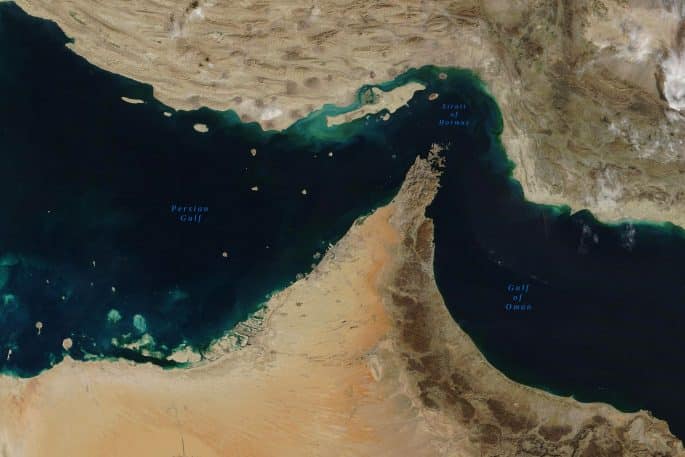
- The Strait of Hormuz is a crucial global waterway for oil shipments, impacting international energy markets.
Overview
The Strait of Hormuz has reopened for commercial vessels, a development reported by The Times of India to have occurred on Friday. This reopening aligns with a 10-day ceasefire agreement established between Israel and Lebanon. The event briefly boosted oil markets and generated optimism from Washington, though The Times of India notes that the reopening came with certain conditions. Concurrently, Crypto Briefing reported a separate incident where the US Navy seized an Iranian tanker in the vicinity of a Chinese warship within the Strait of Hormuz.
Expectations regarding the normalization of traffic in the Strait of Hormuz are being closely monitored. According to Crypto Briefing, the market for traffic normalization currently sits at a 25% 'YES' for a return to normal by May 31. This indicates a cautious outlook on sustained stability despite the recent reopening.
Background & Context
The Strait of Hormuz is a strategically vital waterway, crucial for global oil shipments. Its closure or restricted access can significantly impact international energy markets and geopolitical stability. Past closures or threats of closure have historically led to heightened tensions and volatility in oil prices, underscoring the importance of its unimpeded operation for international trade and security.
The recent ceasefire between Israel and Lebanon, as reported by The Times of India, provides a broader regional context for the Strait's reopening. Such agreements often aim to de-escalate conflicts that could otherwise spill over and affect critical infrastructure or shipping lanes, including those in the Persian Gulf region. The involvement of various international actors, including the US and China, further highlights the complex geopolitical dynamics at play in the region.
Key Developments
The Times of India explicitly stated that the Strait of Hormuz reopened for commercial vessels on Friday. This reopening was presented as being in line with a 10-day ceasefire between Israel and Lebanon, and it reportedly brought a brief uplift to oil markets and fresh optimism from Washington. However, The Times of India also highlighted that the reopening came "with strings attached," implying conditions or limitations.
In a distinct but related development, Crypto Briefing reported that the US Navy seized an Iranian tanker near a Chinese warship within the Strait of Hormuz. This incident introduces a layer of complexity and potential friction amidst the broader narrative of the Strait's reopening. Crypto Briefing also provided a specific market indicator, noting that the "Strait of Hormuz traffic normalization market now sits at 25% YES for a return to normal by May 31," suggesting ongoing uncertainty about long-term stability.
Perspectives
The two sources presented the core event of the Strait's status with different emphasis. The Times of India focused on the reopening and its positive, albeit conditional, implications for oil markets and regional optimism, linking it to a broader ceasefire. Crypto Briefing, while acknowledging the Strait's status implicitly through its market normalization figures, placed a primary emphasis on a specific naval incident involving the US, Iran, and China, highlighting potential points of contention.
Washington's optimism, as reported by The Times of India, suggests a positive reception to the Strait's reopening, likely due to its economic and strategic importance. However, the unspecified "strings attached" mentioned by the same outlet indicate that the situation remains nuanced and potentially fragile. The US Navy's action, as detailed by Crypto Briefing, underscores the continued presence and operational activities of international naval forces in the critical waterway, reflecting ongoing security concerns.
What to Watch
Future developments will hinge on the specifics of the "strings attached" to the Strait's reopening, as well as the duration and effectiveness of the Israel-Lebanon ceasefire. The market's 25% confidence in normalization by May 31, as reported by Crypto Briefing, suggests that the coming weeks will be critical in determining whether the current stability holds or if further disruptions or incidents, such as naval seizures, will occur. Observers will also be monitoring any official statements or reactions from Iran, China, or the US regarding the tanker seizure incident and its potential implications for regional maritime security.
Found this story useful? Share it:
Sources (2)
Crypto Briefing
"US Navy seizes Iranian tanker near Chinese warship in Strait of Hormuz"
April 18, 2026
The Times of India
"Iran reopens Strait of Hormuz, but with strings attached"
April 18, 2026