EU Leaders Convene in Cyprus to Address Middle East Strategy Amid Iran War Concerns
Structured Editorial Report
This report is based on coverage from Bloomberg Markets and has been structured for clarity, context, and depth.
Key Points
- EU leaders are meeting in Cyprus to discuss strategy in the Middle East, particularly concerning the Iran conflict.
- Cyprus's Foreign Minister urged Europe to enhance its strategic presence and forge new regional partnerships.
- The minister called for European efforts to help bring an end to the ongoing conflict involving Iran.
- The discussions highlight Europe's recognition of its critical role in Middle Eastern stability and security.
- Bloomberg News Chief Europe Correspondent Oliver Crook provided analysis on the high-level talks.
Introduction
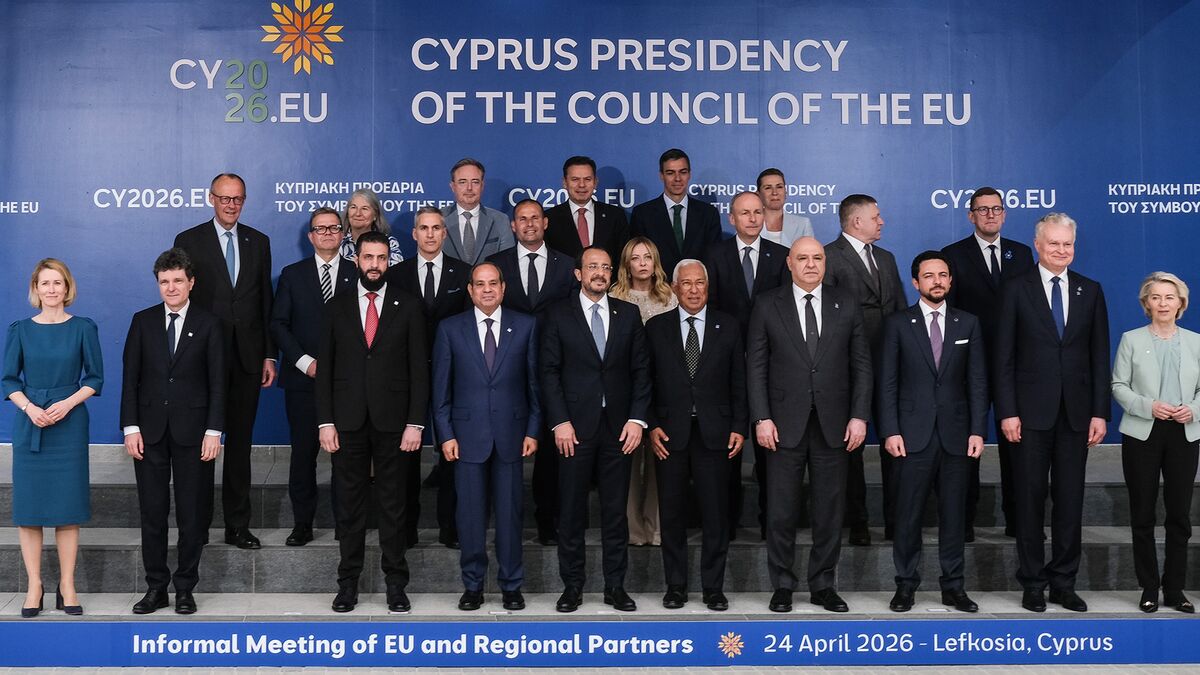
European Union leaders are currently engaged in discussions in Cyprus, focusing on the urgent need for a more robust and strategic European presence in the Middle East. This strategic re-evaluation comes amidst escalating tensions, particularly concerning the ongoing conflict involving Iran. Cyprus's Foreign Minister underscored the imperative for European nations to forge new partnerships across the region and actively work towards de-escalating the conflict, highlighting the critical role Europe can play in regional stability. The meeting serves as a crucial platform for EU member states to coordinate their diplomatic efforts and define a unified approach to the complex geopolitical landscape of the Middle East.
The discussions are being closely monitored by international observers, as any significant shift in European policy could have far-reaching implications for global security and economic stability. The emphasis on striking deals with regional partners suggests a move towards proactive diplomacy rather than reactive measures. This high-level engagement reflects a growing recognition within the EU of its responsibility to contribute meaningfully to resolving regional crises, especially those with potential spillover effects on European security and interests.
Key Facts
Cyprus's Foreign Minister issued a clear call for European countries to enhance their strategic involvement in the Middle East. This statement was made on Friday, during a gathering of EU leaders in Cyprus. The core message emphasized the necessity for Europe to "step up strategically" in the region, actively "strike deals with partners," and endeavor to "bring an end to the Iran war." These points highlight a concerted effort to move beyond passive observation towards active engagement.
The discussions and the minister's statements were reported by Bloomberg News, with Chief Europe Correspondent Oliver Crook providing insights on Bloomberg This Weekend. Crook joined hosts David Gura and Christina Ruffini to elaborate on the significance of these high-level talks. The focus on the "Iran war" indicates a specific and pressing concern driving the European strategic re-evaluation, suggesting that the conflict's regional and international ramifications are a primary motivator for increased European involvement.
Why This Matters
This development holds significant weight for several reasons, primarily due to the Middle East's perennial role as a geopolitical flashpoint with direct implications for global energy markets, international security, and migration patterns. A more assertive and unified European strategic presence could introduce a much-needed moderating influence, potentially de-escalating conflicts and fostering regional stability. The current approach, as implied by the call for increased engagement, may be perceived as insufficient in addressing the multifaceted challenges posed by the region, including the ongoing conflict involving Iran.
The economic implications are substantial; instability in the Middle East directly impacts oil prices, supply chains, and global trade routes, affecting consumers and industries worldwide. For European nations, closer partnerships and diplomatic solutions could safeguard energy security and protect vital economic interests. Furthermore, prolonged conflicts often lead to humanitarian crises and displacement, which directly impact European borders and social cohesion. A proactive European strategy aims to mitigate these challenges at their source, demonstrating a commitment to human rights and regional peace.
Politically, a stronger European stance could reshape diplomatic dynamics, offering an alternative to existing power blocs and fostering multilateral cooperation. This could empower regional actors seeking peaceful resolutions and diminish the influence of those benefiting from continued conflict. The call for striking deals with partners suggests a nuanced approach that respects regional sovereignty while promoting shared goals of security and prosperity. Ultimately, this initiative reflects Europe's recognition that its own stability and prosperity are inextricably linked to the stability of the Middle East.
Full Report
European leaders convened in Cyprus to address the escalating complexities of the Middle East, with a particular focus on the conflict involving Iran. The urgency of the situation was articulated by Cyprus's Foreign Minister on Friday, who emphasized the critical need for European nations to significantly enhance their strategic engagement within the region. This call for increased involvement is rooted in the understanding that the current geopolitical climate demands a more proactive and unified European response to safeguard its interests and contribute to regional stability.
The minister specifically outlined a three-pronged approach: first, for Europe to "step up strategically" in the Middle East, indicating a shift from a more passive or reactive posture to one of deliberate influence. Second, he stressed the importance of actively "strike deals with partners across the region," suggesting a diplomatic offensive aimed at building alliances and fostering cooperation with various regional stakeholders. This approach aims to create a network of relationships that can support peace initiatives and economic development.
Third, and perhaps most critically, the minister urged European nations to "try to bring an end to the Iran war." This direct reference underscores the profound concern among EU leaders regarding the conflict's destabilizing effects, which extend beyond the immediate belligerents to impact global energy markets, international shipping lanes, and regional security architectures. The conflict's potential to draw in more actors and escalate further is a significant driver behind Europe's intensified diplomatic efforts.
The discussions in Cyprus were highlighted by Bloomberg News, with Chief Europe Correspondent Oliver Crook providing expert analysis on the Bloomberg This Weekend program. Crook joined hosts David Gura and Christina Ruffini to dissect the implications of these high-level talks, offering insights into the strategic thinking behind Europe's renewed focus on the Middle East. The presence of such a senior correspondent indicates the perceived importance and potential impact of these deliberations on international affairs.
Context & Background
The Middle East has long been a region of paramount strategic importance due to its vast energy resources, critical trade routes, and complex geopolitical dynamics. European nations, historically and contemporaneously, have significant economic, security, and cultural ties to the region. However, Europe's approach has often been characterized by a mix of bilateral engagements and multilateral initiatives, sometimes lacking a cohesive, unified strategic vision, particularly in times of heightened conflict.
The ongoing conflict involving Iran is a multifaceted issue with deep historical roots, encompassing regional rivalries, sectarian divisions, and external interventions. This conflict has fueled proxy wars, destabilized governments, and contributed to humanitarian crises across several countries in the Middle East. The direct and indirect consequences, such as refugee flows and the rise of extremist groups, have had tangible impacts on European security and social structures, prompting a re-evaluation of Europe's role.
Previous European efforts in the region have included diplomatic initiatives, humanitarian aid, and participation in international peacekeeping missions. However, the call from Cyprus's Foreign Minister suggests a recognition that these efforts may not be sufficient to address the current scale and complexity of the challenges. The need for Europe to "step up strategically" implies a desire to move towards a more integrated and impactful foreign policy in the Middle East, one that actively shapes outcomes rather than merely responding to them. This shift is likely influenced by a desire to protect European interests more effectively and contribute to a more stable global order.
What to Watch Next
Observers should closely monitor the outcomes of the ongoing discussions among EU leaders in Cyprus, as these deliberations are expected to shape the immediate future of European foreign policy in the Middle East. Any joint statements or communiqués released following these meetings will provide crucial insights into the specific diplomatic initiatives and strategic partnerships Europe intends to pursue. Particular attention should be paid to any concrete proposals for engagement with regional actors and potential mediation efforts in the Iran conflict.
Future developments will likely include follow-up meetings at various diplomatic levels, potentially involving EU foreign ministers or special envoys dispatched to the Middle East. The European External Action Service (EEAS) will be instrumental in translating these high-level strategic directives into actionable policies. Furthermore, the reactions from key Middle Eastern nations and Iran itself to Europe's renewed strategic push will be critical indicators of the potential for successful diplomatic engagement. The effectiveness of any new "deals with partners" will largely depend on the willingness of regional states to cooperate with Europe's proposed framework.
Source Attribution
This report draws on coverage from Bloomberg Markets, specifically referencing the article detailing EU leaders' discussions in Cyprus amid the Iran war, featuring insights from Bloomberg News Chief Europe Correspondent Oliver Crook.
Found this story useful? Share it:
Sources (1)
Bloomberg Markets
"EU Leaders Convene in Cyprus Amid Iran War"
April 25, 2026