
NASA Advances Space Communications with Optical Laser Technology on Artemis II Mission
Structured Editorial Report
This report is based on coverage from Ars Technica and has been structured for clarity, context, and depth.
Key Points
- Artemis II mission primarily used traditional radio waves for communication, resulting in low-definition video feeds.
- Higher-resolution data, including lunar far side photos, was transmitted using optical laser communications.
- The advanced communication system incorporated both NASA-developed and commercial components.
- Optical laser technology offers significantly higher bandwidth, paving the way for vastly more data from space.
- This communication advancement is crucial for future data-intensive deep-space missions and scientific discovery.
- Future Artemis missions and commercial partnerships will further integrate and expand optical communication networks.
Introduction
NASA's recent Artemis II mission, while providing awe-inspiring views of the Moon, highlighted a significant technological transition in space communications. Although much of the live video beamed back to Earth from the Orion spacecraft was in standard definition, reminiscent of Apollo-era transmissions, the mission also successfully demonstrated the efficacy of optical laser communications for transmitting high-resolution data. This dual approach underscores a pivotal moment in how future deep-space missions will relay critical information and stunning visuals back to Earth, moving beyond traditional radio wave limitations.
The initial low-definition video feeds, though exciting, presented a stark contrast to modern high-definition expectations, particularly given the advancements in consumer technology. This disparity was largely due to the reliance on established radio wave communication systems, which have been the backbone of space exploration for over five decades. However, the intermittent transmission of high-resolution data, including detailed photographs of the lunar far side and a solar eclipse, showcased a promising alternative that could revolutionize data return from space.
Key Facts
The Artemis II mission primarily utilized radio waves for communication with Earth, a method consistent with the Apollo program's approach over half a century ago. This traditional system relies on large ground-based dishes to receive signals. In addition to radio communications, the Orion spacecraft periodically transmitted batches of significantly higher-resolution data. These advanced transmissions included high-quality photographs of the Moon's far side and detailed imagery of a solar eclipse observed from space.
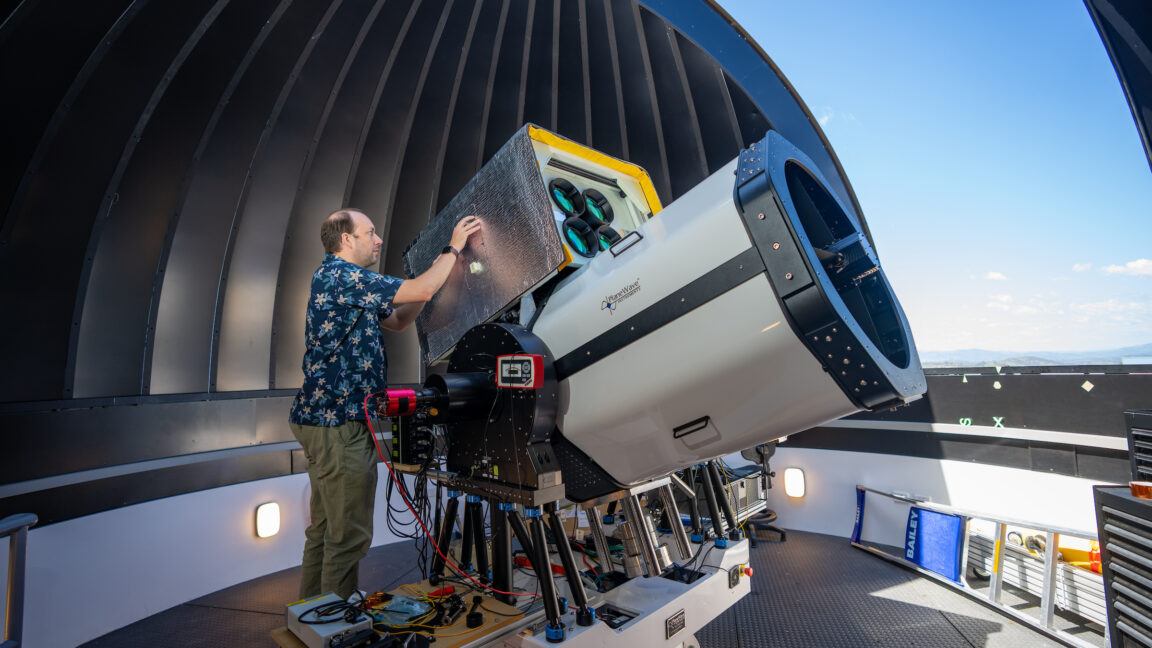
The capability for high-resolution data transfer was facilitated by optical laser communications. Notably, this technology incorporated both NASA-developed components and a commercial element. The integration of commercial technology is a key aspect, signaling a potential shift towards broader industry involvement in space communication infrastructure. This hybrid communication strategy represents a significant step forward in enhancing the volume and quality of data returned from future deep-space endeavors.
Why This Matters
The successful implementation of optical laser communications during the Artemis II mission carries profound implications for the future of space exploration and scientific discovery. The ability to transmit vastly more data at higher resolutions will fundamentally change how scientists analyze celestial bodies, how engineers monitor spacecraft, and how the public experiences space missions. High-definition imagery and real-time data streams can provide unprecedented detail for geological analysis, atmospheric studies, and biological research conducted in space, accelerating the pace of scientific breakthroughs.
Economically, the development and integration of commercial optical communication components could foster a new sector within the space industry, driving innovation and creating new markets for space-based data services. This could lead to more cost-effective and efficient data transmission solutions, making deep-space missions more feasible and frequent. Furthermore, the enhanced public engagement fostered by high-definition visual content from space can inspire future generations in STEM fields, securing long-term societal benefits from space exploration efforts. The transition from low-definition to high-definition data transmission is not merely an aesthetic upgrade; it is a critical enabler for more ambitious, data-intensive missions, such as sustained lunar presence or human missions to Mars, where bandwidth and data integrity are paramount.
Full Report
During the Artemis II mission, the four-person crew aboard the Orion spacecraft provided Earth with a mix of communication experiences. The majority of the video content, both from within the spacecraft's interior and external views of the lunar surface, was transmitted in a relatively low-definition format. This reliance on traditional radio wave communication, a method largely unchanged since the Apollo missions of the 1960s and 70s, meant that while the content was inherently thrilling, its visual quality often fell short of contemporary expectations for high-definition media.
However, the mission also served as a crucial testbed for next-generation communication technologies. Periodically, the Orion crew was able to send back significantly higher-resolution data batches. These transmissions included breathtaking photographs of the Moon's enigmatic far side and detailed observations of a solar eclipse, captured with a clarity far superior to the standard video feeds. This capability was directly attributable to the deployment of optical laser communications systems.
Crucially, these advanced communication systems were not solely developed by NASA. The Artemis II mission incorporated a commercial component into its optical laser communications suite. This integration of private sector technology into a flagship space mission signals a strategic move by NASA to leverage external innovation and potentially scale up future communication infrastructure more efficiently. The partnership between government and commercial entities in this critical area could set a precedent for future deep-space endeavors, fostering a more collaborative and robust ecosystem for space technology development.
The successful demonstration of these optical laser communication capabilities holds the promise of dramatically increasing the volume of data that can be returned to Earth from space. Traditional radio frequency limitations have long constrained the amount and quality of data that can be transmitted over vast distances. Optical laser systems, by utilizing light waves, offer significantly higher bandwidth, enabling the transmission of vast quantities of high-definition imagery, scientific telemetry, and potentially even real-time 4K video from lunar or even interplanetary distances. This technological leap is essential for supporting the increasingly complex and data-intensive missions envisioned for the coming decades.
Context & Background
Space communication has historically been dominated by radio frequency (RF) technology, a method proven reliable since the dawn of the space age. The Apollo missions, for instance, relied entirely on RF signals to maintain contact with Earth, transmitting voice, telemetry, and early television broadcasts. This technology, while robust, is inherently limited by bandwidth, especially over interplanetary distances, leading to the low-definition transmissions that have characterized much of space exploration's visual record.
For decades, NASA and other space agencies have been exploring alternatives to overcome these limitations. Optical communication, or laser communication, emerged as a promising candidate due to its potential for significantly higher data rates. Unlike radio waves, which spread out and weaken over distance, laser beams are much more focused, allowing for more data to be packed into each transmission and received with greater fidelity. Initial experiments and demonstrations have been ongoing for years, but integrating such a system into a crewed deep-space mission like Artemis II represents a major validation.
The drive for enhanced communication capabilities is directly linked to the evolving ambitions of space exploration. Future missions to the Moon, Mars, and beyond will require unprecedented amounts of data for scientific instruments, autonomous systems, and human operations. Establishing a robust, high-bandwidth communication infrastructure is as critical as developing advanced propulsion or life support systems. The Artemis II mission’s success in this domain builds upon a long history of incremental advancements, positioning optical communication as a foundational technology for humanity’s next giant leaps in space.
What to Watch Next
Following the successful demonstration on Artemis II, the next critical steps will involve the full integration and operational deployment of optical laser communication systems on subsequent lunar and deep-space missions. Observers should monitor NASA's Artemis III mission, which aims to return humans to the lunar surface, for further advancements in communication bandwidth and reliability. Specific attention should be paid to whether high-definition video streams become a standard feature of live mission coverage, indicating a full transition from the low-definition feeds observed previously.
Furthermore, watch for announcements regarding commercial partnerships and investments in space-based optical communication networks. The involvement of commercial entities, already hinted at in the Artemis II mission, suggests a potential expansion of private sector roles in developing and maintaining this infrastructure. Future developments will likely include the establishment of dedicated optical ground stations and relay satellites to create a comprehensive high-speed data network between Earth and deep space, enabling continuous, high-volume data transfer for sustained lunar outposts and future Mars missions.
Source Attribution
This report draws on coverage from Ars Technica.
Found this story useful? Share it:
Sources (1)
Ars Technica
"You want your Moon landings in HD? So does NASA—here's how it's happening."
April 22, 2026