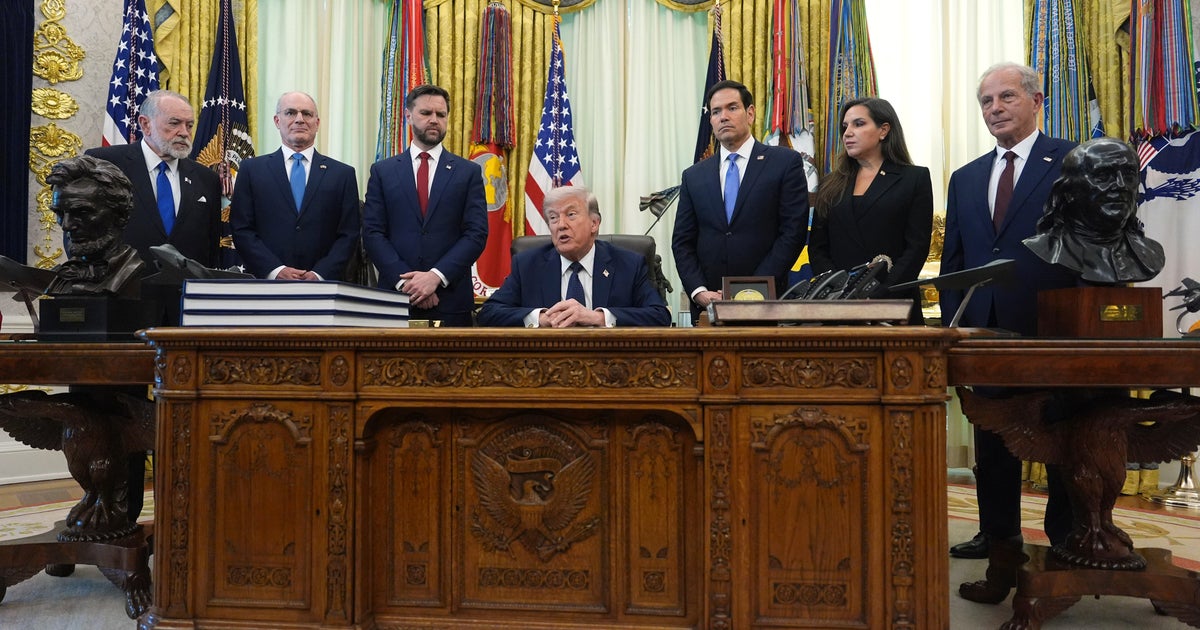
US Government Shutdown Ends as President Trump Signs Funding Bill
Compiled from 5 Sources
This report draws on coverage from Google News Politics and presents a structured, balanced account that notes where outlets differ in their reporting.
Key Points
- President Trump signed a funding bill, ending the partial US government shutdown.
- The Guardian specified the funding bill was valued at $1.2 trillion.
- PBS highlighted a disparity, noting ICE agents were paid while TSA agents were not during the shutdown.
- The Guardian also reported on TMZ tracking lawmakers vacationing amidst the shutdown.
- The shutdown's end allows federal operations to resume and employees to receive pay.
- Underlying budgetary disagreements, particularly on border security, remain a future challenge.
Introduction
President Donald Trump has signed a funding bill, officially ending a partial government shutdown that had impacted various federal agencies. The agreement brings to a close a period of legislative impasse over government appropriations. This development follows weeks of negotiations and political maneuvering concerning the federal budget.
The signing of the bill marks a significant moment, allowing federal operations to resume and addressing the immediate financial uncertainty faced by hundreds of thousands of government workers. The resolution comes after considerable public and political pressure to restore full government functionality. The immediate impact is the reopening of affected agencies and the return of furloughed employees to their posts.
Key Facts
President Trump signed a bill to end the partial government shutdown, as reported by The Times and PBS. The Guardian specified that this was a $1.2 trillion funding bill. This action concluded a period where parts of the federal government were unfunded. PBS also highlighted a specific disparity during the shutdown, noting that ICE agents continued to be paid while TSA agents were not.
Separately, The Guardian reported on TMZ tracking US lawmakers vacationing during the partial government shutdown. This detail underscores public scrutiny regarding political accountability during the period of halted government services. The core agreement across sources is the signing of the bill by President Trump, which officially brought the partial shutdown to an end.
Why This Matters
The cessation of the government shutdown carries profound implications for both the federal workforce and the broader American public. Hundreds of thousands of federal employees, who were either furloughed or working without pay, will now receive their salaries, alleviating significant financial stress on families across the nation. This directly impacts their ability to meet essential living expenses, including rent, mortgages, and groceries, and restores stability to their personal finances.
Beyond individual employees, the shutdown's end allows critical government services to resume full operation, affecting everything from national park maintenance and food inspections to scientific research and economic data collection. The disruption of these services had tangible consequences, such as delays in tax refunds, reduced oversight of public safety, and a slowdown in various regulatory processes. Economically, prolonged shutdowns can erode consumer confidence, disrupt supply chains, and negatively impact GDP growth, making the resolution crucial for economic stability. Politically, the resolution demonstrates a temporary ability for compromise, though the underlying budgetary disagreements often persist, setting the stage for future legislative battles. The public's perception of governmental effectiveness and stability is also directly tied to such events, influencing trust in institutions and future electoral outcomes.
Full Report
On a recent date, President Donald Trump officially signed a funding bill, thereby concluding a partial government shutdown. This action was reported by The Times, which stated the US government shutdown was over, and by PBS, which provided a visual report with the headline, "WATCH: Trump signs bill to end partial government shutdown." The Guardian offered a specific financial detail, noting that Trump signed a "$1.2tn funding bill," which directly led to the end of the partial government shutdown. All three outlets consistently framed the event as the termination of the shutdown through presidential action.
While the primary focus of The Times, PBS (in its first article), and The Guardian was the end of the shutdown, PBS also published an article titled, "Why do ICE agents get paid during the partial government shutdown, but not TSA?" This piece highlighted a specific disparity in how federal employees were treated during the funding lapse, drawing attention to different classifications of essential workers and their compensation status. This indicates a difference in emphasis, with some outlets focusing on the resolution and others on the impacts and inequities experienced during the shutdown period.
Adding another layer of detail and public perception, The Guardian also carried a report titled, "TMZ tracks US lawmakers vacationing amid the partial government shutdown | US politics." This article, while not directly about the funding bill's signing, provided insight into the political atmosphere and public sentiment during the shutdown, particularly concerning the actions of elected officials. It suggests a public interest in accountability and the perceived disconnect between lawmakers and the affected federal workforce. This detail from The Guardian illustrates a broader media focus beyond just the legislative mechanics, incorporating elements of political optics and public scrutiny.
Collectively, the sources confirm the central fact of the shutdown's conclusion via presidential signature on a significant funding package. However, they diverge in their secondary focus, with some exploring the human impact and perceived political impropriety during the shutdown, while others concentrate solely on the legislative outcome. The $1.2 trillion figure provided by The Guardian offers a concrete scale to the funding package, distinguishing it from the more general reporting of The Times and PBS regarding the bill's signing.
Context & Background
The partial government shutdown that concluded with President Trump's signing of the funding bill was the culmination of protracted disagreements over federal spending, particularly concerning border security. Such shutdowns are not unprecedented in U.S. history, often arising when the executive and legislative branches, or different factions within Congress, fail to agree on appropriations bills by the statutory deadline. These impasses typically revolve around policy priorities embedded within budget allocations.
In this specific instance, the shutdown was largely driven by the administration's demand for significant funding for a wall on the U.S.-Mexico border, a key campaign promise. Congressional Democrats, however, largely opposed this level of funding for the wall. The inability to reconcile these differing priorities led to several government agencies losing their funding, resulting in the furlough of non-essential federal employees and requiring essential personnel to work without immediate pay. This standoff created a period of uncertainty and operational disruption across various federal services, intensifying pressure on both sides to reach a resolution.
What to Watch Next
With the immediate crisis of the government shutdown resolved, attention will now turn to the underlying budgetary disagreements that precipitated the impasse. Lawmakers will likely face continued pressure to negotiate a more comprehensive and long-term budget agreement that addresses contentious spending priorities. Future legislative deadlines for appropriations will serve as critical junctures, potentially reigniting debates over border security funding and other fiscal matters. The administration's approach to these upcoming negotiations, particularly regarding its border wall demands, will be closely scrutinized.
Furthermore, the impact of the shutdown on federal agencies and their employees will be assessed. Reports on backlogs in services, financial recovery for furloughed workers, and potential morale issues within the federal workforce are expected. Any upcoming elections or political primaries will also be influenced by voters' perceptions of how the shutdown was handled and the effectiveness of their elected officials in resolving such crises. The political landscape will continue to evolve as both parties strategize for future legislative battles and electoral campaigns.
Source Attribution
This report draws on coverage from The Times, PBS (two articles), and The Guardian (two articles), all accessed via Google News Politics.
Found this story useful? Share it:
Sources (5)
Google News Politics
"US government shutdown over as Trump signs off spending bill - The Times"
November 12, 2025
Google News Politics
"WATCH: Trump signs bill to end partial government shutdown - PBS"
February 4, 2026
Google News Politics
"Trump signs $1.2tn funding bill, ending partial government shutdown - The Guardian"
February 3, 2026
Google News Politics
"Why do ICE agents get paid during the partial government shutdown, but not TSA? - PBS"
March 24, 2026
Google News Politics
"TMZ tracks US lawmakers vacationing amid the partial government shutdown | US politics - The Guardian"
March 31, 2026