Fifth Circuit Upholds Texas Law Mandating Ten Commandments Display in Public School Classrooms
Structured Editorial Report
This report is based on coverage from CBS News and has been structured for clarity, context, and depth.
Key Points
- Fifth Circuit Court of Appeals upheld a Texas law mandating Ten Commandments display in public school classrooms.
- The law requires a specific format for the Ten Commandments to be displayed in all K-12 classrooms.
- The ruling impacts public schools across Texas, allowing the controversial state mandate to proceed.
- The decision is a significant development in the ongoing debate over church-state separation in public education.
- Opponents argue the law violates the First Amendment's Establishment Clause; proponents cite historical and moral guidance.
- The ruling could influence similar legislative efforts in other states and may face further appeals to the Supreme Court.
Introduction
A federal appeals court has affirmed a Texas law requiring public schools to display the Ten Commandments in every classroom. The decision, issued by the Fifth Circuit Court of Appeals on Tuesday, marks a significant legal development in the ongoing national debate over the separation of church and state within public education. This ruling allows the controversial state mandate, enacted by Texas lawmakers, to proceed, impacting educational institutions across the state.
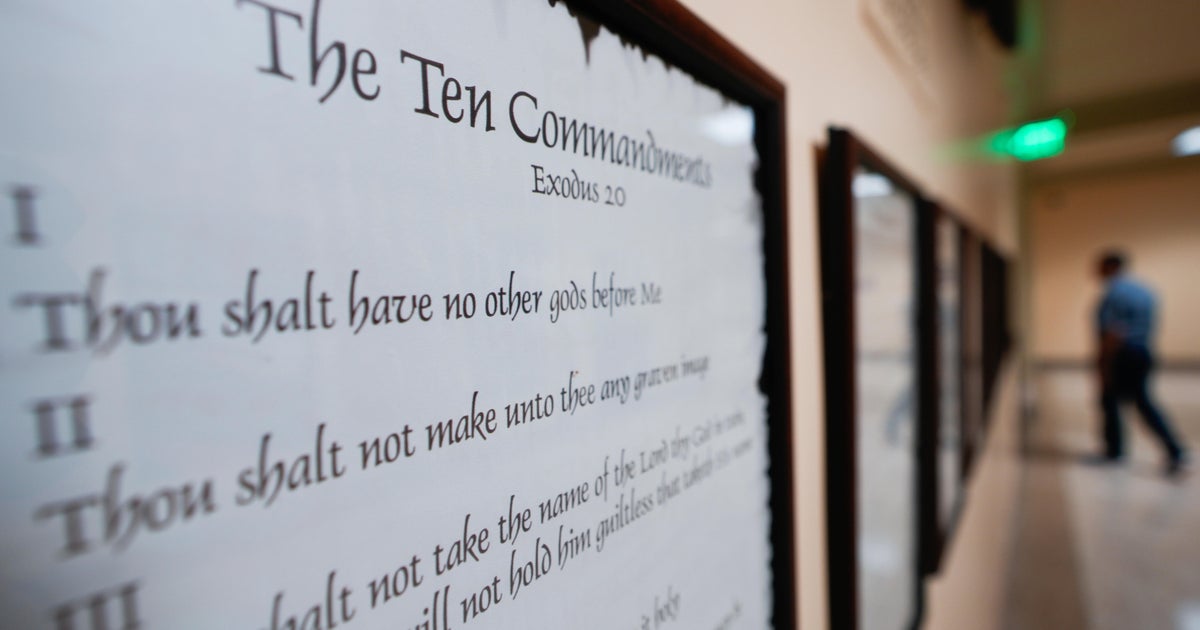
The law stipulates that a poster or framed copy of the Ten Commandments, printed in a specified font size and format, must be prominently displayed in all public school classrooms, from kindergarten through twelfth grade. Critics argue that this requirement violates the Establishment Clause of the First Amendment, which prohibits government endorsement of religion. However, the appeals court found the law to be constitutionally permissible, setting a precedent for similar legislative efforts.
Key Facts
The Fifth Circuit Court of Appeals issued its opinion on Tuesday, upholding the Texas law. The law mandates the display of the Ten Commandments in every public school classroom, from kindergarten to 12th grade. The specific format for the display includes a poster or framed copy with a particular font size. The legal challenge centered on the Establishment Clause of the First Amendment, which prevents government endorsement of religion. The court's decision allows the state mandate to proceed, affecting public educational institutions throughout Texas.
Why This Matters
This ruling carries substantial implications for public education, religious freedom, and legislative efforts nationwide. For students and educators in Texas, it means classrooms will now feature a religious text, potentially altering the perceived neutrality of the learning environment. Families with diverse religious or non-religious backgrounds may view this as an imposition, raising concerns about inclusivity and respect for individual beliefs within public institutions funded by all taxpayers.
Beyond Texas, the decision could embolden other states considering similar legislation, fueling a broader movement to introduce religious texts or practices into public schools. This legal precedent may serve as a blueprint for proponents of such laws, potentially leading to a patchwork of varying religious displays across the country. The long-term societal impact could include increased polarization over religious expression in public spaces and renewed legal battles over the interpretation of the First Amendment.
Furthermore, the ruling reignites a fundamental debate about the role of government in religious matters and the delicate balance between religious freedom and governmental neutrality. It forces a re-examination of how public institutions, particularly schools, should navigate the diverse religious landscape of the United States. The outcome could influence curriculum development, school policies, and even student enrollment choices, as families seek educational environments aligned with their values.
Full Report
The Fifth Circuit Court of Appeals released its opinion on Tuesday, affirming a Texas law that requires public schools to display the Ten Commandments in every classroom. This decision allows the state mandate, which has been a subject of intense legal and public debate, to move forward. The law specifies that each public school classroom, encompassing grades kindergarten through twelve, must feature a poster or framed copy of the Ten Commandments. The legislation also dictates a particular font size and format for these displays, ensuring uniformity across the state's educational system.
The legal challenge against the Texas law primarily argued that it violated the Establishment Clause of the First Amendment to the U.S. Constitution. This clause, often interpreted as mandating a separation of church and state, prohibits government entities from establishing or endorsing a religion. Opponents contended that requiring the display of a foundational text from Abrahamic religions constituted an unconstitutional endorsement of those faiths, thereby infringing upon the religious freedom of students and families who may not adhere to those beliefs.
However, the Fifth Circuit Court of Appeals concluded that the law did not violate the Establishment Clause. The court's reasoning likely centered on interpretations that view such displays as having a secular purpose, such as promoting moral conduct or historical understanding, rather than solely religious indoctrination. This perspective aligns with a growing trend in some legal circles to re-evaluate traditional understandings of the separation of church and state, particularly in cases involving religious symbols or expressions in public spaces.
The ruling is a significant victory for proponents of the law, who argue that displaying the Ten Commandments reflects the historical and cultural heritage of the nation and provides moral guidance to students. They often assert that such displays are not coercive and do not establish a state religion but rather acknowledge the role of religious principles in society. Conversely, civil liberties and religious freedom advocacy groups have expressed deep concern, warning of the potential for religious discrimination and the erosion of public schools' secular nature.
Context & Background
The debate over religious displays in public schools has a long and complex history in the United States, frequently reaching the Supreme Court. Landmark cases like *Engel v. Vitale* (1962), which prohibited state-sponsored prayer in public schools, and *Abington School District v. Schempp* (1963), which banned mandatory Bible readings, established a robust interpretation of the Establishment Clause. These decisions generally aimed to prevent public schools from endorsing or favoring any particular religion, ensuring a religiously neutral environment for all students.
More recently, the legal landscape has seen shifts, particularly with the Supreme Court's 2022 decision in *Kennedy v. Bremerton School District*. In that case, the Court sided with a football coach who prayed on the field, emphasizing the Free Exercise Clause and suggesting a more accommodating stance towards religious expression in public settings, provided it is not coercive. This ruling has been interpreted by some as signaling a potential loosening of the strict separationist approach that characterized earlier Establishment Clause jurisprudence.
Texas has been at the forefront of legislative efforts to introduce religious elements into public education. The law requiring the Ten Commandments display is part of a broader trend in the state to assert religious values in public life. This includes previous legislative attempts and ongoing discussions about curriculum content and religious instruction. The current ruling by the Fifth Circuit must be understood within this evolving legal and political context, reflecting a continued push to challenge established interpretations of church-state separation.
What to Watch Next
Legal experts anticipate that this decision will likely face further challenges, potentially leading to an appeal to the U.S. Supreme Court. Opponents of the law are expected to explore all available avenues to contest the Fifth Circuit's ruling, arguing that it deviates from established constitutional precedents regarding the Establishment Clause. The timeline for such an appeal would depend on the legal strategy of the challenging parties, but a petition for certiorari could be filed within months.
Beyond the courtroom, the implementation of this law in Texas schools will be closely monitored. School districts across the state will need to develop and execute policies for displaying the Ten Commandments, which could lead to practical challenges and varying interpretations. Public reaction, including potential protests or further advocacy efforts from both supporters and opponents, will also be a key development to observe. This could influence future legislative actions in Texas and other states considering similar measures.
Source Attribution
This report draws on coverage from CBS News.
Found this story useful? Share it:
Sources (1)
CBS News
"Federal appeals court upholds Texas law requiring Ten Commandments in classrooms"
April 22, 2026