
Friedrich Nietzsche's 'Aesthetic Standards' Quote Explores Subjectivity of Morality
AI-Summarized Article
ClearWire's AI summarized this story from The Times of India into a neutral, comprehensive article.
Key Points
- Friedrich Nietzsche's quote, "Morality has aesthetic standards," challenges the idea of fixed moral principles.
- The quote illustrates how human moral judgment can be influenced by the perceived beauty or repulsion of a subject.
- Killing a cockroach is seen as heroic, while killing a butterfly is considered bad, despite both involving taking a life.
- Nietzsche suggests that our ethical evaluations are often rooted in subjective aesthetic preferences and emotional responses.
- The statement highlights a potential hypocrisy in human judgment, where appearance can dictate moral condemnation or praise.
- It encourages critical reflection on the origins and consistency of individual and societal moral standards.
Overview
German philosopher Friedrich Nietzsche's quote, "If you kill a cockroach you are a hero; if you kill a butterfly you are bad. Morality has aesthetic standards," highlights the often-unacknowledged subjective nature of human moral judgment. This statement challenges the common perception that morality is a fixed, objective set of rules, instead suggesting that our ethical evaluations are frequently influenced by aesthetic preferences and emotional responses. The quote prompts reflection on how societal values and individual perceptions shape what is deemed 'right' or 'wrong,' revealing a potential hypocrisy in human judgment.
Nietzsche's observation underscores that our reactions to actions are not solely based on their intrinsic harm or benefit, but also on the perceived beauty or ugliness of the entities involved. The act of ending a life, for instance, elicits vastly different moral responses depending on whether the subject is considered a pest or something beautiful. This distinction suggests that the 'morality' we apply is often less about universal principles and more about culturally conditioned or aesthetically driven biases, leading to inconsistent ethical applications in everyday life.
Background & Context
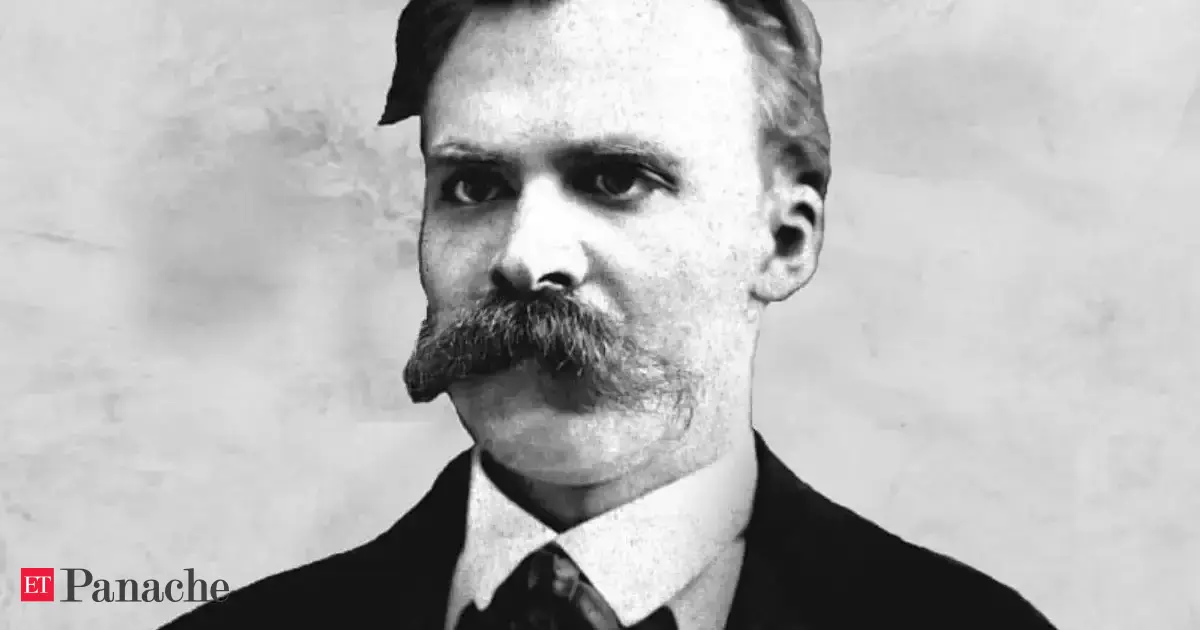
Friedrich Nietzsche (1844–1900) was a pivotal figure in Western philosophy, known for his critiques of traditional morality, religion, and culture. His work often explored the origins and evolution of moral concepts, arguing that many deeply held beliefs were not divinely ordained or objectively true, but rather products of human psychological and historical development. This particular quote aligns with his broader philosophical project of questioning established values and exposing the underlying human motivations behind them.
Nietzsche's concept of "aesthetic standards" in morality can be understood within his larger framework of re-evaluating all values. He contended that what societies deem 'good' or 'evil' is often rooted in power dynamics, utility, or, as this quote suggests, even superficial appearances. By pointing out the aesthetic dimension, he invites a deeper scrutiny of how our emotional and sensory experiences subtly dictate our ethical stances, often without conscious acknowledgment.
Key Developments
The quote serves as a powerful thought experiment, illustrating how an identical action (taking a life) can provoke diametrically opposed moral judgments based purely on the perceived aesthetic quality of the subject. A cockroach, often associated with dirt and disease, is considered repulsive, making its extermination an act of heroism or cleanliness. Conversely, a butterfly, admired for its beauty and fragility, evokes sympathy, making its harm an act of cruelty.
This highlights a fundamental inconsistency in human ethical reasoning. It suggests that our moral compass is not always guided by universal principles of life preservation or harm reduction, but can be swayed by subjective factors like attractiveness or perceived utility. The quote challenges individuals to examine their own moral reactions and consider whether their judgments are truly objective or if they are unconsciously influenced by aesthetic biases and societal conditioning.
Perspectives
The implication of Nietzsche's statement is that morality is not as absolute or universally applicable as many believe. Instead, it is a fluid construct, deeply intertwined with human perception, emotion, and cultural narratives. This perspective encourages a critical examination of societal norms, prompting questions about why certain lives or actions are valued differently than others, even when the underlying act is similar. It suggests that what we call 'morality' might often be a rationalization of our aesthetic preferences or emotional biases.
This viewpoint can lead to a more nuanced understanding of ethical dilemmas, where the 'right' answer is not always clear-cut and can vary significantly depending on individual and cultural frameworks. It underscores the importance of self-awareness in moral decision-making, urging individuals to recognize the subjective elements that may influence their judgments rather than assuming an objective moral high ground. The quote serves as a reminder that deeply held moral beliefs can sometimes mask underlying prejudices or superficial considerations.
What to Watch
As societies continue to grapple with complex ethical issues, from environmental conservation to social justice, Nietzsche's observation remains relevant. Future discussions on morality will likely continue to explore the interplay between objective principles and subjective human perceptions, challenging individuals and institutions to critically assess the underlying biases that shape their ethical frameworks.
Found this story useful? Share it:
Sources (1)
The Times of India
"Quote of the day by Friedrich Nietzsche: 'If you kill a cockroach you are a hero; if you kill a butterfly you are bad. Morality has aesthetic standards' - The hypocrisy of human judgement between right and wrong explained by the German philosopher"
April 17, 2026