Statements from John Bolton, Keir Starmer, and Donald Trump on the Iran War
Compiled from 3 Sources
This report draws on coverage from CBS News, BBC News and presents a structured, balanced account that notes where outlets differ in their reporting.
Key Points
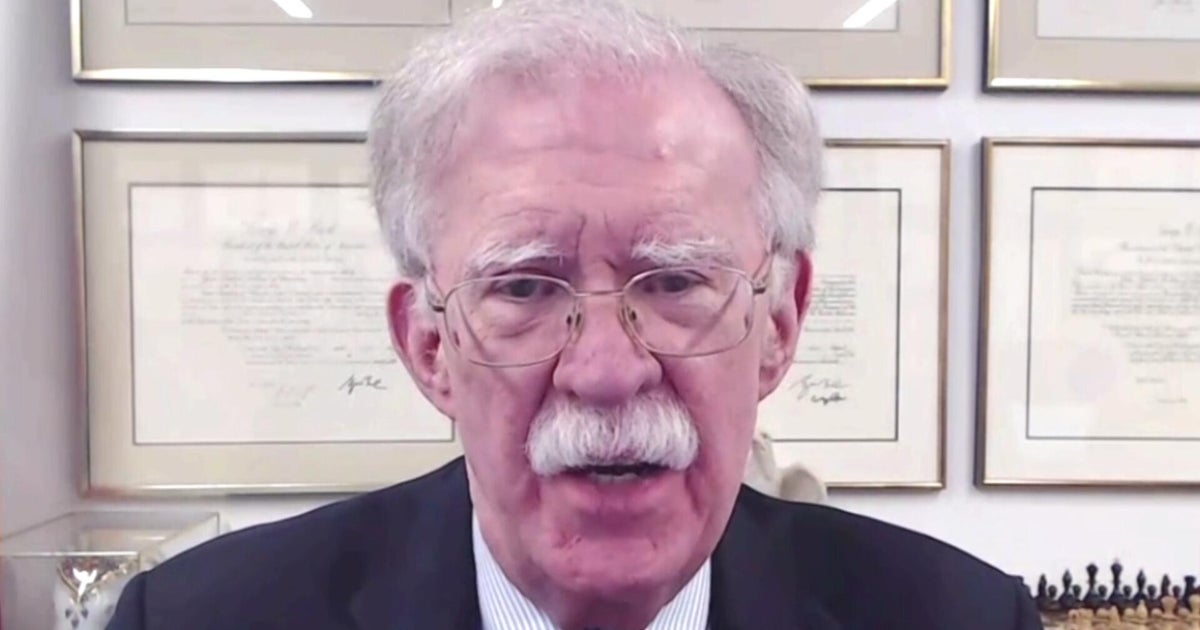
- John Bolton stated he could not fully understand President Trump's objectives in the Iran war (CBS News).
- President Trump insisted that the Iran war is almost over (CBS News).
- UK Labour leader Sir Keir Starmer affirmed he would not yield to pressure from Trump on the Iran war (BBC News).
- Starmer's position on Iran has been clear from the start, as he stated during Prime Minister's Questions (BBC News).
- The reports highlight differing perspectives among key political figures regarding the Iran war's status and strategy.
Introduction
Recent public statements from former U.S. National Security Advisor John Bolton, former U.S. President Donald Trump, and UK Labour leader Sir Keir Starmer have brought into sharp focus the divergent international perspectives and strategic ambiguities surrounding the ongoing conflict involving Iran. These pronouncements, reported by major news outlets, underscore a complex geopolitical landscape characterized by differing interpretations of the conflict's trajectory, the objectives of key actors, and the pressures influencing international diplomacy. While former President Trump asserted an imminent conclusion to the conflict, Bolton expressed uncertainty regarding Trump's strategic goals, and Sir Keir Starmer affirmed his resolute stance against external pressure concerning Iran policy. This confluence of statements highlights not only the varied understandings among global leaders but also the intricate web of alliances, domestic political considerations, and strategic calculations that define the current international discourse on Iran.
Key Facts
* **John Bolton's Uncertainty:** Former U.S. National Security Advisor John Bolton publicly stated that he could not fully comprehend the strategic objectives of former President Donald Trump regarding the conflict involving Iran. This comment suggests a potential lack of clarity or a complex, perhaps unarticulated, strategic approach from the U.S. administration during Trump's tenure, at least from Bolton's vantage point.
* **Donald Trump's Optimism:** Conversely, former President Donald Trump declared that the conflict involving Iran was "almost over." This assertion presents a narrative of nearing resolution, contrasting with Bolton's expressed uncertainty and potentially reflecting a different assessment of the conflict's status and duration.
* **Keir Starmer's Steadfastness:** UK Labour leader Sir Keir Starmer publicly affirmed his consistent stance on Iran, resisting any perceived pressure from former President Trump. During Prime Minister's Questions, Starmer reiterated his clear and unwavering position, indicating a commitment to an independent foreign policy approach for the United Kingdom concerning the conflict.
* **Source of Information:** These statements and their interpretations were primarily reported by CBS News, which covered the remarks from Bolton and Trump, and BBC News, which detailed Sir Keir Starmer's position.
Why This Matters
The divergent statements from these influential political figures carry significant real-world implications for global stability, international relations, and public understanding of the conflict involving Iran.
Firstly, the ambiguity surrounding the strategic objectives, as articulated by John Bolton, can lead to uncertainty among allies and adversaries alike. For allied nations, a lack of clear U.S. goals can complicate coordinated diplomatic efforts, defense planning, and economic strategies. It may foster distrust or hesitancy in aligning with U.S. policy, potentially fragmenting international responses to the conflict. For adversaries, this ambiguity could be interpreted in various ways: as a sign of weakness, an opportunity for exploitation, or a deliberate tactic to maintain unpredictability. Each interpretation carries the risk of miscalculation, which could escalate tensions or prolong the conflict.
Secondly, Donald Trump's assertion that the conflict is "almost over" has the potential to shape public perception and policy expectations. If the reality on the ground does not align with this optimistic prognosis, it could erode public trust in political leadership and official narratives. Domestically, it might influence electoral dynamics, as voters assess the efficacy of foreign policy. Internationally, such pronouncements can affect market stability, investment decisions in the region, and the willingness of other nations to engage in peace processes or economic sanctions, particularly if they believe the conflict is winding down. Furthermore, an overly optimistic outlook might inadvertently reduce pressure for diplomatic solutions or humanitarian aid if the perception is that the crisis is resolving itself.
Thirdly, Sir Keir Starmer's firm stance against external pressure from a former U.S. President on Iran policy highlights the evolving dynamics of international alliances and national sovereignty. For UK citizens, this signals a commitment to an independent foreign policy, potentially reassuring those concerned about undue influence from larger global powers. For the U.S., it underscores the limitations of its ability to dictate policy to allies, emphasizing the need for genuine consultation and multilateralism. In the broader international context, it could encourage other nations to assert their own independent foreign policy positions, potentially leading to a more multipolar world order where alliances are more flexible and issue-specific rather than rigidly hierarchical. This shift could impact global governance structures, trade agreements, and collective security initiatives, requiring more complex diplomatic navigation.
Collectively, these statements underscore the challenges of maintaining a unified international front on complex geopolitical issues, the impact of political rhetoric on strategic realities, and the ongoing recalibration of power dynamics in a world grappling with persistent conflicts. For readers, understanding these nuances is crucial for comprehending the forces shaping global events and their potential repercussions on economies, security, and international cooperation.
Full Report
The discourse surrounding the conflict involving Iran has been further complicated by recent remarks from several high-profile political figures, offering a glimpse into the varied interpretations and strategic approaches at play. Former U.S. National Security Advisor John Bolton, known for his hawkish foreign policy views, expressed a notable degree of uncertainty regarding the precise objectives of former President Donald Trump's strategy concerning Iran. According to reports from CBS News, Bolton indicated that he "could not fully comprehend" what Trump's ultimate goals were in the ongoing conflict. This statement from a former insider suggests a potential lack of clear, consistent, or publicly articulated strategic direction from the Trump administration, or at least a divergence in understanding between the President and his top national security advisor. Such ambiguity from a key former official can sow doubt about the coherence of past U.S. policy and its long-term implications.
In stark contrast to Bolton's uncertainty, former President Donald Trump himself offered a more definitive and optimistic assessment of the conflict's status. Also reported by CBS News, Trump asserted that the conflict involving Iran was "almost over." This declaration presents a narrative of imminent resolution, potentially aimed at reassuring the public or signaling a perceived strategic victory. However, without specific details or verifiable evidence supporting such a claim, this statement stands in direct opposition to the more cautious and questioning tone adopted by Bolton. The juxtaposition of these two perspectives from figures within the same political orbit highlights a potential disconnect in understanding or a deliberate difference in public messaging regarding a critical geopolitical issue.
Concurrently, across the Atlantic, UK Labour leader Sir Keir Starmer articulated a firm and independent stance on Iran policy. During a session of Prime Minister's Questions, Starmer was pressed by Liberal Democrat leader Sir Ed Davey regarding his position on Iran, particularly in the context of potential pressure from former President Trump. As reported by BBC News, Sir Keir unequivocally declared that he "would not yield to pressure from Trump" on the Iran war. He further emphasized that his position on Iran has been "clear from the outset," signaling a consistent and unwavering commitment to a particular foreign policy trajectory for the United Kingdom. This declaration underscores a broader trend among some U.S. allies to assert greater autonomy in their foreign policy decisions, even when faced with the influence or expectations of a major power like the United States. Starmer's remarks reinforce the idea that national interests and independent strategic assessments continue to guide the foreign policy of key international actors, rather than simply aligning with the positions of other global leaders.
These reports collectively paint a picture of a multi-faceted international discourse surrounding the conflict involving Iran. They reveal not only the internal complexities and potential disagreements within the U.S. political establishment regarding strategic clarity but also the determination of allied nations to maintain independent foreign policy positions. The differing narratives from Trump and Bolton, alongside Starmer's resolute stance, illustrate the challenges in achieving a unified international approach and the varied interpretations of the conflict's trajectory and resolution.
Context & Background
The conflict involving Iran has deep historical roots, extending back decades and encompassing a complex interplay of geopolitical, ideological, and economic factors. The current phase of heightened international tension can be traced to several key events and policies, particularly following the 1979 Iranian Revolution, which established an Islamic Republic and fundamentally altered Iran's relationship with the West, especially the United States.
A significant turning point in recent history was the 2015 Joint Comprehensive Plan of Action (JCPOA), commonly known as the Iran nuclear deal. This agreement, negotiated by Iran and the P5+1 group (China, France, Germany, Russia, the United Kingdom, and the United States), aimed to prevent Iran from developing nuclear weapons in exchange for sanctions relief. The JCPOA was hailed by its proponents as a landmark diplomatic achievement, de-escalating a major source of international concern.
However, the deal became a focal point of contention, particularly in the United States. Critics, including Donald Trump and John Bolton, argued that the JCPOA was insufficient, did not address Iran's ballistic missile program or its regional activities, and provided too much economic relief without adequate concessions. Upon assuming the presidency, Donald Trump made withdrawing from the JCPOA a central foreign policy promise. In May 2018, the Trump administration officially withdrew the U.S. from the agreement and reimposed stringent sanctions on Iran, initiating a "maximum pressure" campaign. This move was met with strong opposition from European allies, including the UK, who remained committed to the deal and sought to preserve it.
The "maximum pressure" campaign led to a significant escalation of tensions in the Persian Gulf region. This period saw a series of incidents, including attacks on oil tankers, drone strikes, and the downing of a U.S. drone by Iran. A critical moment occurred in January 2020, when the U.S. assassinated Iranian General Qasem Soleimani in Baghdad, leading to Iranian retaliatory missile strikes on U.S. bases in Iraq. These events brought the U.
Found this story useful? Share it:
Sources (3)
CBS News
"John Bolton says he can't fully understand Trump's objectives in Iran war"
April 15, 2026
BBC News
"Starmer 'not going to yield' to pressure from Trump on Iran war"
April 15, 2026