
Scientists Explore Lightning-Induced Plasma for Methane-to-Methanol Conversion
AI-Summarized Article
ClearWire's AI summarized this story from Gizmodo.com into a neutral, comprehensive article.
Key Points
- Scientists are developing a method to convert methane into methanol using lightning-induced plasma.
- Methane is a potent greenhouse gas, and its conversion to methanol offers environmental and industrial benefits.
- The plasma-based process operates at lower temperatures and pressures than traditional methane conversion methods.
- Methanol is a valuable chemical used in various industries and as a clean-burning fuel.
- The technology aims to offer a more energy-efficient and environmentally friendly pathway for methane valorization.
- Future work focuses on optimizing energy efficiency, selectivity, and scaling up the process for industrial use.
Overview
Researchers are investigating a novel method to convert methane, a potent greenhouse gas, into methanol, a valuable industrial chemical and fuel. This innovative approach utilizes lightning-induced plasma, essentially creating controlled electrical discharges to facilitate the chemical transformation. The process aims to provide a more energy-efficient and environmentally friendly pathway for methane valorization compared to traditional industrial methods. This development could significantly impact both waste management and the chemical industry by transforming a problematic greenhouse gas into a useful product.
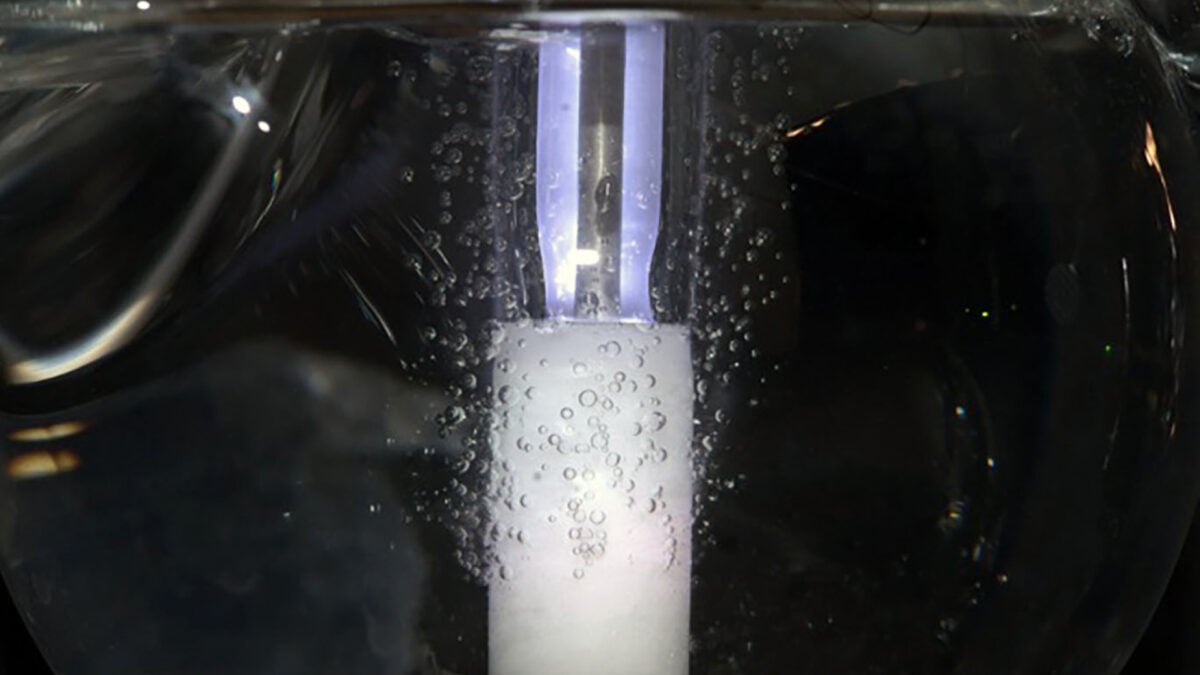
The core of the research involves passing methane gas through a chamber where high-voltage electrical pulses generate plasma. This plasma, characterized by ionized gas, provides the necessary energy to break methane's stable C-H bonds and initiate reactions that form methanol. The team's experiments have demonstrated the feasibility of this conversion, offering a promising alternative to current high-temperature and high-pressure catalytic processes. The efficiency and scalability of this plasma-based method are key areas of ongoing investigation, with potential applications extending to various methane sources.
Background & Context
Methane is the second most abundant anthropogenic greenhouse gas, possessing a global warming potential significantly higher than carbon dioxide over a 20-year period. Its primary sources include natural gas leaks, agriculture, and landfills, making its reduction a critical environmental challenge. Converting methane into more manageable and useful compounds like methanol has long been a goal for scientists and engineers, as methanol is a versatile chemical used in plastics, pharmaceuticals, and as a clean-burning fuel.
Traditional industrial methods for converting methane to methanol, such as steam reforming followed by syngas conversion, are energy-intensive and produce significant carbon emissions. These processes typically require high temperatures (700-1100°C) and pressures, making them costly and inefficient for distributed methane sources. The search for more sustainable and less energy-demanding conversion technologies has therefore been a major focus in chemical research, driving the exploration of alternative approaches like plasma catalysis.
Key Developments
The research, conducted by scientists at the University of California, Los Angeles, focuses on non-thermal plasma technology. This method uses electrical discharges to create a reactive environment at near-ambient temperatures and pressures, contrasting sharply with conventional catalytic converters. The plasma effectively activates methane molecules, allowing for their selective oxidation into methanol without the need for extreme conditions.
Early experimental results indicate that the plasma-driven process can achieve significant conversion rates and selectivity towards methanol. The team is refining the parameters of the electrical pulses, including voltage and frequency, to optimize the reaction yield and minimize unwanted byproducts. This precise control over the plasma conditions is crucial for developing an industrially viable process. The ability to perform this conversion at lower energy inputs could make it economically attractive for smaller, remote methane sources, such as those associated with oil and gas extraction or agricultural waste.
Perspectives
This innovative approach holds substantial promise for addressing both climate change and resource utilization. By transforming methane into methanol, the technology offers a dual benefit: reducing atmospheric methane concentrations and creating a valuable chemical feedstock. Experts view this as a significant step towards a circular carbon economy, where waste products are repurposed into useful materials. The flexibility of plasma technology also suggests it could be adapted for various scales and methane sources, from industrial emissions to biogas.
However, challenges remain in scaling up the technology and ensuring its long-term economic viability. The energy efficiency of the plasma generation itself and the separation of methanol from the reaction mixture are critical factors that need further optimization. While the initial findings are encouraging, extensive research and development are required to transition this laboratory-scale success into industrial application. The potential environmental and economic benefits, however, provide strong motivation for continued investment in this area.
What to Watch
Future research will likely focus on improving the energy efficiency of the plasma reactors and enhancing the selectivity of methanol production. Scientists will also explore integrating this technology with renewable energy sources to further reduce its carbon footprint. Watch for pilot projects and demonstrations that aim to scale up this process from laboratory settings to industrial applications, potentially within the next five to ten years. Developments in reactor design and catalyst integration will be key indicators of progress in this field.
Found this story useful? Share it:
Sources (1)
Gizmodo.com
"Scientists Are Using Lightning in a Bottle to Turn Methane Into Methanol"
April 15, 2026