
U.S. Sanctions Mexican Casinos and Individuals for Alleged Ties to Cartel del Noreste and Human Smuggling
AI-Summarized Article
ClearWire's AI summarized this story from CBS News into a neutral, comprehensive article.
Key Points
- U.S. Treasury sanctioned three individuals and two casinos for alleged links to Mexico's Cartel del Noreste (CDN).
- The sanctions target entities accused of facilitating the CDN's human smuggling operations and money laundering.
- Individuals include Fidel Ranulfo Lopez, Juan Pablo Padilla, and Veronica Garcia; casinos are Golden City and Money City.
- The CDN, a successor to Los Zetas, profits significantly from human smuggling along the U.S.-Mexico border.
- Sanctions block assets under U.S. jurisdiction and prohibit transactions with U.S. persons, aiming to disrupt cartel finances.
- This action underscores U.S. efforts to combat transnational organized crime and protect migrants from exploitation.
Overview
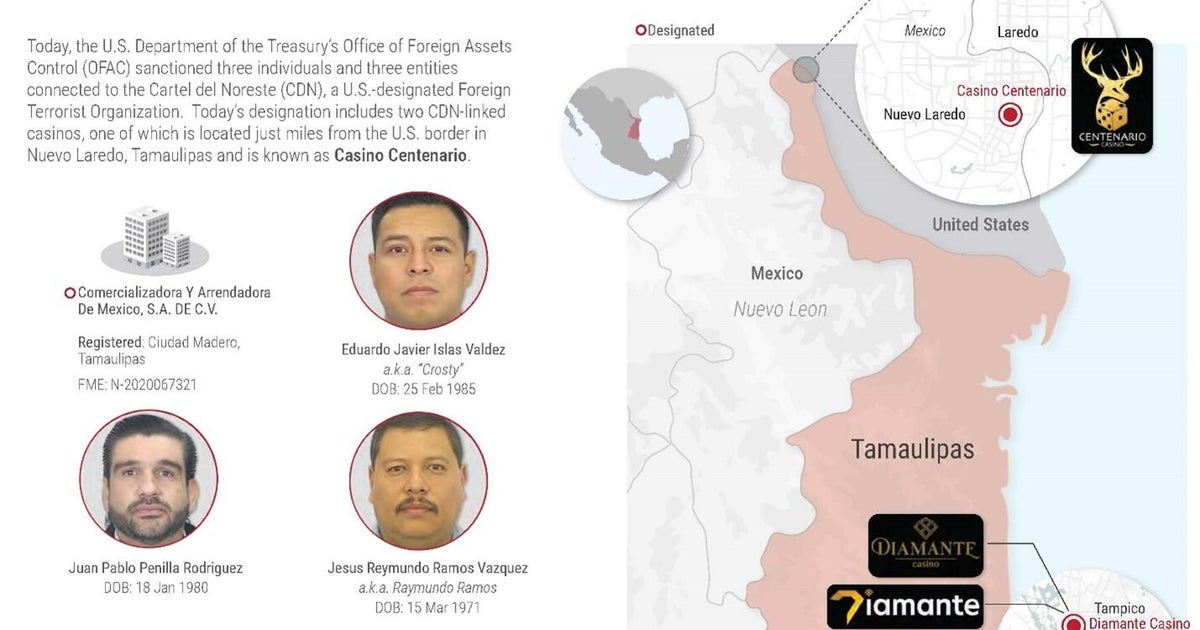
The U.S. Treasury Department recently imposed sanctions on three individuals and two casinos in Mexico, citing their alleged connections to the Cartel del Noreste (CDN). This action is part of a broader effort to disrupt the financial networks of criminal organizations involved in illicit activities, including human smuggling. The sanctions target entities accused of facilitating the cartel's operations, particularly those linked to exploiting migrants along the U.S.-Mexico border.
The designated individuals and businesses are accused of acting as a "gatekeeper" for human smuggling routes, enabling the CDN to profit from the movement of migrants. This move underscores the U.S. government's commitment to combating transnational organized crime and its impact on both national security and humanitarian concerns. The sanctions aim to isolate these entities from the global financial system, thereby limiting their ability to support cartel activities.
Background & Context
The Cartel del Noreste is identified as a successor to the notorious Los Zetas cartel, known for its extreme violence and diversification into various criminal enterprises. This cartel operates extensively in northeastern Mexico, a critical region for both drug trafficking and human smuggling routes into the United States. The U.S. has increasingly focused on the financial infrastructure supporting these cartels, recognizing that disrupting their economic lifelines is crucial to weakening their overall power and influence.
Human smuggling has become a highly lucrative business for Mexican cartels, generating billions of dollars annually. These criminal groups often control vast stretches of the border, exploiting vulnerable migrants and subjecting them to dangerous conditions. The U.S. government views these operations not only as a border security issue but also as a significant humanitarian crisis, necessitating targeted interventions against those who facilitate such exploitation.
Key Developments
The Treasury Department's Office of Foreign Assets Control (OFAC) specifically named Fidel Ranulfo "El Tio" Lopez, a key figure alleged to be a primary facilitator for the CDN's human smuggling operations. Also sanctioned were individuals Juan Pablo "El Cuate" Padilla and Veronica Garcia. The two casinos, identified as Golden City and Money City, both located in Nuevo Laredo, Tamaulipas, were designated for allegedly laundering money and providing financial support to the cartel. These establishments are believed to have played a role in the illicit financial flows that sustain the CDN's criminal empire.
The sanctions mean that all property and interests in property of the designated individuals and entities that are within U.S. jurisdiction or in the possession or control of U.S. persons are blocked. Furthermore, U.S. persons are generally prohibited from engaging in transactions with them. This financial isolation is designed to sever their access to the legitimate financial system, making it harder for them to conduct business and support cartel activities.
Perspectives
U.S. officials emphasize that these sanctions are a direct response to the cartels' increasing involvement in human smuggling, which has become a significant source of revenue and a driver of instability at the border. The Treasury Department highlighted the cartels' ruthlessness in exploiting migrants for profit, often subjecting them to extortion, kidnapping, and violence. This action signals a continued aggressive posture by the U.S. government against transnational criminal organizations.
The U.S. government views these measures as essential for protecting the integrity of the financial system and safeguarding national security. By targeting the financial enablers of cartels, the aim is to reduce their capacity to operate and inflict harm. The sanctions also send a strong message to other entities that might be considering or are currently involved in facilitating cartel operations, underscoring the severe consequences of such involvement.
What to Watch
Future developments will likely include continued monitoring of the effectiveness of these sanctions in disrupting the CDN's financial networks and human smuggling operations. Observers will also watch for potential retaliatory actions from the cartel or shifts in their operational methods. Further U.S. enforcement actions, including additional sanctions or law enforcement initiatives targeting other cartels and their facilitators, are also anticipated as the U.S. government maintains its focus on combating transnational organized crime.
Found this story useful? Share it:
Sources (1)
CBS News
"U.S. sanctions cartel-linked Mexican casinos, alleged "gatekeeper" of human smuggling routes"
April 15, 2026