
Prime Minister Carney Suspends Fuel Excise Tax Amid Rising Gas Prices Driven by Iran War
AI-Synthesized from 2 Sources
ClearWire's AI read coverage of this story from Financial Post and synthesized a single balanced, unbiased summary that cites each outlet where their reporting differs.
Key Points
- Prime Minister Mark Carney has suspended a fuel excise tax until Labour Day weekend.
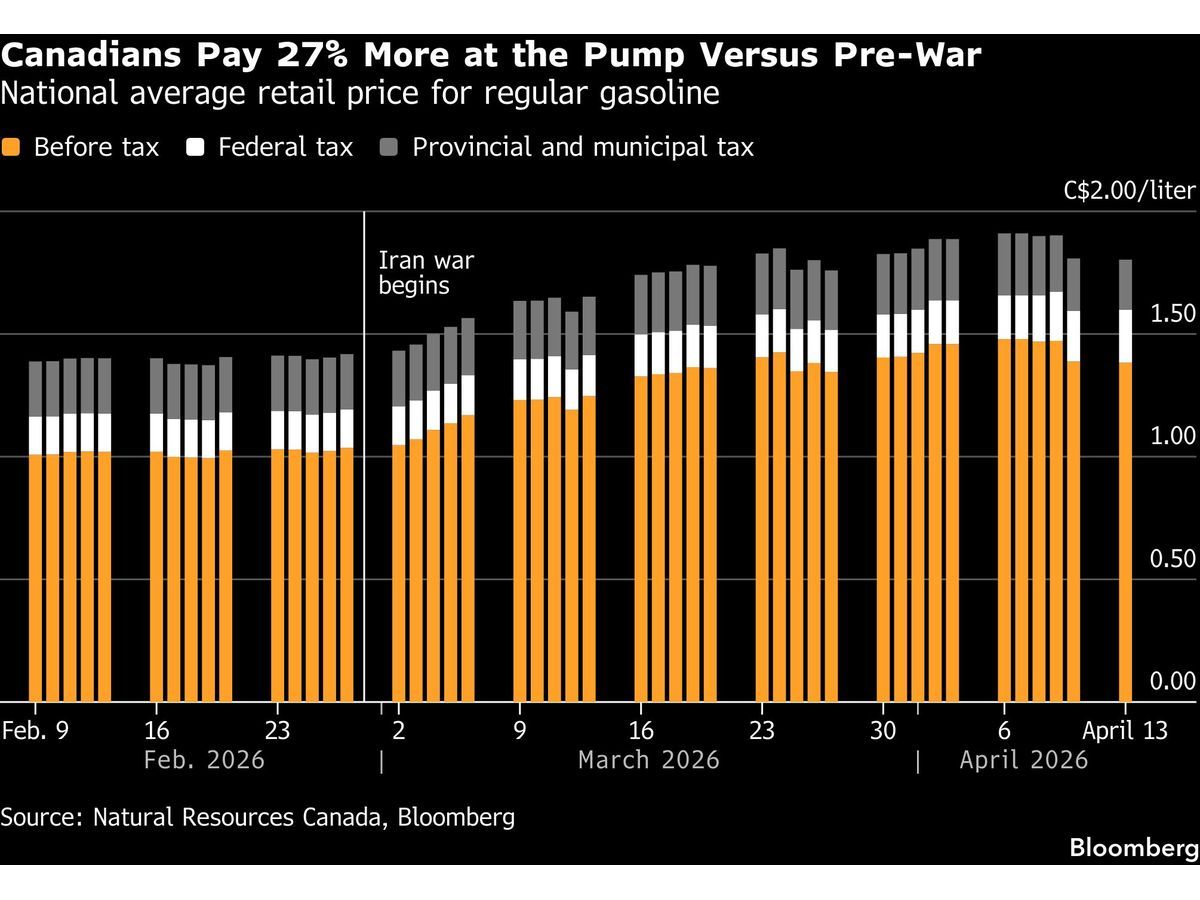
- The suspension is a direct response to gas prices increasing by approximately 45% in 2026.
- Both Financial Post reports attribute the surge in gas prices primarily to the Iran war.
- The policy aims to alleviate the financial burden on consumers facing higher energy costs.
- The measure is temporary, with its duration set until the Labour Day weekend.
Overview
Prime Minister Mark Carney has announced the suspension of a fuel excise tax, a measure taken in response to a significant surge in gas prices. This suspension is slated to remain in effect until the Labour Day weekend. The decision comes as gas prices have reportedly increased by approximately 45 percent throughout 2026, with the primary cause identified as the ongoing conflict in Iran.
This policy change aims to alleviate the financial burden on consumers experiencing higher costs at the pump. Both Financial Post reports confirm the Prime Minister's direct involvement in this decision and the specific timeframe for the tax suspension. The overarching context for this economic intervention is the impact of international geopolitical events on domestic energy markets.
Background & Context
The considerable increase in gas prices, cited as about 45 percent in 2026, has created a challenging economic environment for consumers. This sharp rise is directly attributed to the conflict in Iran, highlighting the interconnectedness of global events and local economies. The decision to suspend the fuel excise tax reflects a governmental response to mitigate the immediate effects of these external pressures on citizens.
The fuel excise tax is a levy on gasoline and other fuels, and its suspension is a direct fiscal policy tool to reduce the final price consumers pay. Such measures are typically implemented during periods of economic strain or unforeseen market disruptions. The timeframe until Labour Day weekend suggests a temporary relief measure, allowing for potential reassessment of the situation as the year progresses.
Key Developments
Prime Minister Mark Carney explicitly stated his decision to suspend the fuel excise tax, as reported by both Financial Post articles. The suspension is set to last until the Labour Day weekend, providing a defined period of relief for consumers. Both sources concur that the primary driver for this action is the significant increase in gas prices, which have reportedly risen by approximately 45 percent in 2026.
This substantial price hike is directly linked to the conflict in Iran, according to both Financial Post reports. The articles, one attributed to Bloomberg via Financial Post and the other directly from Financial Post, present identical core facts regarding the Prime Minister's announcement, the reason for the price increase, and the duration of the tax suspension. No discernible differences in specific details or framing were noted between the two Financial Post reports.
Perspectives
The Prime Minister's decision to suspend the fuel excise tax is a direct response to the economic impact of the Iran war on energy costs. This action is framed as a measure to address the financial strain on consumers due to the reported 45 percent increase in gas prices in 2026. The consistent reporting from both Financial Post articles indicates a unified understanding of the core facts and the government's stated rationale for the policy.
This move can be seen as a governmental intervention to stabilize consumer spending power in the face of external economic shocks. While the articles do not present differing viewpoints from stakeholders or opposition, the policy itself inherently addresses the public's concern over rising living costs. The focus is on the direct cause-and-effect relationship between the Iran conflict, energy prices, and the government's responsive action.
What to Watch
Consumers and analysts will be closely monitoring the impact of the fuel excise tax suspension on gas prices and household budgets until the Labour Day weekend. Further developments in the Iran conflict and global energy markets will also be critical factors to watch, as they may influence future governmental decisions regarding energy policy and taxation beyond the current suspension period.
Found this story useful? Share it:
Sources (2)
Financial Post
"Carney Suspends Gas Tax as Iran War Drives Up Energy Costs"
April 14, 2026
Financial Post
"Carney suspends gas tax as Iran War drives up energy costs"
April 14, 2026