
Myanmar Military Leader Sworn In as President Amidst Ongoing Political Instability
AI-Summarized Article
ClearWire's AI summarized this story from Shannews.org into a neutral, comprehensive article.
Key Points
- Senior General Min Aung Hlaing was sworn in as Myanmar's self-appointed president on April 10.
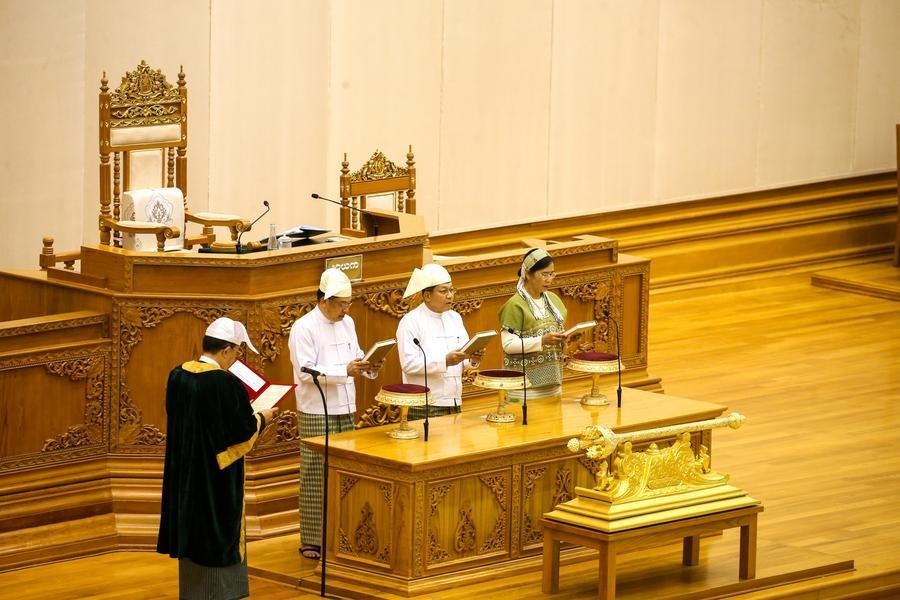
- The ceremony took place at the junta's Union Parliament in Nay Pyi Taw.
- This move formalizes the military leader's control following the 2021 coup.
- The appointment occurs amidst ongoing political instability and resistance to military rule.
- He announced the formation of a new government after his inauguration.
- The international community and opposition groups largely reject the legitimacy of this appointment.
Overview
Senior General Min Aung Hlaing, the military leader who orchestrated the 2021 coup in Myanmar, was sworn in as the self-appointed president at the junta's Union Parliament in Nay Pyi Taw on April 10. This development solidifies his grip on power following the military takeover that deposed the elected civilian government. The move comes amidst a protracted period of political turmoil and widespread resistance to military rule across the country. His assumption of the presidency signals a continuation of the military's control over the nation's governance.
Background & Context
Myanmar has been in a state of political crisis since the February 2021 military coup, which overthrew the democratically elected government led by Aung San Suu Kyi's National League for Democracy (NLD) party. The coup triggered widespread protests, civil disobedience movements, and armed conflict between the military and various resistance groups. The military junta has faced international condemnation and sanctions for its actions, including human rights abuses and suppression of dissent, which have significantly destabilized the nation.
Key Developments
On April 10, Senior General Min Aung Hlaing formally assumed the role of president, a position he previously held as the head of the State Administration Council (SAC). This formalization of his leadership occurred within the junta's legislative body, the Union Parliament, which was reconstituted after the coup. Following his inauguration, he announced the formation of a new government, signaling the military's intent to establish a long-term administrative structure under its command. These actions are perceived as further entrenching military rule and dismissing calls for a return to democratic governance.
Perspectives
This self-appointment is widely viewed by international observers and internal opposition as a move to legitimize the military's control, rather than a step towards resolving the ongoing conflict. Critics argue that it undermines any prospects for a peaceful resolution and exacerbates the humanitarian crisis. The National Unity Government (NUG), formed by deposed lawmakers and anti-junta activists, continues to reject the legitimacy of the military regime and its appointments, advocating for a return to democratic principles. The military, however, maintains that its actions are necessary to restore order and stability.
What to Watch
Observers will be closely monitoring the international community's response to this latest development, particularly regarding potential new sanctions or diplomatic pressures. Domestically, the impact on the ongoing armed conflict and the unity of resistance movements will be crucial. The new government's policies and their implementation will also indicate the military's strategy for managing the country's severe economic and social challenges.
Found this story useful? Share it:
Sources (1)
Shannews.org
"MYANMAR’S POLITICAL LANDSCAPE: No Short Path to a Durable Peace"
April 11, 2026